by Aura Health and Spa | Jun 12, 2026 | News
Your 2026 Guide
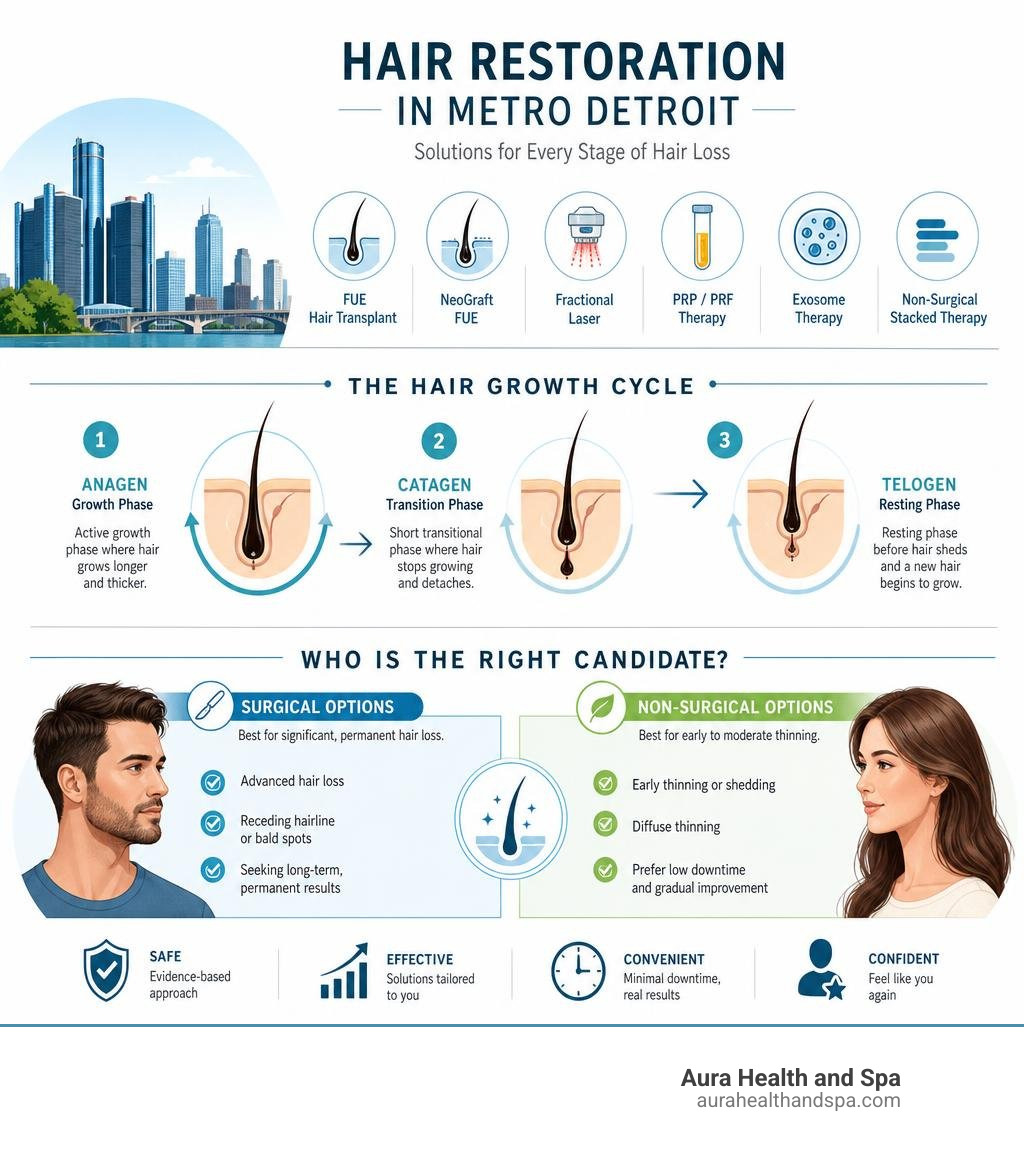
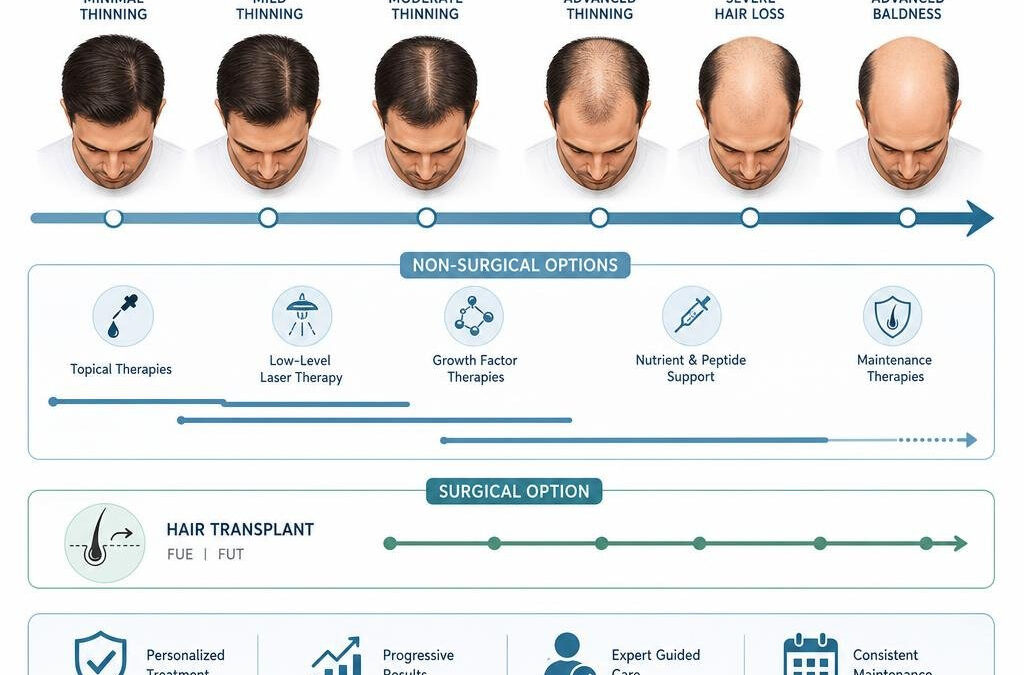
Hair restoration in Metro Detroit is more accessible than ever, with a wide range of advanced non-surgical options available across the region.
Quick Answer: Top Hair Restoration Options in Metro Detroit
| Treatment Type |
Best For |
Downtime |
| FolixMD Fractional Laser |
Early to moderate thinning |
Minimal |
| PRP / PRF Therapy |
Stimulating existing follicles |
Minimal |
| De|Rive Ultra Plus Exosomes |
Scalp nourishment and regrowth |
Minimal |
| Non-surgical stacked therapy |
Diffuse thinning, women's hair loss |
None |
Hair loss is more common than most people realize. According to WebMD, over 40% of women will experience some form of hair loss by age 40. For men, the numbers are even higher. And whether it starts as a widening part, a receding hairline, or a handful of extra hairs in the shower drain, the emotional impact can be significant.
The good news? Metro Detroit has no shortage of experienced providers — offering advanced non-surgical laser and regenerative treatments right here in Plymouth.
But with so many options, knowing where to start — and what questions to ask — makes all the difference.
I'm Dr. Reema Sethi, a board-certified emergency medicine physician trained in medical aesthetics and the Medical Director of Aura Health & Spa in Plymouth, MI — the heart of Metro Detroit. My background in evidence-based medicine shapes how we approach hair restoration in Metro Detroit: focused on safe, effective, non-surgical solutions that deliver real, measurable results. While I oversee our clinical protocols to ensure the highest standards of safety and efficacy, all treatments at our clinic are performed by our highly trained licensed nurses and aestheticians.
Hair restoration Metro Detroit word list:
Understanding Hair Loss Causes in Michigan
Living in Metro Detroit means our hair and scalp deal with unique environmental factors. From the freezing, dry winter winds off the Great Lakes to the humid summer heat, our scalps are constantly adapting. However, environmental stressors are only a small piece of the puzzle.
For most residents, hair loss is driven by a combination of genetics, hormones, and lifestyle factors. The most common culprit is androgenetic alopecia, commonly known as male or female pattern baldness. In men, this typically presents as a receding hairline or a thinning crown. In women, it often manifests as diffuse thinning across the top of the scalp, making the middle part look wider. If you are noticing these early changes, you can learn more about what is happening in Is Your Hair Thinning? A Woman's Guide to Causes and Solutions.
Another frequent cause is telogen effluvium, a temporary form of hair loss triggered by severe stress, major life changes, illness, or rapid weight loss. This condition forces a large number of hair follicles prematurely into the resting (telogen) phase, leading to noticeable shedding a few months after the triggering event. Additionally, autoimmune conditions like alopecia areata can cause patchy hair loss, while hormonal fluctuations during postpartum or menopause can dramatically impact hair density. Understanding these shifts is key to finding the right fix, as discussed in Hair Today Gone Tomorrow? Not With These Hair Loss Fixes.
Advanced Non-Surgical Hair Restoration Metro Detroit
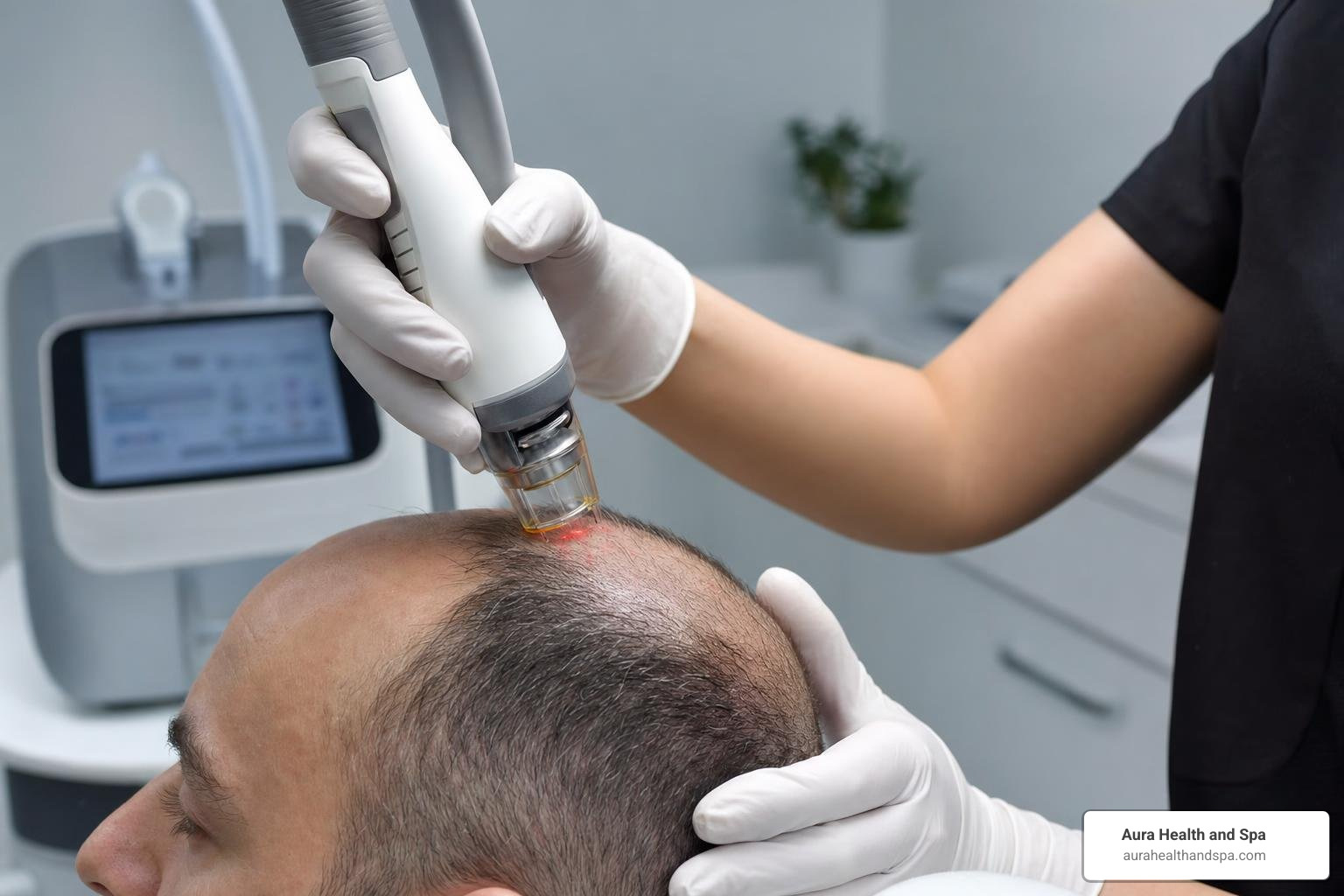
For many years, the options for addressing hair loss were highly limited. Fortunately, as we head through June 2026, the landscape of hair restoration in Metro Detroit has shifted toward cutting-edge, non-surgical interventions. Today, we can achieve remarkable follicular rejuvenation without scalpel incisions, linear scars, or weeks of painful recovery.
At the forefront of this scientific evolution are advanced laser therapies and plant-based regenerative complexes. These modern treatments focus on reviving dormant follicles and optimizing the health of the scalp. If you are exploring these options for the first time, our Beginner's Guide to Non-Surgical Hair Restoration provides an excellent baseline. To understand how we can breathe new life into struggling follicles, check out our guide on How to Restore Hair Follicles.
The Aura Health & Spa Approach to Hair Restoration Metro Detroit
At Aura Health & Spa in Plymouth, Michigan, we believe that confidence starts with results you can see. We specialize in a highly sophisticated, non-surgical approach that combines the power of the Lumenis FoLix fractional laser with the regenerative benefits of De|Rive Ultra Plus plant-based exosomes.
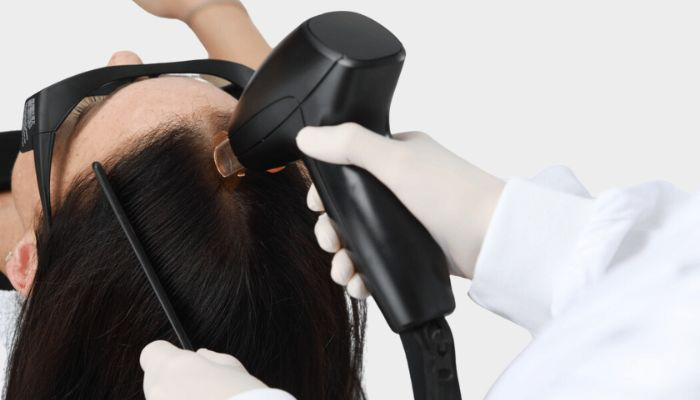
Our FolixMD treatment is a game-changer. Unlike older methods, the Lumenis FoLix laser uses fractional energy to create precise microthermal zones in the scalp. This targeted, concentrated energy stimulates the body's natural healing response and increases blood flow to the hair follicles, prompting them to transition back into the active growth (anagen) phase.
Every procedure at our Plymouth clinic is performed by our highly trained registered nurses and licensed aestheticians under the direct supervision of our Medical Director. This medical-grade oversight ensures that your treatment is both exceptionally safe and customized to your specific hair goals. Discover how we can help you Boost Hair Follicles and explore our complete philosophy on non-surgical Hair Restoration.
Premium Non-Surgical Treatment Packages
We believe that the best results come from comprehensive, holistic care rather than standalone, quick-fix treatments. That is why we focus on premium treatment packages that pair our in-office laser technology with advanced topical solutions and professional home care.
When you choose one of our signature packages, we combine the physical stimulation of the FoLix laser with the deep-nourishing properties of De|Rive Ultra Plus plant-based exosomes. This dual-action approach maximizes the absorption of active ingredients, giving your scalp the ultimate environment for regeneration.
Because we prioritize safety and transparency, we always discuss what to expect after your session. While there is zero downtime, some patients may experience mild side effects such as redness, swelling, or minor bruising on the treated areas. These temporary side effects are completely normal and typically resolve within a few days to two weeks. For a deeper dive into these modern alternatives, explore Beyond the Blade: Effective Non-Surgical Hair Loss Solutions and read about our customized Advanced Hair Solutions.
Comprehensive Aesthetic Services at Aura Health & Spa
In addition to our advanced hair restoration, our Plymouth clinic offers a full suite of medical aesthetic services to help you look and feel your best. All treatments are performed by our licensed nurses and aestheticians under the direct oversight of our Medical Director, Dr. Reema Sethi. Our comprehensive offerings include:
- Neuromodulators: We offer Dysport, Jeuveau, and Daxxify to smooth fine lines and wrinkles.
- Advanced Facials: Experience the skin-nourishing benefits of Glo2facial and Hydrafacial.
- Peels & Resurfacing: We provide the 'medium depth perfect derma peel' for skin rejuvenation (please note that Dr. Reema Sethi's staff performs chemical peels, not the doctor herself), as well as ResurFX fractional non-ablative laser skin resurfacing.
- Microneedling: We offer Microneedling with PRP/Exosomes (EXOE)/PDGF+ to stimulate collagen production and accelerate cellular repair. For optimal results, a series of 3-4 sessions is typically required.
- RF Microneedling (Morpheus8): This advanced treatment combines radiofrequency energy with microneedling to remodel deeper subdermal layers. To achieve optimal results, a series of 3-4 sessions is typically required.
- Hair Restoration: Our signature FolixMD fractional laser and De|Rive Ultra Plus plant-based exosome treatments provide cutting-edge, non-surgical solutions for hair thinning.
The Science Behind Advanced Non-Surgical Hair Restoration
To truly appreciate the power of non-surgical hair restoration in Metro Detroit, it helps to understand the underlying cellular science. Hair loss occurs when follicles shrink, weaken, and spend less time in the active growth phase (anagen) and more time resting (telogen). Over time, if left untreated, these follicles can become completely inactive.
Our non-surgical treatments work by triggering cellular rejuvenation. When the Lumenis FoLix laser delivers targeted fractional energy to the scalp, it creates tiny, controlled zones of heat. This process acts as a biological wake-up call, sending growth factors and increased circulation directly to the hair roots. When paired with De|Rive Ultra Plus plant-based exosomes, we are able to deliver a concentrated dose of signal peptides and nutrients directly to the rejuvenated pathways, actively nourishing the scalp and encouraging healthier, thicker hair to emerge.
How FolixMD and De|Rive Ultra Plus Work Together
Think of your scalp as a garden. If the soil is dry and depleted, planting seeds won't yield a lush lawn. The FolixMD fractional laser acts like a premium aerator, opening up the pathways and prepping the ground. The De|Rive Ultra Plus plant-based exosomes are the ultimate fertilizer, rich in active plant-derived factors that support cellular health.
When we apply De|Rive Ultra Plus immediately after a FolixMD laser session, the absorption rate is significantly enhanced through the laser-created microthermal zones. This allows the plant-based exosomes to penetrate deeply, nourishing the scalp tissue and supporting the natural hair growth cycle. To learn more about this biological synergy, take a look at our Beginner's Guide to Non-Surgical Hair Restoration and find out how we work to How to Restore Hair Follicles.
What to Expect During and After Your Treatment
We design our treatments to be as comfortable and stress-free as possible. When you arrive at our Plymouth clinic, our registered nurses or licensed aestheticians will prepare your scalp and guide you through the session. The Lumenis FoLix laser treatment is quick and generally well-tolerated, with most patients describing the sensation as a warm, tingling feeling.
Immediately following the laser session, we apply the De|Rive Ultra Plus serum to the treated areas. Because this is a non-surgical treatment, there is no surgical recovery or downtime; you can drive yourself home and return to your normal daily routine immediately.
You may experience some mild redness, slight swelling, or minor bruising on the scalp, which is a natural part of the localized healing response. These effects are temporary and typically fade within a few days, though they can occasionally last up to two weeks. We will provide you with detailed aftercare instructions to ensure your scalp remains clean, comfortable, and fully supported as it begins its renewal process. You can read more about what to expect post-treatment in our dedicated resource on Hair Restoration.
Frequently Asked Questions About Hair Restoration
What is the difference between FolixMD and low-level laser therapy (LLLT)?
It is common to confuse different types of laser therapies, but FolixMD and low-level laser therapy (LLLT) are entirely different technologies. LLLT devices—such as home-use laser caps or helmets—emit a weak, scattered light designed to gently warm the scalp over long daily sessions.
In contrast, FolixMD uses the Lumenis FoLix fractional laser, which is a medical-grade, clinical system. Instead of low-level light, it delivers targeted, concentrated fractional laser energy to create precise microthermal zones in the scalp. This creates a much more powerful and direct biological response, actively triggering the body's natural healing cascade to revive dormant follicles. To understand why this clinical approach is so effective, read Beyond the Blade: Effective Non-Surgical Hair Loss Solutions.
Who is an ideal candidate for non-surgical hair restoration?
Non-surgical hair restoration is ideal for men and women experiencing early to moderate hair thinning, diffuse hair loss, or a widening part. It is especially beneficial for individuals who want to avoid the downtime, scarring, and discomfort associated with invasive procedures, as well as women experiencing hormonal hair thinning due to postpartum changes or menopause.
However, because these treatments rely on stimulating existing hair follicles, they are most effective when the follicles are still active. If an area of the scalp has been completely bald for many years, the follicles may be entirely gone, making non-surgical restoration less effective. If you are trying to determine if this is the right path for you, explore Is Your Hair Thinning? A Woman's Guide to Causes and Solutions and review our guide on Hair Balding Solutions.
What are the expected side effects and recovery time for laser hair therapy?
One of the greatest benefits of our laser-based hair therapy is that there is absolutely zero clinical downtime. You can immediately return to work, run errands, and go about your day.
In terms of side effects, you may notice some mild redness, slight swelling, or minor bruising on the scalp, which feels similar to a mild sunburn. These side effects are a normal sign that the scalp's healing response has been activated. They typically resolve within a few days, though in some cases, they can last up to two weeks. We always provide comprehensive pre- and post-care guidance to make your recovery as smooth and comfortable as possible. For more details on maintaining your scalp after a session, check out Advanced Hair Solutions.
Conclusion
Restoring your hair is about more than just aesthetics—it is about reclaiming your self-esteem and loving what you see in the mirror. Whether you are in the early stages of thinning or looking for a powerful, non-surgical solution to boost your hair density, you do not have to travel far to find world-class care.
At Aura Health & Spa in Plymouth, Michigan, we are dedicated to helping you achieve natural-looking, visible results through safe and scientifically proven methods. Our combination of FolixMD fractional laser technology and De|Rive Ultra Plus plant-based exosomes offers a premium, comfortable alternative to invasive procedures.
Are you ready to take the first step toward thicker, healthier hair? Schedule Your Consultation with our expert medical team in Plymouth today, and let us design a personalized treatment plan tailored to your unique goals.
by Aura Health and Spa | Jun 12, 2026 | News
Finding Hair Restoration in Plymouth — and Why the Best Option Might Surprise You
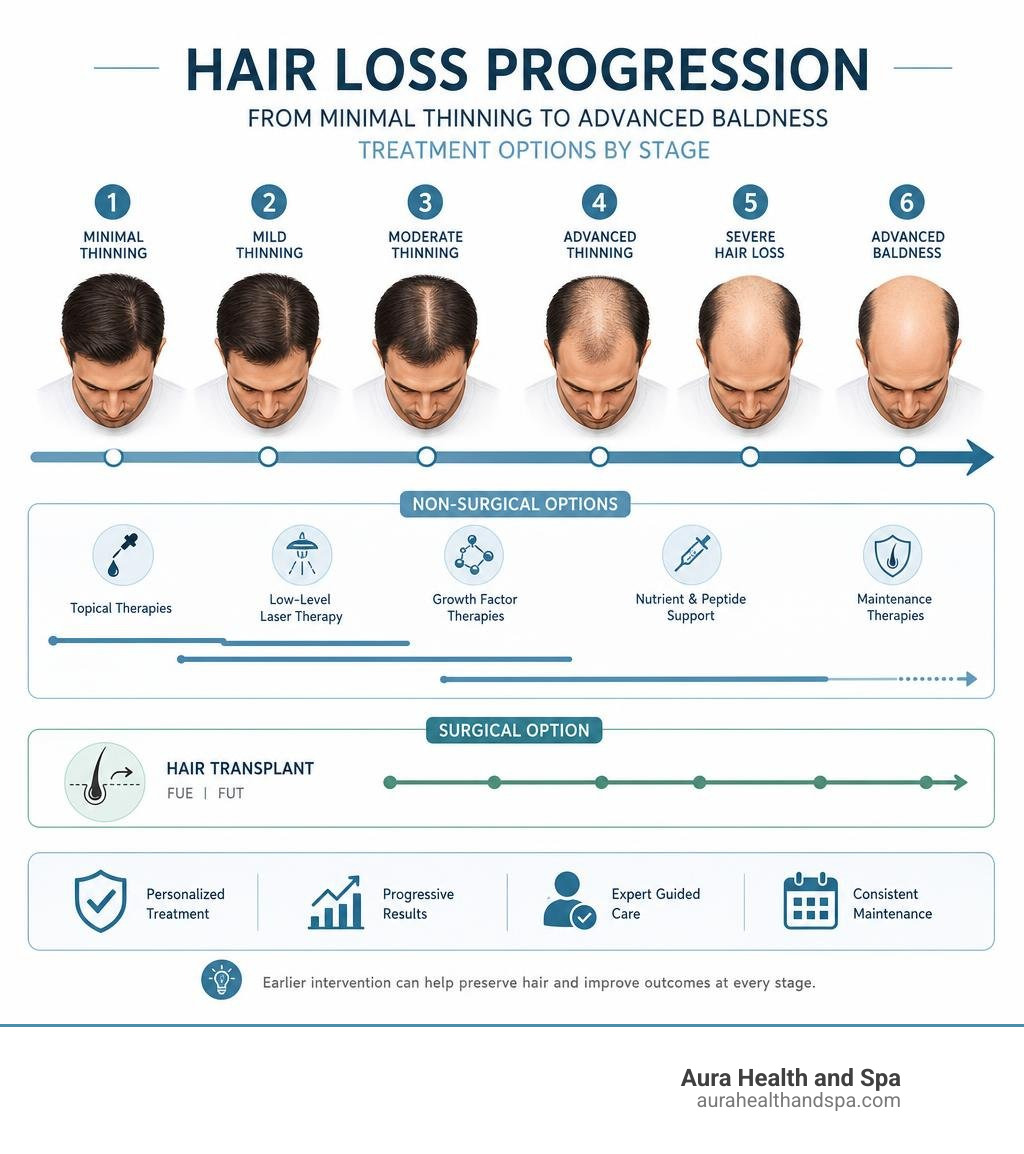
If you're searching for effective hair restoration in Plymouth, you're not alone. Around 50 million men and 30 million women in the United States experience pattern baldness or thinning hair — and by the time most people notice the problem, they've already lost roughly half their hair.
Here's a quick overview of your main options in the Plymouth and greater Metro Detroit area:
| Option |
Type |
Location |
Best For |
| Traditional Surgical Approaches |
Surgical |
Metro Detroit area |
Invasive graft-based procedures |
| Aura Health & Spa |
Non-surgical |
Plymouth, MI |
Active follicle restoration, zero downtime |
But here's what most people don't realize when they start searching: surgery isn't the only path to real, lasting results. Modern non-surgical treatments — including fractional laser therapy and advanced growth factor protocols — can stimulate dormant follicles, slow progressive loss, and restore visible density without a scalpel, a recovery week, or the risks that come with surgical procedures.
This guide gives you the full picture: what traditional surgical procedures entail, how costs compare, and — critically — why many patients in Plymouth and greater Metro Detroit are choosing advanced non-surgical alternatives first.
I'm Dr. Reema Sethi, a board-certified emergency medicine physician and the Medical Director at Aura Health & Spa in Plymouth, Michigan, where I help patients find safe, evidence-based solutions for hair thinning and loss — including the latest non-surgical alternatives to surgical hair transplants. My background in emergency medicine gives me a precise, clinical approach to aesthetic care, and I'm here to help you make a confident, well-informed decision.
Handy hair restoration terms:
Understanding Your Options: Why Skip the Surgical Hair Transplant
When faced with a receding hairline or thinning crown, the immediate gut reaction for many is to look up a surgical hair transplant. It makes sense—historically, moving hair from one spot to another was the only way to get a full head of hair back. But before you book a surgical consultation, it is vital to understand what surgery actually entails.
Surgical hair restoration primarily relies on two methods: Follicular Unit Extraction (FUE) and Follicular Unit Transplantation (FUT). While FUE is highly popular because it avoids a massive linear scar, it is still a major, invasive surgical procedure. It involves a doctor—or sometimes automated machines—punching out thousands of individual hair follicles from the back of your head (the donor zone) and manually placing them into tiny slits made in the balding areas.
Here is the catch: you only have a limited lifetime supply of harvestable donor hair. If you jump straight into surgery too early, or without addressing the root cause of your progressive hair loss, you may find yourself needing a second or third surgery down the road to fill in new bald spots as they appear.
Furthermore, surgical options require you to undergo local anesthesia, endure hours of tiny scalp incisions, and navigate a recovery process that involves scabbing, swelling, and sleeping at a precise angle to avoid dislodging your new, fragile grafts.
To understand the mechanics of these surgical options better, you can explore the differences in the Unlock Your Locks: The FUE Hair Transplant Advantage and take a closer look at donor harvesting in The FUE Donor Zone: A Deep Dive into Hair Transplant Harvesting. If you are curious about the more traditional strip-harvesting method, read up on The Fuss About Fuss Hair Transplants: Your Complete Guide and find out how it affects the scalp in Unpacking the FUT Donor Zone: A Comprehensive Look.
At Aura Health & Spa in Plymouth, Michigan, we believe in a different path. Rather than immediately resorting to the blade, we focus on preserving, waking up, and strengthening the hair follicles you already have. Our state-of-the-art non-surgical therapies offer a powerful, pain-free alternative that keeps your scalp fully intact—and keeps you out of the operating room.
Specialized Non-Surgical Procedures: Female Hair Restoration and Targeted Solutions
Hair loss is often framed as a "men's issue," but the reality is that millions of women quietly struggle with thinning hair. For women, hair loss tends to present differently—usually as diffuse thinning across the entire scalp rather than a localized receding hairline.
Because female hair loss is often diffuse, women are frequently poor candidates for surgical hair transplants. Why? Because a transplant requires a dense, healthy "donor zone" at the back of the head. If a woman is thinning all over, transplanting hair from one thinning area to another simply doesn't work.
This is where non-surgical protocols truly shine. By utilizing targeted regenerative therapies, we can address the hormonal, genetic, and environmental factors causing female hair loss without surgery. Our customized treatments work to nourish the scalp, increase blood flow, and deliver essential growth factors directly to struggling follicles. To dive deeper into female-specific hair loss and how to combat it, read From Toppers to Treatments: The Ultimate Guide to Women's Hair Solutions and explore our comprehensive resource, Is Your Hair Thinning? A Woman's Guide to Causes and Solutions.
Evaluating Hair Restoration Costs and Value
When researching surgical hair transplant alternatives, evaluating the financial and physical investment is a major step. Surgical transplants are typically priced per graft, meaning the more hair you have lost, the more expensive your procedure becomes. Furthermore, surgical costs rarely include the hidden "costs" of downtime: time taken off work, prescription pain medications, and specialized post-op care products.
At Aura Health & Spa, we believe in complete pricing transparency and maximum value. Instead of basic, standalone treatments, we focus on premium, comprehensive treatment packages. These packages pair our advanced clinical technologies with professional skincare and home-care add-ons designed to protect your investment and optimize your results.
| Feature / Benefit |
Traditional Surgical Hair Transplant |
Aura Health & Spa Non-Surgical Packages |
| Primary Method |
Incision-based follicle harvesting (FUE/FUT) |
Fractional Laser (FolixMD) + Growth Factors (De |
Rive) |
| Downtime |
7 to 10 days of visible scabbing and swelling |
Zero downtime; immediate return to normal activities |
| Comfort Level |
Requires local anesthesia; post-op pain is common |
Highly comfortable; warm sensation during laser |
| Scarring Risk |
Permanent pinprick or linear scars |
Absolutely zero risk of scarring |
| Graft Dependence |
Dependent on limited donor zone hair |
Works by revitalizing your existing, dormant follicles |
| Approach |
Standalone surgical event |
Comprehensive packages with professional home-care |
Comparing the Investment: Surgical Costs vs. Aura's Comprehensive Packages
Choosing a surgical transplant is a major commitment that doesn't guarantee your remaining, non-transplanted hair won't continue to fall out. In fact, many surgical patients find themselves paying for additional treatments later on to maintain the hair surrounding their new grafts.
Our premium non-surgical packages offer a much more holistic, long-term value. By focusing on overall scalp health and follicle regeneration, we treat the entire head at once. We don't just move hair around; we create an environment where your existing hair can thrive. By pairing in-office laser and growth factor treatments with medical-grade take-home serums, we ensure your hair gets continuous support. This comprehensive approach delivers graft-free confidence without the surgical price tag or the physical toll of an operation.
What to Expect During Your Consultation at Aura Health & Spa
We know that talking about hair loss can feel vulnerable, which is why we have designed our consultation process to be warm, educational, and entirely stress-free. There is no high-pressure sales pitch here—just science, empathy, and clear paths forward.
When you visit our beautiful Plymouth location, we will perform a detailed scalp analysis and hair thinning assessment. We look closely at your hair density, follicle health, and thinning patterns to determine the exact stage of your hair loss.
Under the medical oversight of our Medical Director, Dr. Reema Sethi, we will design a highly customized treatment plan tailored to your unique goals. All of our advanced treatments are performed by registered and licensed providers, including our highly trained licensed nurses and aestheticians, ensuring you receive the highest standard of clinical care at every single visit.
Recovery and Aftercare: The Non-Surgical Advantage
One of the greatest benefits of opting for a non-surgical approach over a surgical hair transplant is the lack of downtime. With surgery, you have to worry about protecting fragile, newly implanted grafts from dislodging. You have to sleep upright, avoid washing your hair normally, and hide your head from the world while the scabs heal.
With our advanced non-surgical protocols, there is no surgery, no bleeding, and no fragile grafts to worry about. You can walk out of our clinic and immediately get back to your day.

Managing Post-Treatment Expectations
While there is no downtime, it is completely normal to experience mild redness and swelling in the treated areas. This is actually a sign that the treatment is working! The energy from our advanced therapies stimulates blood flow and triggers a natural healing response in your scalp. Any mild redness or swelling typically resolves within a few days, though it may occasionally last up to two weeks for those with highly sensitive skin.
This is a stark contrast to surgical recovery, which involves weeks of healing, potential numbness, and the risk of infection. To compare, you can read about the long road of surgical healing in Hair Transplant Recovery, learn about FUE healing times in Bounce Back Fast: A Complete Guide to FUE Transplant Recovery, and examine the recovery process for strip surgery in Beyond the Strip: A Comprehensive Guide to FUT Transplant Recovery.
Long-Term Hair Care and Follicle Preservation
Once we have stimulated your hair follicles, the key is keeping them active and healthy. Hair restoration is a journey, not a one-time event. Just like going to the gym, consistency is what keeps your results looking great.
We pair our in-office treatments with professional skincare and home-care add-ons to nurture your active follicles daily. This ongoing care helps prolong the growth phase of your hair and prevents future thinning. For excellent tips on how to care for your scalp and maintain hair health long-term, check out From Graft to Glory: Essential Hair Care After Your Transplant.
Advanced Non-Surgical Hair Restoration Alternatives in Plymouth
If you want to skip the surgeon's scalpel but still want real, visible results, Aura Health & Spa in Plymouth, Michigan, is your destination. We have invested in the absolute gold standard of non-surgical hair restoration technology to bring our clients premium, highly effective alternatives to surgery.
To understand how these modern treatments work to revive tired hair, take a look at our Beginner's Guide to Non-Surgical Hair Restoration and discover why more patients are moving Beyond the Blade: Effective Non-Surgical Hair Loss Solutions. You can also read our expert advice on How to Restore Hair Follicles and learn daily habits to Boost Hair Follicles.
FolixMD Fractional Laser Therapy
At the heart of our hair restoration program is the FolixMD treatment, which utilizes the state-of-the-art Lumenis FoLix fractional laser.
It is incredibly important to clarify that this is NOT a low-level laser therapy (LLLT) device. LLLT devices (like the hair growth helmets or combs you see online) use weak, diffuse light that offers very limited, slow results.
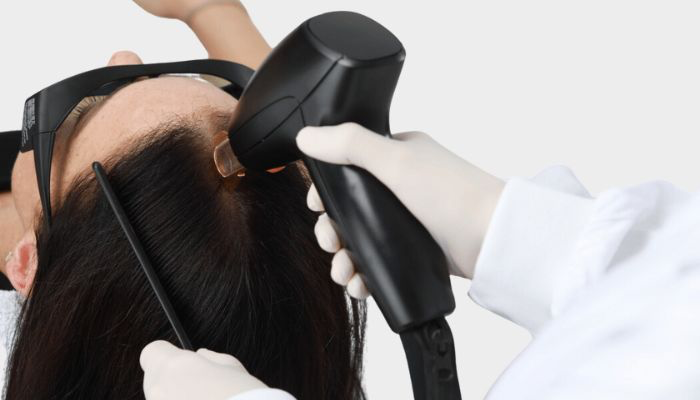
The Lumenis FoLix, by contrast, is a powerful, medical-grade fractional laser. It works by sending targeted, concentrated pulses of laser energy into the scalp, creating precise "microthermal zones." These microscopic zones of heated tissue trigger the body's natural healing cascade. This response floods the area with blood flow, oxygen, and essential nutrients, waking up dormant hair follicles and encouraging them to enter the active growth phase again.
Because it is a highly effective, medical-grade treatment, you may experience some temporary redness and swelling on your scalp post-treatment, which can last for a few days or up to two weeks. To learn more about how we use this incredible technology to restore hair, visit our dedicated FolixMD services page.
De|Rive Ultra Plus and Targeted Growth Factors
To supercharge our laser treatments, we often pair them with De|Rive Ultra Plus, a cutting-edge topical treatment that utilizes plant-based secretory factors.
De|Rive Ultra Plus is specifically formulated to address hair thinning by delivering highly concentrated growth factors directly to the hair follicles. When applied to the scalp—especially after the Lumenis FoLix laser has created microthermal channels—De|Rive Ultra Plus penetrates deeply to nourish the scalp, reduce inflammation, and support the biological pathways necessary for healthy hair growth.
This combination is a core part of our premium, comprehensive packages, offering a powerful, double-action approach to hair thinning. To explore how we customize these advanced therapies for our clients, read Hair Restoration and discover our Advanced Hair Solutions.
Frequently Asked Questions About Hair Restoration in Michigan
Am I too young or too old for non-surgical hair restoration?
There is no "perfect" age for hair restoration, but timing does matter. Generally, we recommend that patients be at least 25 years old before starting intensive hair treatments. By age 25, your hair loss patterns have typically stabilized enough for us to accurately assess progressive hair loss and design a highly effective, long-term plan. Whether you are in your late 20s trying to nip a receding hairline in the bud, or in your 50s looking to restore lost density, non-surgical treatments can help as long as you still have active (even if dormant) hair follicles.
How do non-surgical treatments compare to older, invasive methods?
Older, invasive methods often involved transplanting large sections of skin and hair, which could result in an unnatural look. While modern techniques have evolved, they still require invasive procedures. Our modern regenerative therapies, like FolixMD and De|Rive, take a completely different approach: instead of moving hair from one spot to another, we use advanced science to regenerate and thicken the hair you already have. To learn more about how far hair restoration technology has come, read What Are Hair Plugs?.
What are the potential side effects of FolixMD and De|Rive?
Our non-surgical treatments have an exceptional safety profile. Because they do not require surgery, incisions, or systemic medications, the risk of serious complications is incredibly low. The most common side effects are temporary redness, mild swelling, or slight tenderness on the scalp immediately following your session. These symptoms are a normal part of the body's inflammatory healing response and typically resolve within a few days, though they can occasionally last up to two weeks for those with highly sensitive scalps.
Conclusion
If you have been searching for a surgical hair transplant, we encourage you to pause and consider the non-surgical path first. You don't have to endure surgery, scarring, and weeks of uncomfortable recovery to love your reflection again.
At Aura Health & Spa in Plymouth, Michigan, we are dedicated to helping you achieve natural-looking, long-term confidence through safe, clinically proven, non-surgical hair restoration. By combining the power of the Lumenis FoLix laser with the regenerative benefits of De|Rive Ultra Plus, we can help you wake up dormant follicles and maintain a thicker, fuller head of hair.
Are you ready to take the first step toward graft-free confidence? Contact us today to schedule your personalized scalp consultation with our expert clinical team. For more inspiration and tips on reclaiming your hair, read Hair Today, Gone Tomorrow? Not With These Hair Loss Fixes.
by | Jan 21, 2026 | News
Finding Relief from Jaw Pain in Ann Arbor

Botox for TMJ Ann Arbor is a neurotoxin treatment that relaxes overactive jaw muscles to reduce tension, slim the jawline, and provide relief from teeth grinding and clenching. While the primary focus is cosmetic jaw contouring, many patients experience reduced discomfort as a welcome side effect. Here’s what you need to know:
Quick Overview:
- Treatment Type: Neurotoxin injections (Dysport, Jeuveau, Daxxify) into masseter muscles
- Primary Purpose: Jaw slimming and facial contouring
- Welcome Side Effect: Reduced jaw tension and teeth grinding intensity
- Procedure Time: 15-20 minutes
- Results Timeline: Tension relief in days; cosmetic slimming in 4-6 weeks
- Duration: 3-6 months depending on product used
- Downtime: None
- Providers in Ann Arbor Area: Aura Health & Spa in Plymouth, MI
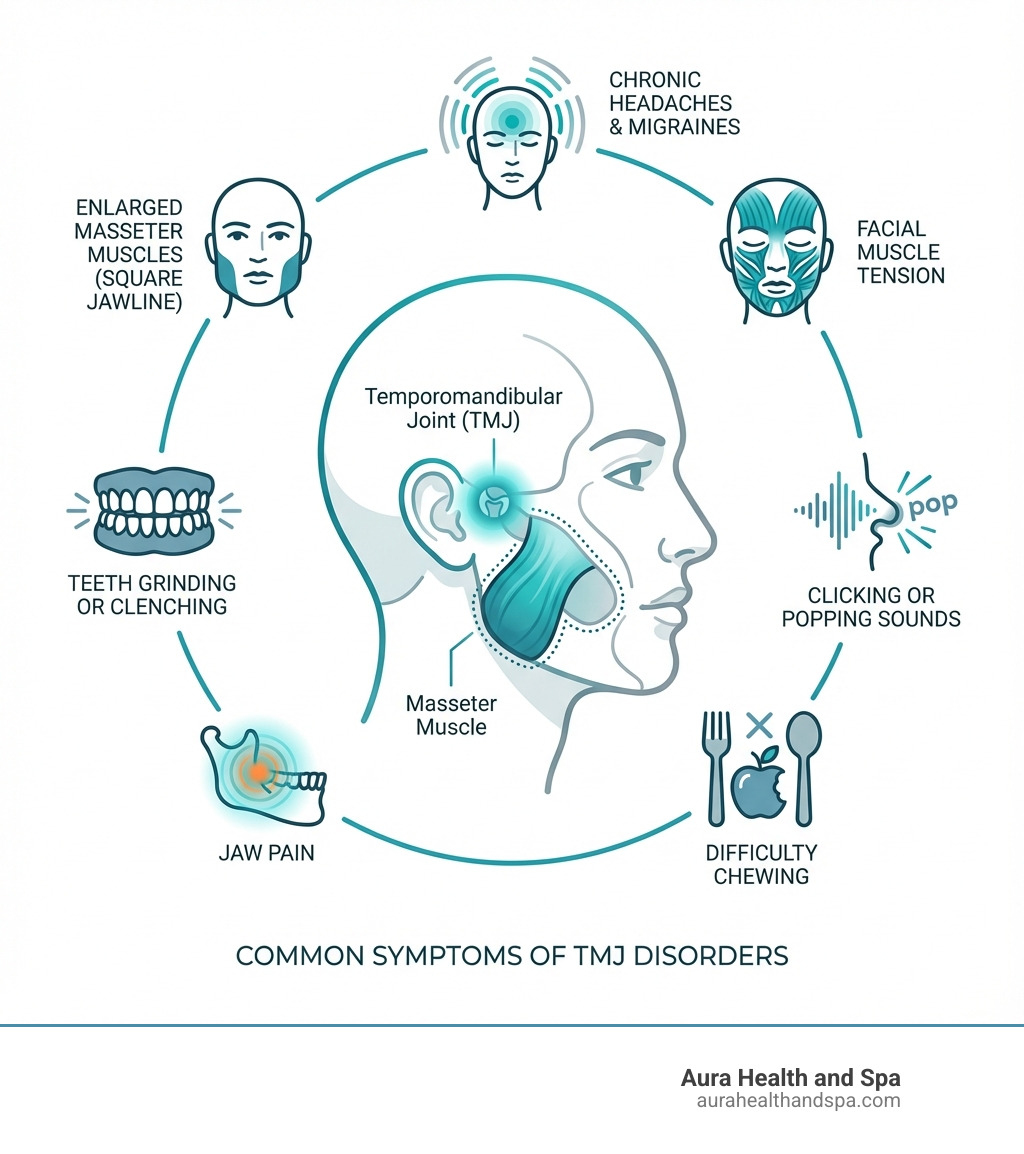
If you live in Ann Arbor and wake up with a sore jaw, experience clicking when you chew, or notice your face looks wider than it used to, you’re not alone. Temporomandibular joint disorders (TMJ) affect millions of people, causing jaw pain, headaches, and facial tension. Many also develop enlarged masseter muscles from chronic clenching or grinding, creating a square jawline appearance.
The good news? There’s a non-surgical solution that addresses both the cosmetic and functional aspects of jaw muscle overactivity. Neurotoxin treatments have become increasingly popular for jaw slimming and facial contouring, with the added benefit of reducing muscle tension that contributes to discomfort.
What causes TMJ-related jaw tension?
The masseter muscle, which controls jaw movement, can become overactive due to stress, teeth grinding (bruxism), or jaw clenching. Over time, this causes the muscle to enlarge, creating both aesthetic concerns (a wider, more square jawline) and physical discomfort (pain, headaches, clicking).
I’m Dr. Reema Sethi, and after over 15 years as a board-certified emergency medicine physician, I trained in medical aesthetics to help patients achieve natural-looking results through safe, effective treatments. At Aura Health & Spa in Plymouth, we serve Ann Arbor residents seeking expert care for Botox for TMJ Ann Arbor concerns, focusing on precise jaw slimming while addressing the tension that impacts quality of life.
Understanding TMJ and Its Impact on Your Jaw
Temporomandibular Joint Disorders, often referred to as TMD or simply TMJ, are conditions affecting the jaw joints and the muscles that control jaw movement. These joints act like a sliding hinge, connecting your jawbone to your skull. When something goes wrong with these joints or the surrounding muscles, it can lead to a range of uncomfortable and often debilitating symptoms.
The masseter muscles, located on the sides of your face near your ears, play a crucial role in chewing and jaw movement. However, when these muscles become overactive due to habits like bruxism (chronic teeth grinding) or jaw clenching, they can lead to significant problems. This constant tension can manifest as chronic headaches, earaches, and facial pain. Many individuals also experience clicking or popping sounds when moving their jaw, limited jaw movement, or even lockjaw where the jaw temporarily gets stuck in an open or closed position.
Beyond the discomfort, persistent overactivity of the masseter muscles can lead to them becoming noticeably enlarged. This not only contributes to the physical symptoms but can also alter your facial appearance, leading to a wider or more square jawline. For some, this change in facial contour can be a significant aesthetic concern.
It’s worth noting that TMJ symptoms can arise from various factors, including orthopedic problems, inflammation, genetic predispositions, and psychological stress. Stress, in particular, often causes individuals to unconsciously hold tension in their jaw, exacerbating these issues. Women, interestingly, are often more prone to developing TMJ disorders than men.
For a deeper dive into the complexities of TMJ disorders, you can visit What Are TMJ Disorders?. Understanding the root causes and symptoms is the first step toward finding effective relief and aesthetic improvement.
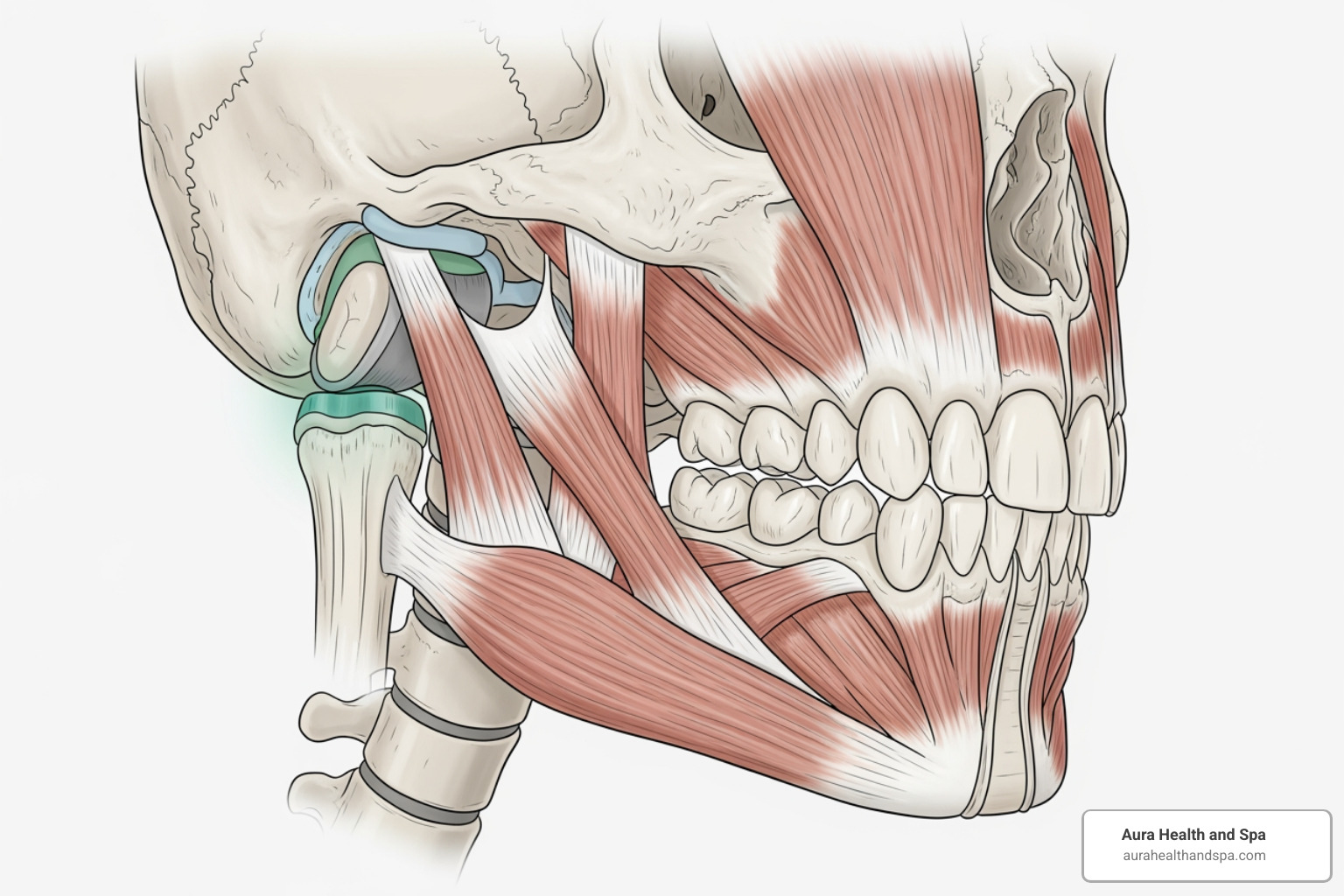
The Link Between Jaw Tension and Facial Aesthetics
The relationship between jaw tension and facial aesthetics is often overlooked. When we continuously clench or grind our teeth, the masseter muscles work overtime, much like any other muscle in the body that’s regularly exercised. This leads to what’s known as masseter hypertrophy, or an enlargement of these muscles.
From an aesthetic perspective, enlarged masseter muscles can give the lower face a heavier, wider, or more masculine appearance. Many individuals seeking a softer, more oval, or “V-shape” jawline find that overactive masseters detract from their desired facial contour. This is where non-surgical jaw reduction through neurotoxin treatments comes into play. By relaxing these muscles, we can achieve a more refined facial aesthetic while also addressing the underlying muscle overactivity. It’s a subtle yet impactful way to improve overall facial harmony and address both functional and aesthetic concerns.
The Cosmetic Solution: How Neurotoxins Relax Overactive Jaw Muscles
At Aura Health & Spa, we leverage the power of advanced neurotoxins to provide effective and precise jawline contouring. While “Botox” is a widely recognized brand name, it’s important to understand that it’s a type of neurotoxin, and several excellent brands offer similar benefits. We proudly offer Dysport, Jeuveau, and Daxxify, which are all highly effective in relaxing overactive muscles. For educational context, other major brands in the market also include Xeomin and Letybo.
So, how exactly do these neurotoxins work for jawline slimming? When injected into a specific muscle, a neurotoxin temporarily blocks the nerve signals that tell that muscle to contract. Think of it as a temporary pause button for muscle activity. For jawline contouring, we precisely inject small amounts of the neurotoxin into the masseter muscles. By relaxing these powerful chewing muscles, we reduce their bulk and activity. Over time, this leads to a noticeable slimming of the jawline, creating a more refined and aesthetically pleasing facial contour.
The mechanism is neat: the neurotoxin disrupts the nerve signaling processes that cause muscle contraction. This muscle relaxation specifically targets the overactive masseter muscles, helping to reduce their prominence and achieve a softer, more sculpted lower face. The result is a non-surgical jaw reduction that can significantly improve facial symmetry and balance.
For more information about our injectable services and how they can improve your look, please visit More info about our injectable services.
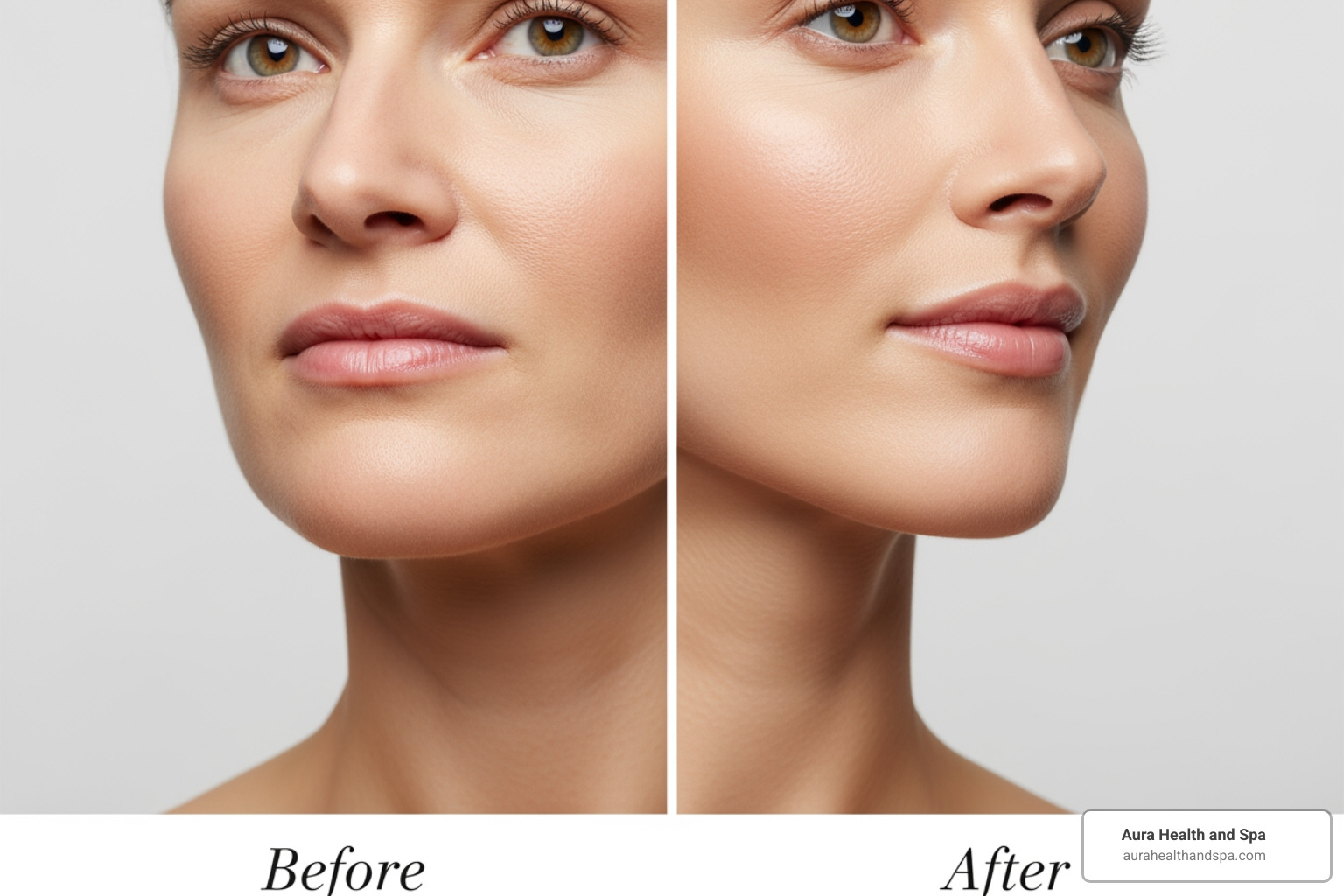
Beyond Wrinkles: A Welcome Side Effect for Jaw Clenchers
While our primary focus for neurotoxin treatments in the masseter muscles is cosmetic jawline slimming and facial contouring, many of our clients experience a wonderful and often unexpected side effect: significant relief from jaw tension and related discomfort.
When the masseter muscles are relaxed for cosmetic purposes, the involuntary movements associated with teeth grinding (bruxism) and jaw clenching are naturally reduced. This leads to a decrease in muscle overactivity, which can alleviate the severity of headaches, jaw pain, and even ear pain that often accompany TMJ-related issues. Patients frequently report a noticeable reduction in nighttime teeth grinding and clenching, minimizing potential damage to their teeth and providing a much-needed break for their overworked jaw muscles.
This therapeutic benefit, though secondary to the cosmetic goal, can dramatically improve a client’s quality of life. Imagine waking up without a sore jaw or experiencing fewer tension headaches throughout the day. It’s a testament to the versatility of these treatments, offering not just aesthetic improvement but also a subtle yet profound sense of comfort. Our goal is to help you look younger, feel more confident, and love your reflection again, and for many, that confidence starts with results they can see and feel, including relief from persistent jaw tension.
Your Guide to Botox for TMJ Ann Arbor
If you’re an Ann Arbor resident considering neurotoxin treatments for jawline contouring and the associated relief from jaw tension, here’s what you can expect at Aura Health & Spa in Plymouth, MI.
Who is a Good Candidate for Masseter Toxin Treatment?
Determining if you’re a good candidate for masseter neurotoxin treatment involves evaluating both your aesthetic goals and any functional concerns you might have. Generally, ideal candidates are adults in good overall health who:
- Desire a slimmer facial profile: If you feel your lower face appears too wide or square due to prominent jaw muscles, this treatment can help create a more oval or V-shaped contour.
- Suffer from teeth grinding or jaw clenching: While this treatment is primarily cosmetic, the muscle relaxation often provides a welcome side effect of reducing the intensity of these habits, leading to decreased tension and discomfort.
- Have enlarged jaw muscles (masseter hypertrophy): This is often visible and palpable as a bulking of the jaw muscles, contributing to a wider facial appearance.
- Have realistic expectations: Neurotoxins offer subtle, natural-looking improvements and tension relief, not a dramatic overhaul.
- Are not pregnant or breastfeeding: For safety reasons, neurotoxin treatments are not recommended during these periods.
- Do not have certain neurological disorders or allergies: Your detailed medical history will be reviewed during your consultation to ensure safety.
During your consultation, our expert providers will assess your specific needs and determine if masseter neurotoxin treatment is the right choice for you.
What to Expect During Your Botox for TMJ Ann Arbor Procedure
Your journey to a more refined jawline and reduced tension at Aura Health & Spa begins with a thorough and personalized consultation. During this initial visit, our licensed providers, overseen by our Medical Director, Dr. Reema Sethi, will:
- Assess your facial anatomy: We carefully examine your jaw muscles, facial structure, and discuss your aesthetic goals and any discomfort you experience.
- Review your medical history: This ensures the treatment is safe and appropriate for you.
- Create a customized treatment plan: Based on our assessment, we’ll determine the optimal neurotoxin (Dysport, Jeuveau, or Daxxify) and the precise dosage needed to achieve your desired results. We focus on personalized care, ensuring education and results that earn your loyalty.
Once your plan is established, the injection procedure itself is remarkably quick and straightforward. Our skilled providers use a very fine needle to deliver small, precise doses of the neurotoxin directly into the masseter muscles. The treatment is quick and convenient, typically taking only 15-20 minutes, depending on the amount required. Most clients describe the sensation as a small pinch or sting, with minimal discomfort. While many patients do not require anesthesia, a topical numbing cream can be applied beforehand if you prefer additional comfort during your session. We prioritize precision and professionalism to ensure a comfortable and effective experience.
Recovery and Results: Life After Your Jaw Slimming Treatment
One of the many benefits of neurotoxin treatments for jawline contouring is the minimal downtime involved. You can generally return to your regular activities immediately after your appointment at Aura Health & Spa. However, we do recommend a few simple post-treatment care guidelines to ensure optimal results and minimize potential side effects:
- Avoid rubbing or massaging the treated area: For at least 24 hours, it’s best to refrain from touching or manipulating the injection sites.
- Avoid strenuous exercise and heat exposure: For the first 24 hours, we advise against vigorous physical activity or anything that significantly raises your body temperature.
- Keep your head upright: For at least the first 4 hours after treatment, try to avoid lying down or bending over excessively.
Like any injectable treatment, you might experience some mild and temporary side effects such as bruising, redness, or slight swelling at the injection sites. These typically resolve within hours to a few days, though bruising can sometimes last up to two weeks. These are normal responses and can usually be easily covered with makeup.
When can you expect to see and feel the changes? The muscle relaxation effects that help with tension relief often begin to appear within a few days. For the cosmetic jaw slimming, the full effects become more apparent as the masseter muscles gradually reduce in size, typically over 4-6 weeks after treatment.
The longevity of your results will vary depending on the neurotoxin used and individual factors. Generally, the effects of Dysport and Jeuveau last approximately three to four months. Daxxify, a newer option, can last up to six months in some cases. Many clients find that with consistent treatments, their muscles become “trained” to remain more relaxed over time, potentially extending the intervals between sessions. We recommend maintenance treatments every three to six months to sustain your beautiful, contoured jawline and continued relief from tension.
Why Expert Application is Crucial for Jawline Contouring
When it comes to any aesthetic treatment, especially injectables, the expertise of your provider is paramount. This is particularly true for jawline contouring, where precise placement and an in-depth understanding of facial anatomy are essential for both safety and achieving natural-looking results. At Aura Health & Spa in Plymouth, we pride ourselves on our commitment to precision, professionalism, and visible results.
All our treatments, including neurotoxin injections, are performed by registered and licensed providers, such as licensed nurses and aestheticians, and are overseen by our Medical Director, Dr. Reema Sethi. Our team undergoes continuous training on new injectables, devices, and treatment combinations, ensuring we are always at the forefront of medical aesthetics. This expertise allows us to:
- Target muscles accurately: We understand the intricate network of facial muscles, ensuring the neurotoxin is injected precisely into the masseter muscles without affecting surrounding structures.
- Prioritize your safety: Our rigorous protocols and professional setting minimize risks. It’s crucial to be aware that “back-alley Botox” providers often use counterfeit products that aren’t safe or administer toxins incorrectly, with potentially dangerous consequences. The U.S. Centers for Disease Control and Prevention (CDC) even issued an alert about this issue in April 2024. For more information on this critical topic, please refer to the Warning about counterfeit products from the CDC.
- Deliver natural-looking results: Our goal is to improve your natural beauty, not alter it. We believe in results that make you look refreshed and more confident, never “overdone.”
Our brand philosophy is built around trust, precision, and results. We provide personalized care, focusing on education and outcomes that earn your loyalty. Choosing a qualified and experienced provider like Aura Health & Spa means you’re entrusting your care to professionals who prioritize your well-being and aesthetic goals.
Frequently Asked Questions about Neurotoxins for Jaw Tension
We understand you might have questions about neurotoxin treatments for jaw tension and jawline slimming. Here are some of the most common inquiries we receive at Aura Health & Spa:
How long do the results of masseter Botox last?
The duration of results from masseter neurotoxin treatments can vary. Typically, for products like Dysport and Jeuveau, you can expect the effects to last approximately three to four months. However, with Daxxify, a newer option we offer, results can extend up to six months in some cases. Several factors influence longevity, including your individual metabolism, the strength and activity of your masseter muscles, and consistent maintenance treatments. Many clients find that after a few sessions, the muscles become less hyperactive, potentially allowing for longer intervals between treatments.
Is the treatment for jaw slimming painful?
Most clients find the treatment for jaw slimming to be very well-tolerated with minimal discomfort. Our licensed providers use an ultra-fine needle for the injections, and the procedure itself is very quick, often described as a “small pinch” sensation. Since the injections are so fast and precise, anesthesia is typically not required. However, if you have particularly sensitive skin or prefer additional comfort, we can apply a topical numbing cream beforehand to ensure your experience is as comfortable as possible.
Can this cosmetic treatment help my teeth grinding?
While our primary focus for neurotoxin injections into the masseter muscles is cosmetic jawline slimming, many clients report a significant reduction in the intensity of their teeth grinding (bruxism) and jaw clenching as a welcome side effect. By relaxing the overactive masseter muscles, the involuntary muscle contractions that contribute to grinding and clenching are lessened. This muscle relaxation can lead to a decrease in the associated discomfort, such as headaches and jaw pain. So, while it’s not marketed as a primary medical treatment for bruxism, the cosmetic application often provides therapeutic benefits for those struggling with these habits. It’s a fantastic example of how aesthetic treatments can subtly yet profoundly improve overall comfort and quality of life.
Begin Your Journey to Relief in Plymouth, MI
If you’re an Ann Arbor resident experiencing the discomfort of jaw tension, chronic clenching, or simply desire a more refined jawline, we invite you to explore the benefits of neurotoxin treatments at Aura Health & Spa in Plymouth, MI. Our approach focuses on delivering measurable improvement, ensuring you see and feel the results.
We believe that confidence starts with results you can see. Our expert team, guided by Dr. Reema Sethi, is dedicated to providing safe, effective, and customized aesthetic treatments that help you restore, improve, and maintain your best look. Whether you’re seeking cosmetic jaw slimming, or looking for the welcome side effect of therapeutic tension relief from your overactive jaw muscles, we are here to help.
Don’t let jaw tension or an undesired jawline contour hold you back. Find how our precision and professionalism can help you achieve your aesthetic goals and enjoy a greater sense of comfort.
Ready to take the first step? We’re just a short drive from Ann Arbor. Book your consultation today to discuss how our neurotoxin treatments can benefit you. If you have any further questions, please don’t hesitate to Contact Us. We look forward to welcoming you to Aura Health & Spa!
by | Jan 20, 2026 | News
The Growing Need for Proven Hair Restoration Options

Non surgical hair loss solutions are changing the way men and women in Plymouth, MI address thinning hair and hair loss. If you’re looking for effective treatments without going under the knife, here are your primary options:
Top Non-Surgical Hair Loss Solutions:
- FolixMD Fractional Laser Treatment – Uses concentrated energy to activate healing and stimulate hair follicles (not LLLT)
- De|Rive Ultra Plus – Plant-based exosome therapy applied topically to nourish follicles
- PRP/PRF Therapy – Injects your own concentrated growth factors into the scalp
- Microneedling with Growth Factors – Creates micro-channels paired with PRP, EXOE exosomes, or PDGF+
- HydraFacial Keravive – Deep-cleanses and nourishes the scalp environment
- Topical Medications – FDA-approved options like minoxidil for ongoing maintenance
Hair loss affects more than 85% of men and 55% of women during their lifetime. In Plymouth and the Metro Detroit area, androgenetic alopecia (hereditary hair loss) impacts approximately 50 million men and 30 million women nationwide. Whether you’re noticing a wider part, thinning at the crown, or increased shedding after brushing, you’re facing a common challenge that has real solutions.
The emotional toll of hair loss runs deep. It affects how you see yourself in the mirror, how confident you feel at work, and how comfortable you are in social settings. Many professionals in Plymouth find that thinning hair makes them look tired or older than they feel, which doesn’t match the energy and success they’ve worked hard to achieve.
The good news? Non-surgical hair restoration has advanced dramatically in recent years. You no longer need to choose between doing nothing or undergoing surgery. Today’s regenerative therapies and laser technologies work with your body’s natural healing processes to stimulate real, visible regrowth.
At Aura Health & Spa, we focus on medical-grade, science-backed treatments that deliver measurable results. Our approach combines the latest technology with premium treatment packages designed to address both the scalp environment and the follicles themselves. All procedures are performed by licensed providers under the oversight of our Medical Director, ensuring you receive safe, effective care.
I’m Dr. Reema Sethi, and I’ve spent over 15 years as a board-certified emergency medicine physician before training in medical aesthetics. At Aura Health & Spa in Plymouth, I’ve seen how effective non surgical hair loss solutions can restore not just hair density, but the confidence that comes with looking and feeling like yourself again. Our team specializes in developing personalized treatment plans that combine multiple therapies for superior, long-lasting outcomes.
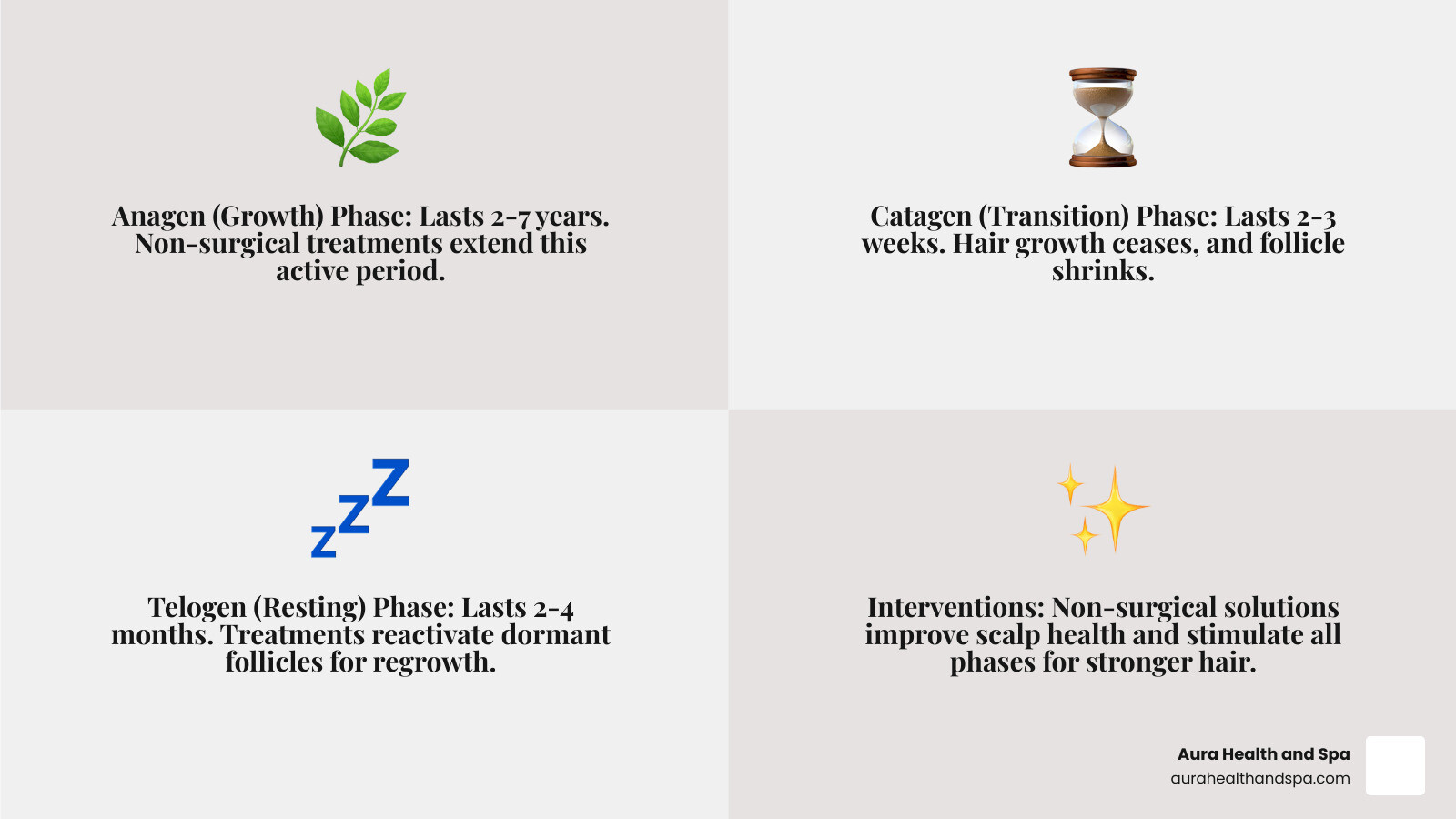
This infographic illustrates the three phases of hair growth: Anagen (active growth phase lasting 2-7 years), Catagen (transition phase lasting 2-3 weeks), and Telogen (resting phase lasting 2-4 months). Non-surgical treatments like FolixMD, PRP, and De|Rive Ultra Plus work by extending the Anagen phase, reactivating dormant follicles in Telogen, and improving the scalp environment to support healthier growth cycles.
Understanding the Root Causes of Hair Loss
Before we dive into the exciting world of non surgical hair loss solutions, it’s crucial to understand why hair loss occurs in the first place. Hair loss is incredibly common, affecting up to 80% of men and 50% of women by age 80. The causes are multifaceted, ranging from genetics and hormones to stress and underlying medical conditions. A proper diagnosis is the first and most vital step toward an effective treatment plan. At Aura Health & Spa, our licensed providers conduct thorough consultations to pinpoint the specific factors contributing to your hair loss, ensuring we recommend the most appropriate and effective therapies.
Hereditary Hair Loss (Androgenetic Alopecia)
The most common culprit behind thinning hair for both men and women is hereditary hair loss, scientifically known as androgenetic alopecia. This condition affects an estimated 50 million men and 30 million women in the United States. It’s a genetic predisposition where hair follicles become sensitive to dihydrotestosterone (DHT), a hormone derived from testosterone. Over time, DHT causes hair follicles to shrink, leading to a process called hair follicle miniaturization. This results in shorter, finer, and sparser hair until the follicles eventually stop producing hair altogether.
For men, this often manifests as a receding hairline and thinning at the crown (male pattern baldness). For women, it typically appears as a widening part and overall thinning, especially on the top of the scalp (female pattern hair loss). Our advanced non surgical hair loss solutions at Aura Health & Spa are specifically designed to counteract these effects by stimulating dormant follicles, promoting new growth, and improving the overall health of your scalp. We focus on therapies that nourish the follicles and extend the hair’s growth cycle, directly addressing the core issues of androgenetic alopecia. You can learn more about the scientific research on androgenetic alopecia.
The Impact of Age, Stress, and Medical Conditions
While genetics play a significant role, other factors can accelerate or trigger hair loss. As we age, the natural hair growth cycle can slow down, leading to thinner, less dense hair. Additionally, significant emotional or physical stress can push a large number of hair follicles into a resting phase prematurely, resulting in sudden, widespread hair shedding known as telogen effluvium. This is often temporary, but it can be alarming.
Hormonal changes are another major contributor, particularly for women. Pregnancy, childbirth (postpartum hair loss), and menopause can all disrupt the delicate balance of hormones that regulate hair growth. Medical conditions such as thyroid imbalances or autoimmune disorders like alopecia areata (where the immune system mistakenly attacks hair follicles) can also lead to hair loss. Even nutritional deficiencies, such as low iron or certain vitamins, can impact hair health.
Understanding these underlying causes is paramount. That’s why a thorough consultation with our expert team at Aura Health & Spa is so important. We dig into your medical history, lifestyle, and hair loss patterns to create a comprehensive picture, allowing us to tailor a non surgical hair loss solutions plan that truly works for you.
Advanced Regenerative Therapies for Natural Regrowth

At Aura Health & Spa, we believe in using your body’s innate ability to heal and regenerate. Our advanced biostimulatory treatments represent the cutting edge of non surgical hair loss solutions, utilizing concentrated growth factors to awaken dormant follicles and promote robust new hair growth. These therapies work synergistically with your body, offering natural-looking rejuvenation and long-term anti-aging maintenance.
Platelet-Rich Plasma (PRP) Therapy
Platelet-Rich Plasma (PRP) therapy is a cornerstone of our regenerative hair restoration approach. This innovative treatment uses a concentrated preparation of your body’s own platelets, which are rich in growth factors. Here’s how it works:
First, a small sample of your blood is drawn, similar to a routine blood test. This blood is then placed into a specialized centrifuge. This process rapidly spins the blood, separating the platelet-rich plasma from other blood components. Our licensed providers then carefully collect this concentrated PRP, which contains hundreds of specialized proteins and growth factors crucial for healing and regeneration.
Finally, this powerful PRP is injected directly into the areas of your scalp experiencing thinning or hair loss. These injections stimulate the hair follicles, increase blood supply and nutrients to the hair root, and encourage the growth phase of the hair cycle. PRP is also believed to signal dermal papillar cells to amplify, increase vascular supply, and promote collagen production around the hair follicle. We’ve seen amazing results with PRP, helping our clients achieve thicker, fuller hair and renewed confidence. You can find more info about PRP services on our website.
Microneedling with Growth Factors
Microneedling is a fantastic standalone treatment, but when combined with growth factors, its power for hair restoration is amplified. At Aura Health & Spa, we offer premium microneedling packages specifically designed for hair loss. Our licensed providers use the advanced SkinPen device to create controlled micro-injuries in the scalp. These tiny channels serve a dual purpose: they stimulate the body’s natural wound healing response, which includes collagen induction and increased blood flow, and they significantly improve the absorption of topical growth factors.
We pair our microneedling treatments with potent regenerative serums, including Platelet-Rich Plasma (PRP), Exosomes (EXOE), or PDGF+. When these powerful growth factors are delivered directly into the micro-channels created by the SkinPen, they can penetrate deeper into the scalp, reaching the hair follicles more effectively. This synergy improves the efficacy of the procedure, promoting new hair growth and increasing hair thickness. All our microneedling procedures are performed by registered and licensed providers, ensuring your safety and optimal results. Find more info about Regenerative SkinPen Microneedling + PDGF Topical on our site.

The Next Wave: Plant-Based Exosome Therapy (De|Rive Ultra Plus)
Embracing the latest advancements in regenerative science, Aura Health & Spa is proud to offer De|Rive Ultra Plus, a truly cutting-edge plant-based exosome therapy. Exosomes are tiny vesicles that play a crucial role in cell-to-cell communication, carrying growth factors and genetic information to stimulate healing and regeneration.
De|Rive Ultra Plus uses powerful plant-derived exosomes that are applied topically to the scalp. This pain-free, non-invasive solution works by nourishing hair follicles, promoting a healthy scalp environment, and encouraging natural hair growth. Unlike injectable treatments, De|Rive Ultra Plus offers a comfortable experience while still delivering potent regenerative signals directly to the scalp. We are excited to offer this innovative non surgical hair loss solution exclusively at Aura Health & Spa, providing our clients in Plymouth with access to the forefront of hair restoration technology.
Laser Hair Restoration: A Leap Beyond LLLT
When we talk about energy-based devices for hair restoration, it’s important to understand the difference between general low-level laser therapy (LLLT) and professional-grade, targeted treatments like our FolixMD fractional laser. While LLLT has its place, we offer a more powerful and direct approach to stimulate hair growth.
Introducing FolixMD Fractional Laser Treatment
At Aura Health & Spa, we use the Lumenis FoLix fractional laser for a truly advanced hair restoration experience. It’s crucial to understand that this is NOT Low-Level Laser Therapy (LLLT). While LLLT uses broad, low-intensity light to stimulate follicles, our FolixMD treatment employs sophisticated fractional laser technology.
The FolixMD laser creates microscopic channels, known as microthermal zones, in the scalp. This process delivers targeted, concentrated energy directly to the hair follicles. This precise energy activates the body’s natural healing response, stimulating dormant follicles, promoting increased blood flow, and encouraging the production of essential growth factors. This method is significantly more powerful and direct than traditional LLLT, offering a deeper and more effective stimulation for hair regrowth. It’s a remarkable non surgical hair loss solution that leverages advanced technology for visible results. You can learn more about this innovative treatment on our Hair Restoration Folix Laser page.
What to Expect: Results, Timeline, and Side Effects
Starting on a laser hair restoration journey involves a series of treatments, typically spaced a few weeks apart, to achieve optimal results. Most of our clients begin to see gradual improvement and increased hair density within three to six months of starting their FolixMD treatments. Patience is key, as hair growth is a slow, natural process.
While the FolixMD fractional laser is a non-surgical procedure, it’s normal to experience some mild and temporary side effects. These can include redness, swelling, and possibly some minor bruising in the treated areas. These effects are generally mild and typically subside within a few days, though they may last up to two weeks in some cases. Rest assured, all FolixMD procedures at Aura Health & Spa are performed by our licensed providers under the direct oversight of our Medical Director, ensuring the highest standards of safety and care. We prioritize your comfort and well-being throughout your hair restoration journey.
Foundational and Complementary Non-Surgical Hair Loss Solutions
While advanced regenerative therapies and laser treatments are powerful non surgical hair loss solutions, we also recognize the critical role of overall scalp health. A healthy scalp is the foundation for healthy hair, and a multi-faceted approach often yields the best results.
The Importance of a Healthy Scalp: HydraFacial Keravive
Think of your scalp as the soil in which your hair grows. If the soil isn’t healthy, the plants won’t thrive. Many factors can compromise scalp health, including product buildup, excess sebum, dead skin cells, and environmental pollutants. These can clog hair follicles, inhibit healthy growth, and even exacerbate hair thinning.
That’s where HydraFacial Keravive comes in. This unique treatment is like a facial for your scalp, designed to cleanse, exfoliate, and nourish. It uses patented vortex technology to gently yet effectively remove buildup and impurities from your scalp and hair follicles. Following this deep cleansing, a specialized blend of growth factors and peptides is delivered, hydrating and nourishing the scalp. This process creates an optimal environment for hair growth, leading to more voluminous and healthier-looking hair. Our licensed aestheticians at Aura Health & Spa perform HydraFacial Keravive, ensuring your scalp is revitalized and prepared to support robust hair growth.
Begin Your Hair Restoration Journey in Plymouth, MI
Taking the first step towards addressing hair loss can feel daunting, but with the right guidance and advanced non surgical hair loss solutions, you can regain not just your hair, but your confidence. At Aura Health & Spa in Plymouth, MI, we are dedicated to providing personalized care and superior results.
Why a Custom Treatment Plan is Crucial
Hair loss is rarely a one-size-fits-all problem, and therefore, the solution shouldn’t be either. The causes of hair loss are diverse, and what works for one person might not be effective for another. That’s why a custom treatment plan is absolutely crucial. Our approach begins with a thorough diagnosis of the specific factors contributing to your hair loss.
We then tailor a comprehensive plan that combines the most effective therapies to maximize your results. This personalized strategy ensures that we are addressing your unique needs and hair loss patterns, rather than applying a generic solution. All treatment plans are carefully overseen by our Medical Director and executed by our highly trained, licensed staff, guaranteeing precision, professionalism, and the visible results you deserve.
Your Expert Consultation at Aura Health & Spa
We invite you to experience the Aura Health & Spa difference right here in Plymouth, MI. Our licensed providers are experts in the latest non surgical hair loss solutions, offering a blend of scientific expertise and artistic precision. We focus on delivering visible results that help you look younger, feel more confident, and love your reflection again.
Our commitment to you extends beyond individual treatments. We believe in offering premium, comprehensive treatment packages that often pair synergistic therapies to improve outcomes and provide long-term benefits. During your consultation, we’ll educate you on all your options, answer your questions, and design a plan custom specifically for you.
Ready to start your journey to fuller, healthier hair? Schedule your hair restoration consultation with us today.
Combining Therapies for the Best Non-Surgical Hair Loss Solutions
The secret to truly remarkable hair restoration often lies in the power of combination therapy. At Aura Health & Spa, we champion a comprehensive approach, leveraging the synergistic effects of various non surgical hair loss solutions to achieve superior outcomes.
For instance, combining Microneedling with PRP or Exosomes can significantly boost the penetration and effectiveness of growth factors, targeting follicles at a deeper level. Similarly, pairing our FolixMD fractional laser treatment with the topical De|Rive Ultra Plus exosome therapy can create an incredibly potent regimen for stimulating regrowth and nourishing the scalp. This integrated strategy ensures that multiple pathways to hair regeneration are activated, leading to more robust and lasting results. We emphasize these premium, paired treatments because we’ve seen how they deliver superior outcomes and long-term benefits for our clients in Plymouth, helping them achieve their best look.
by | Jan 17, 2026 | News
Understanding Your Hair Restoration Journey
Deciding to address hair loss is a significant step, and understanding the recovery process is crucial. For many, the term “hair restoration” brings to mind traditional surgical procedures like Follicular Unit Transplantation (FUT), often called the “strip method.” While it can be effective, the FUT transplant recovery process is a major commitment involving significant downtime, discomfort, and a permanent linear scar.

A Look at the Traditional FUT Recovery Timeline:
- Day 1-2: Expect moderate discomfort, swelling, and tightness at the incision site. Strenuous activity is strictly forbidden.
- Days 3-10: Scabs form over the transplanted grafts and the sutured donor area. Stitches or staples require a follow-up visit for removal, typically around day 10-14.
- Weeks 2-4: The notorious “shedding phase” begins, where the newly transplanted hairs fall out before regrowth starts. The linear scar begins its long healing process.
- Months 3-4: New hair may begin to sprout, but it is often thin and sparse at this stage.
- Months 6-12: Hair gradually thickens and matures, with final results not fully visible for up to a year or more.
- Return to work: Most patients require 1-2 weeks off work to manage discomfort and visible signs of surgery.
Because FUT and other surgical hair transplant techniques are invasive and require this kind of extended healing, many people searching for information about FUT transplant recovery are now looking for alternatives that avoid surgery altogether.
At Aura Health & Spa in Plymouth, Michigan, we believe in providing advanced, effective solutions without the drawbacks of surgery. Our Medical Director, Dr. Reema Sethi, oversees all hair restoration procedures, which are performed by our licensed nurses and aestheticians. She has curated a suite of non-surgical hair restoration treatmentsFolixMD using the Lumenis FoLix fractional laser and De|Rive Ultra Plus with plant-based exosomesthat deliver remarkable results without scalpels, stitches, or scars. You can return to your life the very same day, with no need to hide while you heal.
Why Choose Aura’s Non-Surgical Approach Instead of FUT?
- No Linear Scar to Conceal: FUT surgery leaves a permanent linear scar on the back of the head, which can limit hairstyle choices and be a constant reminder of the procedure. Our non-surgical methods leave no scars, giving you complete freedom.
- Minimal Downtime (Hours, Not Weeks): Our clients in Plymouth, MI typically experience only mild, temporary redness and can return to their daily activities immediately after their session. Any redness or swelling usually resolves within hours to days, but in some cases side effects such as redness, swelling, or mild tenderness may last for several days or up to two weeks.
- No Stitches or Staples: Our treatments are entirely non-invasive, eliminating the need for painful stitches or staples and the follow-up appointments required for their removal.
- Return to Normal Activities Immediately: While FUT requires you to avoid exercise and strenuous activity for weeks, our treatments allow you to get back to your routine right away.
- Natural-Looking Results That Strengthen Over Time: Instead of transplanting hair, we stimulate your body’s own regenerative processes to reactivate dormant follicles and thicken existing hair for a completely natural appearance.
As a Board Certified Emergency Medicine Physician with over 15 years of clinical experience, I, Dr. Reema Sethi, prioritize treatments that are not only effective but also safe and minimally disruptive. That is why our focus at Aura Health & Spa in Plymouth, Michigan is on advanced non-surgical alternatives for those researching FUT transplant recovery. We offer premium, comprehensive treatment packages rather than basic, standalone services, thoughtfully pairing technologies like FolixMD and De|Rive Ultra Plus with professional-grade hair and scalp care to enhance results and long-term value. At Aura Health & Spa, we combine cutting-edge technology with comprehensive, personalized care to deliver superior outcomes that respect your time and lifestyle.
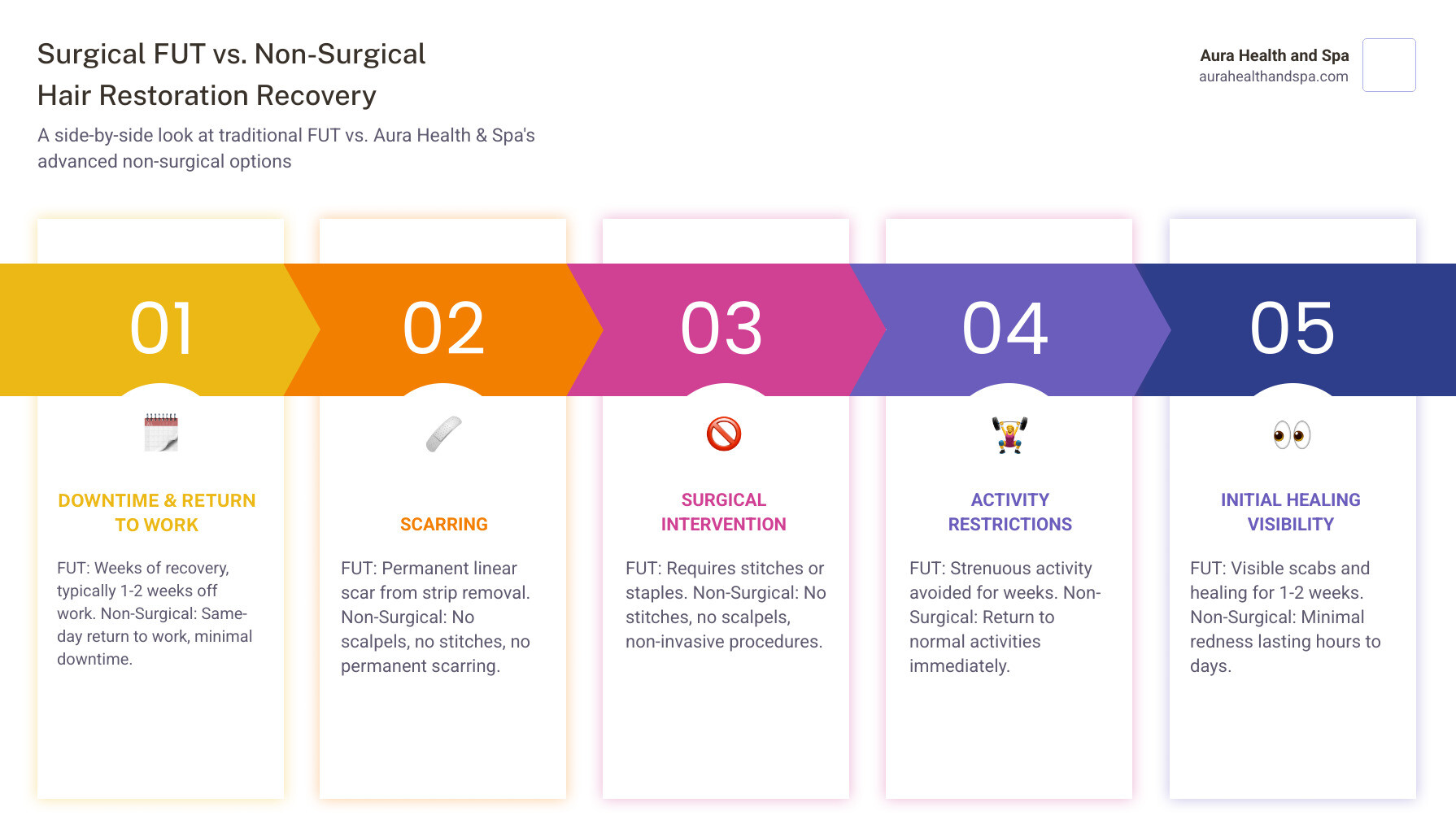
Understanding Modern Hair Restoration at Aura Health & Spa
Hair thinning and loss can be a distressing experience, often impacting self-esteem and confidence. Whether it’s due to aging, genetics, or environmental factors, noticing fewer strands or a receding hairline can feel like a personal battle. At Aura Health & Spa in Plymouth, Michigan, we understand these concerns deeply. Our brand vision is to help people look younger, feel more confident, and love their reflection again through advanced, non-surgical aesthetic treatments. We believe confidence starts with results you can see, and that begins with early, effective intervention. The sooner you address hair loss, the more effectively we can stimulate existing follicles and encourage new, healthy growth.
We specialize in premium, comprehensive treatment packages designed to restore, improve, and maintain your best look. Our expert consultation process in Plymouth, MI, led by our Medical Director and performed by our licensed nurses and aestheticians, ensures that every client receives a customized treatment plan tailored to their unique needs and goals. We are committed to delivering safe, effective, and personalized aesthetic treatments using the most trusted medical technologies available.
Who is a Candidate for Non-Surgical Hair Restoration?
Our advanced non-surgical hair restoration solutions are ideal for a wide range of individuals seeking effective hair regrowth without the invasiveness, downtime, and scarring of surgery. You might be an excellent candidate if you are:
- Experiencing early to moderate hair loss: Our treatments are most effective for men and women with thinning hair, a receding hairline, or widening part lines where hair follicles are still present, even if they are dormant or miniaturized.
- Seeking minimal downtime and a quick recovery: If your busy lifestyle doesn’t allow for the 1-2 weeks of recovery required for surgical options like FUT, our non-surgical treatments allow you to return to your daily activities almost immediately.
- Preferring a non-surgical, no-scar solution: If the thought of scalpels, stitches, or a permanent linear scar is a significant deterrent, our methods offer a comfortable, discreet, and effective alternative.
- Looking for natural-looking rejuvenation: Our goal is to improve your natural hair growth cycle, resulting in subtle yet significant improvement that blends seamlessly with your existing hair. This is not about creating an artificial hairline but about restoring your own hair’s density and vitality.
- Wanting to improve the results of other treatments: Our therapies can be used to maintain the results of previous non-surgical procedures or to proactively strengthen hair and help reduce future loss.
Our target market includes men and women aged 30 60 in and around Plymouth, Michigan who desire natural-looking rejuvenation and long-term anti-aging maintenance. A personalized consultation with our skilled team is the first step. During this consultation, we’ll assess your hair loss, discuss your medical history, and determine the most appropriate course of action to achieve your desired results. We focus on personalized care and premium, package-based plans that often pair in-office treatments with at-home professional skincare and haircare, providing education and results that earn loyalty, rather than upselling.
How FolixMD Laser Treatment Works
At the heart of our hair restoration program in Plymouth, MI is the FolixMD treatment, which uses the powerful Lumenis FoLix fractional laser. This is not a low-level laser therapy (LLLT) cap or comb. While LLLT devices use diffused, low-energy light, the FolixMD system delivers targeted, concentrated columns of laser energy deep into the scalp. This process creates microscopic thermal (microthermal) zones that trigger the bodys natural healing response. This controlled thermal impact stimulates blood flow, increases the production of essential growth factors, and awakens dormant hair follicles, encouraging them to re-enter the growth phase. It is a more powerful, direct, and clinically robust approach to stimulating hair regrowth from within than traditional LLLT.
The De|Rive Ultra Plus Advantage
To amplify the regenerative effects of FolixMD, we pair it with De|Rive Ultra Plus. This cutting-edge topical treatment is formulated with plant-based exosomespowerful nanoparticles that act as messengers to your cells. Derived from botanicals, these exosomes are rich in growth factors, peptides, and nutrients that are essential for scalp health and hair vitality. When applied to the scalp after a FolixMD treatment, De|Rive Ultra Plus provides:
- Intense Hydration: Soothes the scalp and creates an optimal environment for healing and growth.
- Potent Nourishment: Delivers a concentrated blend of biomimetic nutrients directly to the hair follicles.
- Reduced Inflammation: Helps calm the scalp and supports the regenerative process initiated by the laser.
This combination is a cornerstone of our philosophy at Aura Health & Spa in Plymouth, Michigan: pairing advanced technologies with supportive treatments in comprehensive packages to achieve superior, long-lasting outcomes.
Advantages and Long-Term Considerations of Non-Surgical Hair Restoration
When considering your options, the benefits of our non-surgical approach become clear, especially when compared to the lengthy FUT transplant recovery process.
- No Scalpels or Stitches: Our treatments are entirely surface-level, eliminating incisions and the discomfort associated with surgical wounds. Potential side effects such as redness, swelling, or mild tenderness are usually temporary and typically improve over several days, but in some cases can last up to two weeks.
- No Linear Scarring: One of the biggest drawbacks of FUT is the permanent scar at the donor site, which can be a source of self-consciousness. Our non-surgical methods leave no visible trace, preserving your styling freedom.
- Minimal to No Downtime: While FUT requires weeks of careful recovery, our clients walk out of our Plymouth spa and can return to work the same day. The primary side effect is mild redness, similar to a sunburn, which typically subsides within hours to a few days.
- Cost-Effective Compared to Surgery: While we focus on value and results over price, non-surgical packages are often a more accessible investment than the high cost of a surgical transplant, particularly when designed as comprehensive plans that support long-term scalp and hair health.
- Suitable for All Hair Lengths: Because there is no need to shave any part of your head, our treatments are discreet and compatible with any hair length or style, for both men and women.
- Superior Outcomes with Paired Treatments: We believe in a holistic strategy. By combining the mechanical stimulation of FolixMD with the biological nourishment of De|Rive Ultra Plus and professional at-home care, we create a synergistic effect that improves the efficacy and longevity of your results far beyond what a single treatment could achieve.
The Non-Surgical Hair Restoration Recovery Timeline
Understanding the recovery timeline for any hair restoration treatment is crucial for setting realistic expectations. While FUT transplant recovery involves distinct phases of surgical healing over many months, our non-surgical approach at Aura Health & Spa in Plymouth, Michigan offers a significantly gentler and faster path to visible results. Heres a detailed breakdown of what you can generally expect with our FolixMD and De|Rive Ultra Plus treatments.
Immediate Post-Treatment: The First 48 Hours
Immediately following your session, your scalp will likely appear pink or red, similar to a mild sunburn. You may also experience a sensation of warmth or slight swelling in the treated area. These effects are a normal response to the Lumenis FoLix fractional laser and are a sign that the body’s healing and regenerative processes have begun. Most of this initial redness and swelling subsides within a few hours, but for some individuals, it may persist for a day or two. In a small number of cases, side effects such as redness, swelling, or mild tenderness can last for several days or up to two weeks. You can return to work and most daily activities right away, with no need for bandages or special coverings.
The First Two Weeks: Critical Healing and Preparation
During the first week, your scalp will continue to normalize. Any residual redness will fade, and you can begin gently washing your hair as instructed by your provider, typically after 24 hours. It’s important to treat your scalp with care during this period. Our licensed nurses and aestheticians in Plymouth, MI will provide you with the take-home De|Rive serum to apply as directed, which will keep the scalp hydrated, nourished, and optimized for follicle stimulation. Unlike surgical recovery, there are no stitches to care for or staples to remove. You can resume your normal exercise routine as you feel comfortable, usually within a day or two.
Essential Post-Treatment Care Tips:
- Avoid direct, prolonged sun exposure on the scalp for the first week.
- Use the provided De|Rive take-home serum as instructed to support results.
- Wash your hair gently with a mild, sulfate-free shampoo.
- Avoid scratching or picking at the treated area.
- Stay hydrated and maintain a healthy diet to support your body’s healing process.
Months 1-4: The Emergence of New Growth
This is the phase where patience is key. Some clients may experience a temporary increase in shedding around the 2-4 week mark. This is a normal and positive sign known as telogen effluvium, where the stimulated follicles push out old, weak hairs to make way for new, stronger ones. By the third or fourth month, you should begin to see the first signs of new growth. These initial hairs may be fine and soft, but their appearance marks the beginning of visible improvement. You will also likely notice that your existing hair feels stronger and healthier as the treatments improve overall scalp circulation and health.
Months 4-12 and Beyond: Maturing Results and Optimal Outcomes
From month four onwards, the results become increasingly apparent. The new hairs will continue to grow, thicken, and mature, blending in with your existing hair to create a fuller, denser appearance. The full life cycle of a hair follicle is a complex process, and it takes time for each follicle to progress through its resting, shedding, and growth phases. Scientific research on hair follicle life cycles highlights that this is a gradual, multi-month journey. Most of our clients in Plymouth, Michigan see the most significant and satisfying results between 6 and 12 months after completing their initial series of treatments. To maintain and improve these outcomes, we will work with you to develop a long-term maintenance plan, which may include periodic touch-up treatments and professional haircare as part of a comprehensive package, ensuring your hair remains healthy and vibrant for years to come.
by | Jan 16, 2026 | News
Why Understanding Botox Face Treatment Matters
Botox face treatment is a minimally invasive cosmetic procedure that uses purified botulinum toxin to temporarily relax facial muscles, smoothing wrinkles and preventing new lines from forming. Here’s what you need to know:
- How it works: Blocks nerve signals to muscles, preventing contractions that cause wrinkles
- Common treatment areas: Forehead lines, frown lines between eyebrows, crow’s feet around eyes
- Results timeline: Effects appear in 3-7 days, peak at 2 weeks, last 3-4 months
- Treatment time: Quick 10-15 minute procedure with no downtime
- Ideal for: Adults seeking to reduce dynamic wrinkles or prevent deeper lines from forming
If you’ve noticed fine lines on your forehead, between your brows, or around your eyes, you’re not alone. These signs of aging can appear sooner than we’d like and affect our confidence.
The good news? Modern neurotoxin treatments offer a proven, science-backed solution that delivers natural-looking results without surgery or extended recovery time.
Botulinum toxin has been the most popular aesthetic procedure since 1999. Clinical studies confirm its effectiveness: 80% of adults see significant improvement in forehead lines, and 89% notice at least moderate improvement in frown lines 30 days after treatment.
But beyond the statistics, what matters most is finding a qualified provider who understands facial anatomy, listens to your goals, and delivers results that look like you—just refreshed.
I’m Dr. Reema Sethi, a Board Certified Emergency Medicine Physician with over 15 years of clinical experience. After extensive training in medical aesthetics, I apply my expertise to deliver safe, effective botox face treatment at Aura Health & Spa in Plymouth, Michigan. My focus is creating natural, subtle results customized to each patient’s unique facial structure and goals.
This guide covers everything you need to know, from how neurotoxins work to what to expect during and after your appointment. You’ll find clear answers to help you make an informed decision.
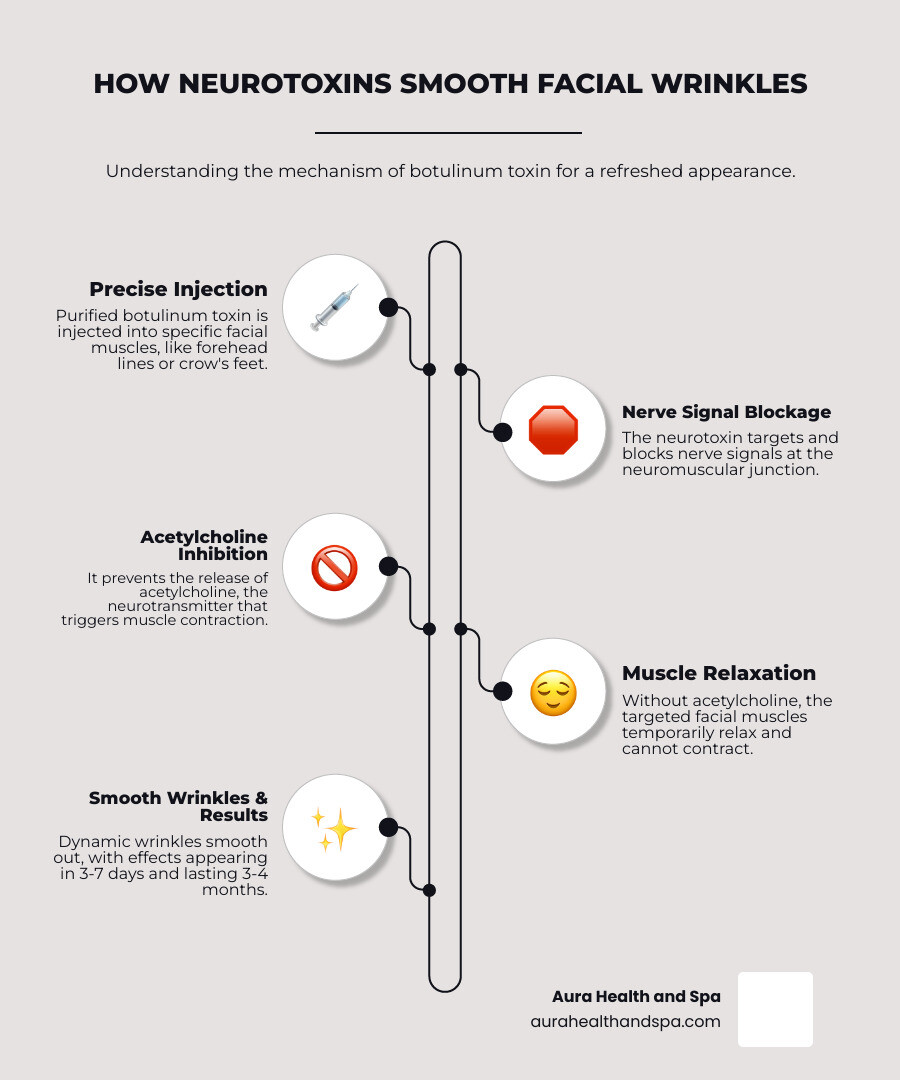
What Are Neurotoxins and How Do They Smooth Facial Wrinkles?
The term “Botox” is often used generically, but it’s actually a brand name for a type of botulinum toxin. At Aura Health & Spa in Plymouth, Michigan, we offer other leading neurotoxin brands like Dysport, Jeuveau, and Daxxify for cosmetic botox face treatment. These advanced treatments use a purified protein derived from Clostridium botulinum bacteria. This potent protein works wonders by temporarily relaxing specific facial muscles.
How does it work? Facial expressions cause muscles to contract, leading to dynamic wrinkles over time. When precisely injected, botulinum toxin targets the nerve signals that cause these contractions. It blocks the release of a neurotransmitter called acetylcholine, interrupting the communication between the nerve and the muscle.
When this communication is interrupted, the treated muscles relax. This relaxation smooths out the overlying skin, reducing the appearance of existing dynamic wrinkles and preventing new ones from deepening. The effects typically begin to appear within 2 to 7 days, with maximal effect seen in about one to two weeks, and results generally last for several months.
This scientific process is why neurotoxins are the world’s most popular aesthetic procedure. For more in-depth information, you can explore scientific research on Botulinum Toxin. To learn how our specific treatments can benefit you, visit our dedicated page for more info about Botox.
The Ultimate Guide to Your Botox Face Treatment
What Types of Facial Wrinkles Can Be Treated?
Neurotoxins are incredibly versatile, primarily targeting dynamic wrinkles—those lines that appear with facial movement. These differ from static wrinkles, which are noticeable even when your face is at rest, and fine lines caused by collagen thinning due to aging and sun damage. While neurotoxins excel at treating dynamic wrinkles, they can also play a preventative role, delaying or even preventing dynamic wrinkles from becoming static over time.
At Aura Health & Spa, our licensed providers in Plymouth, MI, expertly use neurotoxins to address a variety of common concerns:
- Glabellar Lines (“11s”): These are the vertical lines that form between your eyebrows when you frown or concentrate. Smoothing these can make you look less angry or stressed.
- Forehead Lines: The horizontal lines that appear across your forehead when you raise your eyebrows.
- Crow’s Feet: The fine lines that radiate from the corners of your eyes, often appearing when you smile or squint.
- Bunny Lines: Wrinkles that appear on the sides of the nose when you scrunch it up.
- Lip Flip: A subtle technique that relaxes the muscle around the upper lip, allowing it to gently roll upward, creating the appearance of a fuller pout without adding volume.
- Chin Dimpling: Also known as “orange peel” chin, this can be smoothed by relaxing the chin muscle.
- Platysma Bands (Neck Bands): These are vertical cords that become prominent in the neck, especially when muscles tense, and can be softened for a more youthful neck contour.
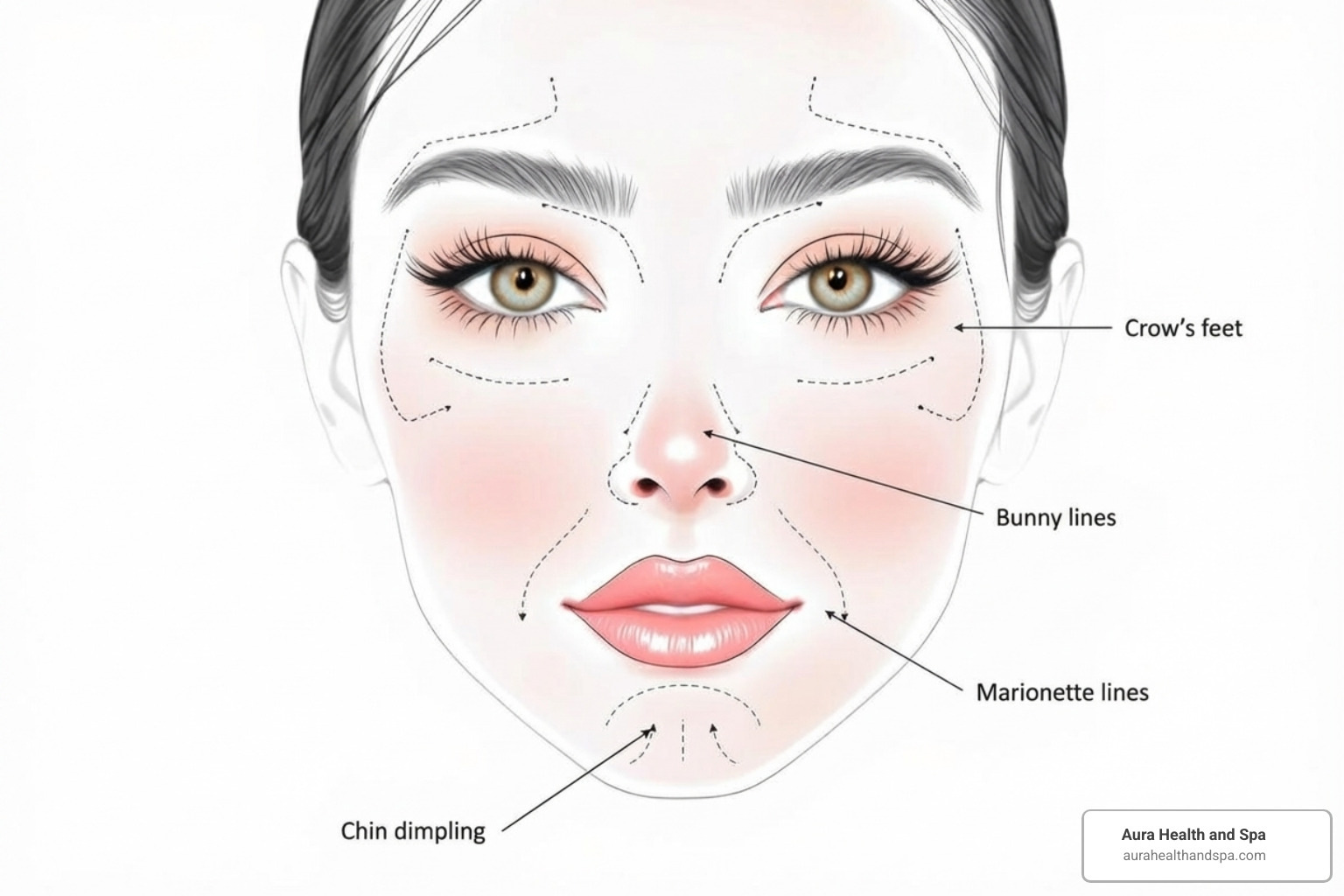
These treatments help you achieve a smoother, more refreshed appearance. For a comprehensive overview of how botulinum toxin addresses facial wrinkles, you can refer to this guide on Botulinum Toxin for Facial Wrinkles.
Who Is an Ideal Candidate for a Botox Face Treatment?
Deciding on a botox face treatment is a personal choice. At Aura Health & Spa, our priority is determining if you’re a good candidate. We typically treat men and women aged 30–60 seeking natural-looking rejuvenation and long-term anti-aging maintenance.
Generally, an ideal candidate is:
- An adult over 18: Neurotoxins are FDA-approved for cosmetic use in adults.
- In good general health: You should be free from any serious underlying medical conditions that could interfere with the treatment or healing process.
- Has realistic expectations: While neurotoxins deliver impressive results, they offer improvement, not perfection. Our goal is always a refreshed, natural look, not an artificial one.
- Seeking to reduce dynamic wrinkles: If you have lines that appear or deepen with facial expressions, you’re likely a good candidate.
- Looking for preventative anti-aging: Many individuals start treatments earlier to prevent dynamic lines from becoming deeper, static wrinkles over time.
However, there are certain contraindications that would make neurotoxin treatment unsuitable:
- Pregnancy or Breastfeeding: For safety, as it’s unknown if the toxin enters breast milk, we recommend waiting until after childbirth and breastfeeding to undergo treatment.
- Neuromuscular Disorders: Conditions such as ALS (amyotrophic lateral sclerosis), myasthenia gravis, or Lambert-Eaton syndrome can increase the risk of serious side effects.
- Allergies: If you have a known allergy to any of the ingredients in Dysport, Jeuveau, Daxxify, or other botulinum toxin products, you should not receive treatment.
- Skin Infections: Any active skin infection at the planned injection site would need to be cleared before treatment to prevent complications.
During your personalized consultation at our Plymouth, MI spa, our licensed providers will thoroughly review your medical history and discuss your aesthetic goals to ensure that neurotoxin treatment is safe and appropriate for you.
What Are the Benefits of a Botox Face Treatment?
A botox face treatment with Dysport, Jeuveau, or Daxxify offers benefits beyond just smoothing wrinkles. At Aura Health & Spa, we deliver results that help our clients look younger, feel more confident, and love their reflection again.
Here are some of the key advantages:
- Significant Wrinkle Reduction: Neurotoxins are incredibly effective at relaxing the muscles that cause dynamic wrinkles, leading to visibly smoother skin. Clinical studies show significant wrinkle reduction. For forehead lines, 80% of adults had significant improvement at day 30. For crow’s feet, studies show a majority of patients have mild or no lines after treatment.
- Youthful and Refreshed Appearance: By softening lines like frown lines, forehead creases, and crow’s feet, these treatments can make you look less tired, stressed, or angry, restoring a more serene and youthful countenance.
- Preventative Anti-Aging: Many of our clients start neurotoxin treatments as a preventative measure. By limiting repeated muscle contractions early on, we can help delay the formation and deepening of permanent wrinkles, preserving smoother, younger-looking skin over time.
- Minimally Invasive with No Downtime: Unlike surgical procedures, neurotoxin injections are quick, involve minimal discomfort, and allow you to return to your daily activities immediately. This makes them a convenient option for those with busy schedules.
- Natural-Looking Results: Our expert team at Aura Health & Spa prides itself on precision and artistry. We aim to soften your features and improve your natural beauty, ensuring you look refreshed and revitalized, never “frozen.”
- Boosted Confidence: “Confidence starts with results you can see.” By helping you achieve a smoother, more vibrant appearance, these treatments can significantly improve your self-esteem and how you present yourself to the world.
These benefits make botox face treatment a cornerstone of non-surgical aesthetic solutions, offering a safe and effective way to restore, improve, and maintain your best look.
The Treatment Journey: Before, During, and After
Starting on a botox face treatment journey at Aura Health & Spa in Plymouth, MI, is a straightforward and comfortable process designed with your safety and satisfaction in mind. Here’s what you can expect every step of the way:
Preparing for Your Appointment
A successful treatment starts with a thorough consultation. You’ll meet with one of our licensed providers to discuss your aesthetic goals, review your medical history, and assess your facial anatomy. We then create a treatment plan customized for you.
To ensure the best possible results and minimize potential side effects like bruising, we recommend the following preparation steps:
- Discuss Medications: Inform us about all medications, vitamins, and herbal supplements you are taking. We may advise you to stop blood-thinning medications (like aspirin, ibuprofen, or certain supplements) several days before your appointment, but only under the guidance of your prescribing physician.
- Avoid Alcohol: We recommend avoiding alcohol consumption for at least 24 hours before your treatment. This helps reduce the likelihood of redness and bruising at the injection sites.
- Clean Skin: Please arrive at your appointment with clean skin, free of makeup or topical products in the treatment areas.

What to Expect During the Injection Process
The actual injection process for your botox face treatment is remarkably quick and efficient, often taking only 10-15 minutes. Our Medical Director oversees all procedures, ensuring the highest standards of safety and care.
Here’s a step-by-step overview:
- Skin Cleansing: Your skin in the treatment area will be thoroughly cleansed to prevent infection.
- Marking Injection Sites: Our licensed provider will carefully mark the precise injection points on your face. This strategic mapping ensures accurate placement and optimal, natural-looking results.
- Minimal Discomfort: Neurotoxin injections are performed using very fine needles, which means most patients experience only minimal discomfort—often described as a slight pinch or sting. If you’re concerned about pain, we can apply a topical numbing cream or use ice packs to further improve your comfort during the procedure. Many patients find the process quite tolerable without any numbing.
Our team’s precision and professionalism ensure a comfortable experience and results you’ll love.
Aftercare and Achieving Optimal Results
Proper aftercare is crucial for the best results. While there’s no downtime, following these post-treatment instructions is key:
- No Rubbing or Massaging: For several hours after your injections, it’s important to avoid rubbing or massaging the treated areas. This prevents the neurotoxin from migrating to unintended muscles.
- Stay Upright: We recommend remaining upright and avoiding lying down for at least 2 to 4 hours post-treatment. This also helps ensure the product stays precisely where it was injected.
- Avoid Strenuous Exercise: Refrain from intense physical activity or heavy exercise for at least 24 to 48 hours. Increased blood flow can potentially spread the neurotoxin or increase bruising.
- Monitor for Side Effects: Mild bruising, swelling, or redness at the injection sites are common and typically subside within a few days or up to two weeks.
Results Timeline and Longevity:
- Initial Effects: You’ll typically begin to notice the initial effects of your neurotoxin treatment within 3 to 5 days.
- Full Effect: The full smoothing and muscle-relaxing effect is usually visible after about two weeks.
- Longevity: For most individuals, the results of Dysport, Jeuveau, or Daxxify last an average of 3 to 4 months. As the neurotoxin gradually wears off, muscle activity will slowly return, and wrinkles may begin to reappear. Consistent, scheduled maintenance treatments are recommended to sustain your refreshed look year-round.
We encourage you to contact us with any questions or to schedule a follow-up appointment after your botox face treatment to ensure your results are everything you hoped for. Our team is here to support you every step of the way.
Safety, Comparisons, and Important Considerations
At Aura Health & Spa, your safety and education are our top priorities for any botox face treatment. Understanding the potential risks, how neurotoxins differ from other treatments, and the various types available will empower you to make informed decisions.
Potential Risks and Side Effects
Neurotoxin injections are generally safe when performed by experienced, licensed providers. However, it’s important to be aware of potential risks. At Aura Health & Spa, our Medical Director oversees all procedures, which are performed by licensed providers to ensure the highest standards of care.
Common Side Effects (typically mild and temporary):
- Bruising, Swelling, Redness: These are the most common side effects at the injection sites. Mild bruising occurs in 11% to 25% of patients and typically resolves within a few days or up to two weeks. Applying ice packs can help minimize these.
- Headaches: Some individuals may experience a mild headache after treatment, which usually subsides within 24-48 hours.
Rare Side Effects (more serious but uncommon):
- Eyelid Ptosis (Drooping Eyelid): This occurs in a small percentage of patients (around 0.59% for brow or eyelid ptosis) if the neurotoxin migrates to unintended muscles. It is usually temporary and resolves as the neurotoxin wears off. Eyelid ptosis was reported in 3% of clinical trials for glabellar line treatment.
- Brow Ptosis (Drooping Brow): Similar to eyelid ptosis, this can happen if the forehead muscles are over-relaxed. Headache (9%) and brow ptosis (2%) were the most common adverse reactions in clinical trials for forehead lines.
- Asymmetry: Uneven results can occur if the neurotoxin is not evenly distributed or if one side of the face responds differently. A skilled injector minimizes this risk.
- Spread of Toxin Effects: In extremely rare cases, the effects of the neurotoxin can spread beyond the injection site, leading to symptoms like muscle weakness, double vision, blurred vision, difficulty speaking or swallowing, or breathing problems. While such serious side effects are rare with cosmetic doses, it’s crucial to seek immediate medical attention if they occur.
- Allergic Reactions: Though rare, serious allergic reactions (itching, rash, wheezing, dizziness) can occur.
A skilled injector is crucial. Our team’s expertise in facial anatomy and precise injection techniques significantly reduces the risk of adverse events. We are committed to your well-being and are here to address any concerns. Learn more about our qualifications on our Meet the Team page. For comprehensive safety information, you can refer to the BOTOX® Cosmetic Safety Information.
Neurotoxins vs. Dermal Fillers: What’s the Difference?
It’s common to hear about both neurotoxins (like Dysport, Jeuveau, and Daxxify) and dermal fillers for facial rejuvenation. While both reduce wrinkles, they work differently. Understanding this distinction is key to choosing the right approach for your goals.
| Feature |
Neurotoxins (e.g., Dysport, Jeuveau, Daxxify) |
Dermal Fillers (e.g., Juvéderm, Restylane) |
| Mechanism |
Temporarily block nerve signals to muscles, relaxing them. |
Add volume to specific areas, plumping skin and filling in lines. |
| Primary Use |
Treat dynamic wrinkles caused by muscle movement. |
Treat static wrinkles, add volume, contour features. |
| Treatment Areas |
Forehead lines, frown lines (“11s”), crow’s feet, bunny lines, lip flip. |
Cheeks, lips, nasolabial folds, marionette lines, temples, jawline. |
| Composition |
Purified botulinum toxin type A. |
Gels made from hyaluronic acid, calcium hydroxylapatite, or other materials. |
| Longevity |
Typically 3-4 months. |
Typically 6 months to 2 years, depending on the product and area. |
Neurotoxins are muscle relaxers, ideal for smoothing lines that appear with expression. Dermal fillers, on the other hand, are volume improvers. They use materials like hyaluronic acid to add volume, plump up static wrinkles, and restore lost facial contour. For instance, while neurotoxins can perform a subtle lip flip, dermal fillers would be used to add more significant volume to the lips.
Often, a comprehensive rejuvenation plan involves a combination of both treatments. Neurotoxins address the dynamic lines, while fillers restore volume and structure. Our licensed providers at Aura Health & Spa can help you determine the best approach for your individual needs. For more detailed information on dermal fillers, please visit our Dermal Fillers page.
Are There Different Types of Botulinum Toxins?
Yes, absolutely! While “Botox” is a widely recognized brand name (BOTOX® Cosmetic), it’s important to know that it’s just one type of botulinum toxin type A product. At Aura Health & Spa in Plymouth, MI, we proudly offer other FDA-approved neurotoxins such as Dysport®, Jeuveau®, and Daxxify®. For educational purposes, you might also hear of other brands like Xeomin® and Letybo.
All these brands contain botulinum toxin type A, but subtle differences in their formulation can influence factors such as:
- Onset Time: Some products may show results slightly faster than others. For example, Dysport may offer faster outcomes compared to some other neurotoxins.
- Diffusion/Spread: The way the product spreads once injected can vary, which our expert providers consider when targeting specific muscles for optimal results.
- Duration of Effect: While many neurotoxins last 3-4 months, newer formulations like Daxxify are being studied for potentially longer-lasting results.
The potency units of these different products are not interchangeable. For instance, the units used for Dysport cannot be directly compared to those for Jeuveau or Daxxify. This is why provider expertise is so critical. Our licensed providers are highly trained in the specific characteristics of each neurotoxin we offer, allowing us to select the best product and customize the dosage for your individual needs and desired outcomes.
To learn more about the differences, you can explore resources like this comparison of Dysport and Botox. We use only trusted, FDA-approved products, and our team is continuously trained on the latest advancements to ensure you receive the safest, most effective botox face treatment.
Frequently Asked Questions about Botox Face Treatments
We understand you likely have many questions when considering a botox face treatment. Here, we address some of the most common inquiries our clients have.
How long do the results of a face treatment last?
The results of a neurotoxin botox face treatment typically last an average of 3 to 4 months. However, this duration can vary significantly from person to person. Several factors influence how long your results will last:
- Individual Metabolism: Everyone metabolizes substances at different rates. Some individuals may break down the neurotoxin faster than others.
- Muscle Strength and Activity: Stronger facial muscles or those that are used more frequently may require more frequent treatments.
- Treatment Area: Different areas of the face may hold the effects for slightly longer or shorter periods.
- Product Used: While most neurotoxins offer similar durations, newer options like Daxxify are being explored for potentially longer-lasting effects.
- Consistent Treatment: Regular, consistent treatments can sometimes lead to longer-lasting results over time, as the muscles become accustomed to being relaxed.
The effects gradually wear off, and muscle activity will slowly return. To maintain your smooth, refreshed appearance, we recommend scheduling follow-up treatments before the full effects have completely dissipated.
Will I look “frozen” or unnatural after treatment?
This is one of the most common concerns we hear, and we’re here to reassure you: absolutely not, not when administered by a skilled and artistic provider! At Aura Health & Spa, our brand vision is to help people look younger, feel more confident, and love their reflection again through advanced, non-surgical aesthetic treatments. Our approach to botox face treatment is rooted in precision and artistry, ensuring natural-looking results.
Our licensed providers are experts in facial anatomy and employ customized dosing strategies. We aim to soften your wrinkles and relax specific muscles just enough to diminish lines, while still allowing for natural facial expressions. The goal is always a refreshed, well-rested appearance—you, just subtly improved. We believe in preserving your unique facial characteristics and ensuring you look like the best version of yourself, not a “frozen” or artificial version. Through careful consultation, we understand your aesthetic goals and tailor the treatment to achieve a balanced and harmonious outcome that ensures your confidence starts with results you can see.
Does insurance cover cosmetic Botox injections?
Generally, insurance does not cover botox face treatment when it’s performed for cosmetic purposes. Aesthetic treatments like wrinkle reduction are considered elective procedures, meaning they are chosen by the patient for cosmetic improvement rather than being medically necessary.
Most insurance policies are designed to cover treatments for medical conditions or illnesses. While botulinum toxin does have several FDA-approved medical uses (which we do not offer at Aura Health & Spa), its use for facial wrinkles falls under the cosmetic category. Therefore, clients typically pay for these treatments out-of-pocket.
At Aura Health & Spa, we believe in transparency and clear communication regarding treatment costs. While we do not discuss specific pricing in this guide, we encourage you to explore our Specials & Events page for any current promotions or packages that might be available. We’re committed to providing exceptional value and results-driven treatments to our community in Plymouth, MI.
Achieve a Smoother, More Confident You
As we’ve explored, botox face treatment with neurotoxins like Dysport, Jeuveau, and Daxxify offers a safe, effective, and minimally invasive solution for reducing the appearance of dynamic facial wrinkles and preventing new lines from forming. From smoothing forehead lines and crow’s feet to subtly enhancing your lips with a lip flip, these treatments deliver a refreshed, natural-looking rejuvenation that can significantly boost your confidence.
The journey to a smoother, more confident you begins with choosing a qualified and experienced provider. At Aura Health & Spa in Plymouth, Michigan, we stand by our core principles: Results First, Transparency, Expertise, and Trust. Our Medical Director oversees all procedures, and our expert team of licensed providers specializes in creating customized treatment plans using neurotoxins to achieve beautiful, natural-looking results custom precisely to your unique facial anatomy and aesthetic goals. We are dedicated to helping you restore, improve, and maintain your best look, ensuring that your confidence starts with results you can see.
Ready to find how a personalized botox face treatment can revitalize your appearance? We invite you to book your personalized Botox consultation at Aura Health & Spa today!