Finding Hair Restoration in Plymouth — and Why the Best Option Might Surprise You
If you're searching for effective hair restoration in Plymouth, you're not alone. Around 50 million men and 30 million women in the United States experience pattern baldness or thinning hair — and by the time most people notice the problem, they've already lost roughly half their hair.
Here's a quick overview of your main options in the Plymouth and greater Metro Detroit area:
| Option | Type | Location | Best For |
|---|---|---|---|
| Traditional Surgical Approaches | Surgical | Metro Detroit area | Invasive graft-based procedures |
| Aura Health & Spa | Non-surgical | Plymouth, MI | Active follicle restoration, zero downtime |
But here's what most people don't realize when they start searching: surgery isn't the only path to real, lasting results. Modern non-surgical treatments — including fractional laser therapy and advanced growth factor protocols — can stimulate dormant follicles, slow progressive loss, and restore visible density without a scalpel, a recovery week, or the risks that come with surgical procedures.
This guide gives you the full picture: what traditional surgical procedures entail, how costs compare, and — critically — why many patients in Plymouth and greater Metro Detroit are choosing advanced non-surgical alternatives first.
I'm Dr. Reema Sethi, a board-certified emergency medicine physician and the Medical Director at Aura Health & Spa in Plymouth, Michigan, where I help patients find safe, evidence-based solutions for hair thinning and loss — including the latest non-surgical alternatives to surgical hair transplants. My background in emergency medicine gives me a precise, clinical approach to aesthetic care, and I'm here to help you make a confident, well-informed decision.
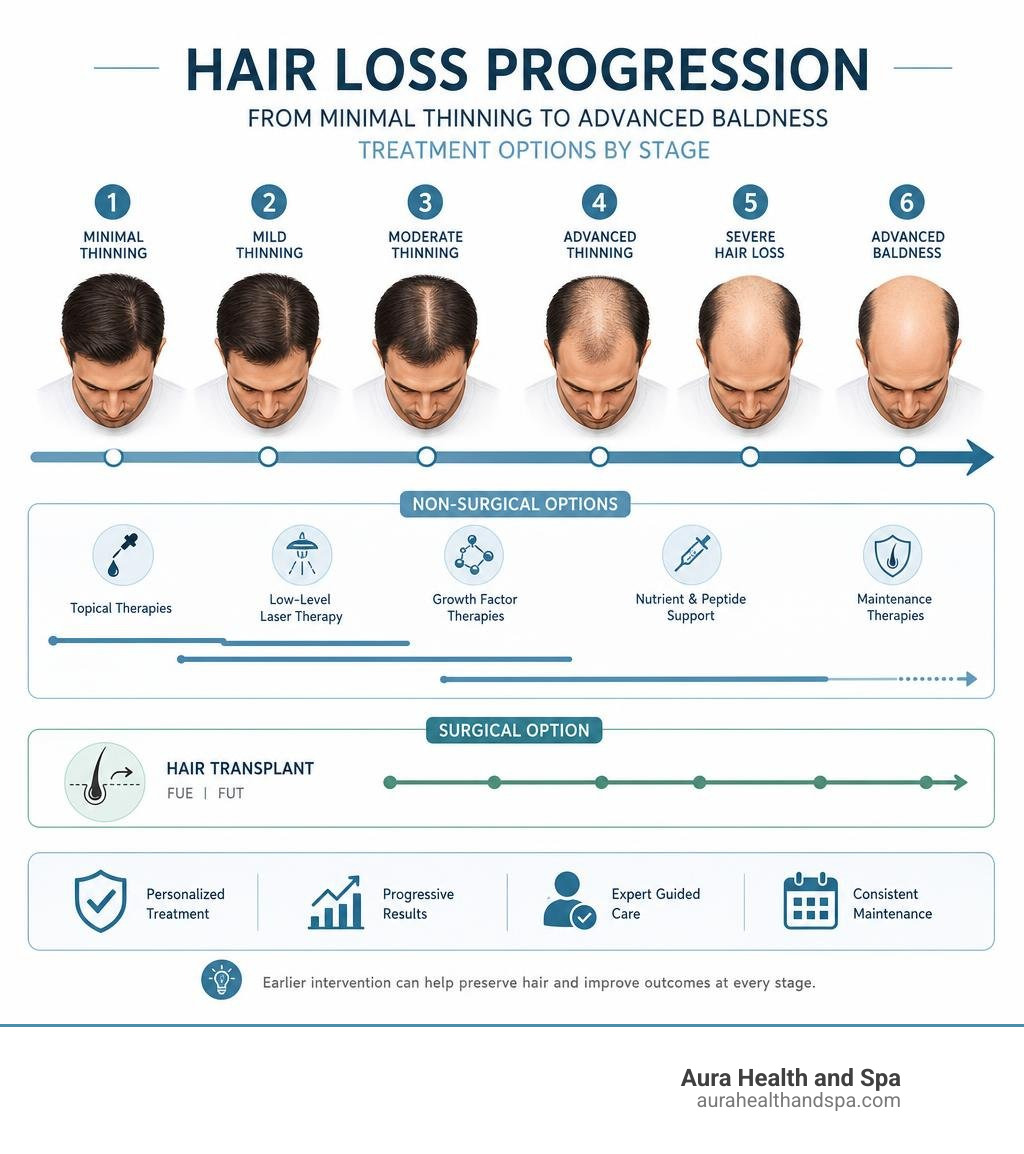
Handy hair restoration terms:
Understanding Your Options: Why Skip the Surgical Hair Transplant
When faced with a receding hairline or thinning crown, the immediate gut reaction for many is to look up a surgical hair transplant. It makes sense—historically, moving hair from one spot to another was the only way to get a full head of hair back. But before you book a surgical consultation, it is vital to understand what surgery actually entails.
Surgical hair restoration primarily relies on two methods: Follicular Unit Extraction (FUE) and Follicular Unit Transplantation (FUT). While FUE is highly popular because it avoids a massive linear scar, it is still a major, invasive surgical procedure. It involves a doctor—or sometimes automated machines—punching out thousands of individual hair follicles from the back of your head (the donor zone) and manually placing them into tiny slits made in the balding areas.
Here is the catch: you only have a limited lifetime supply of harvestable donor hair. If you jump straight into surgery too early, or without addressing the root cause of your progressive hair loss, you may find yourself needing a second or third surgery down the road to fill in new bald spots as they appear.
Furthermore, surgical options require you to undergo local anesthesia, endure hours of tiny scalp incisions, and navigate a recovery process that involves scabbing, swelling, and sleeping at a precise angle to avoid dislodging your new, fragile grafts.
To understand the mechanics of these surgical options better, you can explore the differences in the Unlock Your Locks: The FUE Hair Transplant Advantage and take a closer look at donor harvesting in The FUE Donor Zone: A Deep Dive into Hair Transplant Harvesting. If you are curious about the more traditional strip-harvesting method, read up on The Fuss About Fuss Hair Transplants: Your Complete Guide and find out how it affects the scalp in Unpacking the FUT Donor Zone: A Comprehensive Look.
At Aura Health & Spa in Plymouth, Michigan, we believe in a different path. Rather than immediately resorting to the blade, we focus on preserving, waking up, and strengthening the hair follicles you already have. Our state-of-the-art non-surgical therapies offer a powerful, pain-free alternative that keeps your scalp fully intact—and keeps you out of the operating room.
Specialized Non-Surgical Procedures: Female Hair Restoration and Targeted Solutions
Hair loss is often framed as a "men's issue," but the reality is that millions of women quietly struggle with thinning hair. For women, hair loss tends to present differently—usually as diffuse thinning across the entire scalp rather than a localized receding hairline.
Because female hair loss is often diffuse, women are frequently poor candidates for surgical hair transplants. Why? Because a transplant requires a dense, healthy "donor zone" at the back of the head. If a woman is thinning all over, transplanting hair from one thinning area to another simply doesn't work.
This is where non-surgical protocols truly shine. By utilizing targeted regenerative therapies, we can address the hormonal, genetic, and environmental factors causing female hair loss without surgery. Our customized treatments work to nourish the scalp, increase blood flow, and deliver essential growth factors directly to struggling follicles. To dive deeper into female-specific hair loss and how to combat it, read From Toppers to Treatments: The Ultimate Guide to Women's Hair Solutions and explore our comprehensive resource, Is Your Hair Thinning? A Woman's Guide to Causes and Solutions.
Evaluating Hair Restoration Costs and Value
When researching surgical hair transplant alternatives, evaluating the financial and physical investment is a major step. Surgical transplants are typically priced per graft, meaning the more hair you have lost, the more expensive your procedure becomes. Furthermore, surgical costs rarely include the hidden "costs" of downtime: time taken off work, prescription pain medications, and specialized post-op care products.
At Aura Health & Spa, we believe in complete pricing transparency and maximum value. Instead of basic, standalone treatments, we focus on premium, comprehensive treatment packages. These packages pair our advanced clinical technologies with professional skincare and home-care add-ons designed to protect your investment and optimize your results.
| Feature / Benefit | Traditional Surgical Hair Transplant | Aura Health & Spa Non-Surgical Packages | |
|---|---|---|---|
| Primary Method | Incision-based follicle harvesting (FUE/FUT) | Fractional Laser (FolixMD) + Growth Factors (De | Rive) |
| Downtime | 7 to 10 days of visible scabbing and swelling | Zero downtime; immediate return to normal activities | |
| Comfort Level | Requires local anesthesia; post-op pain is common | Highly comfortable; warm sensation during laser | |
| Scarring Risk | Permanent pinprick or linear scars | Absolutely zero risk of scarring | |
| Graft Dependence | Dependent on limited donor zone hair | Works by revitalizing your existing, dormant follicles | |
| Approach | Standalone surgical event | Comprehensive packages with professional home-care |
Comparing the Investment: Surgical Costs vs. Aura's Comprehensive Packages
Choosing a surgical transplant is a major commitment that doesn't guarantee your remaining, non-transplanted hair won't continue to fall out. In fact, many surgical patients find themselves paying for additional treatments later on to maintain the hair surrounding their new grafts.
Our premium non-surgical packages offer a much more holistic, long-term value. By focusing on overall scalp health and follicle regeneration, we treat the entire head at once. We don't just move hair around; we create an environment where your existing hair can thrive. By pairing in-office laser and growth factor treatments with medical-grade take-home serums, we ensure your hair gets continuous support. This comprehensive approach delivers graft-free confidence without the surgical price tag or the physical toll of an operation.
What to Expect During Your Consultation at Aura Health & Spa
We know that talking about hair loss can feel vulnerable, which is why we have designed our consultation process to be warm, educational, and entirely stress-free. There is no high-pressure sales pitch here—just science, empathy, and clear paths forward.
When you visit our beautiful Plymouth location, we will perform a detailed scalp analysis and hair thinning assessment. We look closely at your hair density, follicle health, and thinning patterns to determine the exact stage of your hair loss.
Under the medical oversight of our Medical Director, Dr. Reema Sethi, we will design a highly customized treatment plan tailored to your unique goals. All of our advanced treatments are performed by registered and licensed providers, including our highly trained licensed nurses and aestheticians, ensuring you receive the highest standard of clinical care at every single visit.
Recovery and Aftercare: The Non-Surgical Advantage
One of the greatest benefits of opting for a non-surgical approach over a surgical hair transplant is the lack of downtime. With surgery, you have to worry about protecting fragile, newly implanted grafts from dislodging. You have to sleep upright, avoid washing your hair normally, and hide your head from the world while the scabs heal.
With our advanced non-surgical protocols, there is no surgery, no bleeding, and no fragile grafts to worry about. You can walk out of our clinic and immediately get back to your day.

Managing Post-Treatment Expectations
While there is no downtime, it is completely normal to experience mild redness and swelling in the treated areas. This is actually a sign that the treatment is working! The energy from our advanced therapies stimulates blood flow and triggers a natural healing response in your scalp. Any mild redness or swelling typically resolves within a few days, though it may occasionally last up to two weeks for those with highly sensitive skin.
This is a stark contrast to surgical recovery, which involves weeks of healing, potential numbness, and the risk of infection. To compare, you can read about the long road of surgical healing in Hair Transplant Recovery, learn about FUE healing times in Bounce Back Fast: A Complete Guide to FUE Transplant Recovery, and examine the recovery process for strip surgery in Beyond the Strip: A Comprehensive Guide to FUT Transplant Recovery.
Long-Term Hair Care and Follicle Preservation
Once we have stimulated your hair follicles, the key is keeping them active and healthy. Hair restoration is a journey, not a one-time event. Just like going to the gym, consistency is what keeps your results looking great.
We pair our in-office treatments with professional skincare and home-care add-ons to nurture your active follicles daily. This ongoing care helps prolong the growth phase of your hair and prevents future thinning. For excellent tips on how to care for your scalp and maintain hair health long-term, check out From Graft to Glory: Essential Hair Care After Your Transplant.
Advanced Non-Surgical Hair Restoration Alternatives in Plymouth
If you want to skip the surgeon's scalpel but still want real, visible results, Aura Health & Spa in Plymouth, Michigan, is your destination. We have invested in the absolute gold standard of non-surgical hair restoration technology to bring our clients premium, highly effective alternatives to surgery.
To understand how these modern treatments work to revive tired hair, take a look at our Beginner's Guide to Non-Surgical Hair Restoration and discover why more patients are moving Beyond the Blade: Effective Non-Surgical Hair Loss Solutions. You can also read our expert advice on How to Restore Hair Follicles and learn daily habits to Boost Hair Follicles.
FolixMD Fractional Laser Therapy
At the heart of our hair restoration program is the FolixMD treatment, which utilizes the state-of-the-art Lumenis FoLix fractional laser.
It is incredibly important to clarify that this is NOT a low-level laser therapy (LLLT) device. LLLT devices (like the hair growth helmets or combs you see online) use weak, diffuse light that offers very limited, slow results.
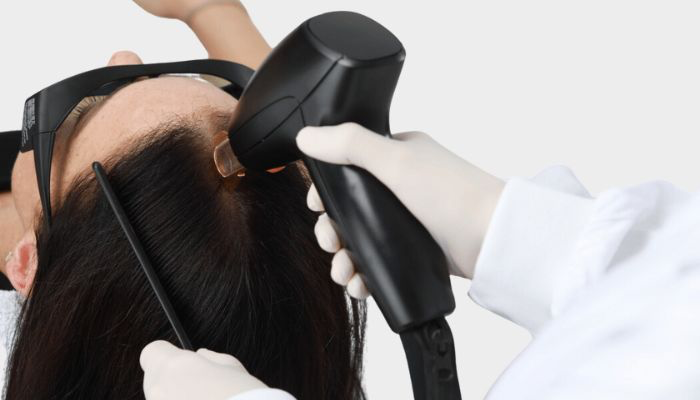
The Lumenis FoLix, by contrast, is a powerful, medical-grade fractional laser. It works by sending targeted, concentrated pulses of laser energy into the scalp, creating precise "microthermal zones." These microscopic zones of heated tissue trigger the body's natural healing cascade. This response floods the area with blood flow, oxygen, and essential nutrients, waking up dormant hair follicles and encouraging them to enter the active growth phase again.
Because it is a highly effective, medical-grade treatment, you may experience some temporary redness and swelling on your scalp post-treatment, which can last for a few days or up to two weeks. To learn more about how we use this incredible technology to restore hair, visit our dedicated FolixMD services page.
De|Rive Ultra Plus and Targeted Growth Factors
To supercharge our laser treatments, we often pair them with De|Rive Ultra Plus, a cutting-edge topical treatment that utilizes plant-based secretory factors.
De|Rive Ultra Plus is specifically formulated to address hair thinning by delivering highly concentrated growth factors directly to the hair follicles. When applied to the scalp—especially after the Lumenis FoLix laser has created microthermal channels—De|Rive Ultra Plus penetrates deeply to nourish the scalp, reduce inflammation, and support the biological pathways necessary for healthy hair growth.
This combination is a core part of our premium, comprehensive packages, offering a powerful, double-action approach to hair thinning. To explore how we customize these advanced therapies for our clients, read Hair Restoration and discover our Advanced Hair Solutions.
Frequently Asked Questions About Hair Restoration in Michigan
Am I too young or too old for non-surgical hair restoration?
There is no "perfect" age for hair restoration, but timing does matter. Generally, we recommend that patients be at least 25 years old before starting intensive hair treatments. By age 25, your hair loss patterns have typically stabilized enough for us to accurately assess progressive hair loss and design a highly effective, long-term plan. Whether you are in your late 20s trying to nip a receding hairline in the bud, or in your 50s looking to restore lost density, non-surgical treatments can help as long as you still have active (even if dormant) hair follicles.
How do non-surgical treatments compare to older, invasive methods?
Older, invasive methods often involved transplanting large sections of skin and hair, which could result in an unnatural look. While modern techniques have evolved, they still require invasive procedures. Our modern regenerative therapies, like FolixMD and De|Rive, take a completely different approach: instead of moving hair from one spot to another, we use advanced science to regenerate and thicken the hair you already have. To learn more about how far hair restoration technology has come, read What Are Hair Plugs?.
What are the potential side effects of FolixMD and De|Rive?
Our non-surgical treatments have an exceptional safety profile. Because they do not require surgery, incisions, or systemic medications, the risk of serious complications is incredibly low. The most common side effects are temporary redness, mild swelling, or slight tenderness on the scalp immediately following your session. These symptoms are a normal part of the body's inflammatory healing response and typically resolve within a few days, though they can occasionally last up to two weeks for those with highly sensitive scalps.
Conclusion
If you have been searching for a surgical hair transplant, we encourage you to pause and consider the non-surgical path first. You don't have to endure surgery, scarring, and weeks of uncomfortable recovery to love your reflection again.
At Aura Health & Spa in Plymouth, Michigan, we are dedicated to helping you achieve natural-looking, long-term confidence through safe, clinically proven, non-surgical hair restoration. By combining the power of the Lumenis FoLix laser with the regenerative benefits of De|Rive Ultra Plus, we can help you wake up dormant follicles and maintain a thicker, fuller head of hair.
Are you ready to take the first step toward graft-free confidence? Contact us today to schedule your personalized scalp consultation with our expert clinical team. For more inspiration and tips on reclaiming your hair, read Hair Today, Gone Tomorrow? Not With These Hair Loss Fixes.