
Why Hair Restoration Matters for Your Well-Being
Hair restoration refers to surgical and non-surgical treatments that combat hair loss and restore a fuller head of hair. Whether you have a receding hairline or thinning at the crown, there are effective options available.
Quick Overview of Hair Restoration Options:
- Surgical: Hair transplant surgery (FUT or FUE) permanently relocates hair follicles to thinning or bald spots.
- Medications: Minoxidil (topical) and Finasteride (oral) slow hair loss and can encourage regrowth.
- Advanced Therapies: PRP injections, laser therapy, ultrasound, and exosomes all stimulate follicles.
- Expected Results: Surgical results appear in 6-12 months; non-surgical options require ongoing use for maintenance.
- Cost Range: $4,000-$15,000 for surgery; non-surgical options vary by treatment.
Hair loss affects more than just your appearance. As patient Oscar C. shared, “Getting my hair back was priceless… the beginning of getting back my confidence and life.” Studies show that 95% of first-time hair restoration surgery patients in 2024 were between ages 20-35, highlighting how deeply hair loss can impact self-esteem during socially active years.
The good news is that modern hair restoration has evolved far beyond the “hair plugs” of the past. Today’s techniques create natural-looking results that blend seamlessly with your existing hair. Whether you choose a permanent surgical solution or prefer non-surgical approaches, the path to regaining your confidence is clearer than ever.
Understanding your options is the first step. Some people achieve their desired results with a single surgical procedure—in fact, 68% of surgeons surveyed typically require only one procedure for success. Others find that combining treatments, like a transplant with ongoing medication, provides the best long-term outcome.
Your journey to restored hair doesn’t have to be overwhelming. As Dr. Reema Sethi, a board-certified physician with over 15 years of clinical experience in medical aesthetics, I develop individualized hair restoration treatment plans at Aura Health and Spa. My approach combines evidence-based medicine with a deep understanding of how hair loss affects your well-being, ensuring you receive safe, effective, and compassionate care.
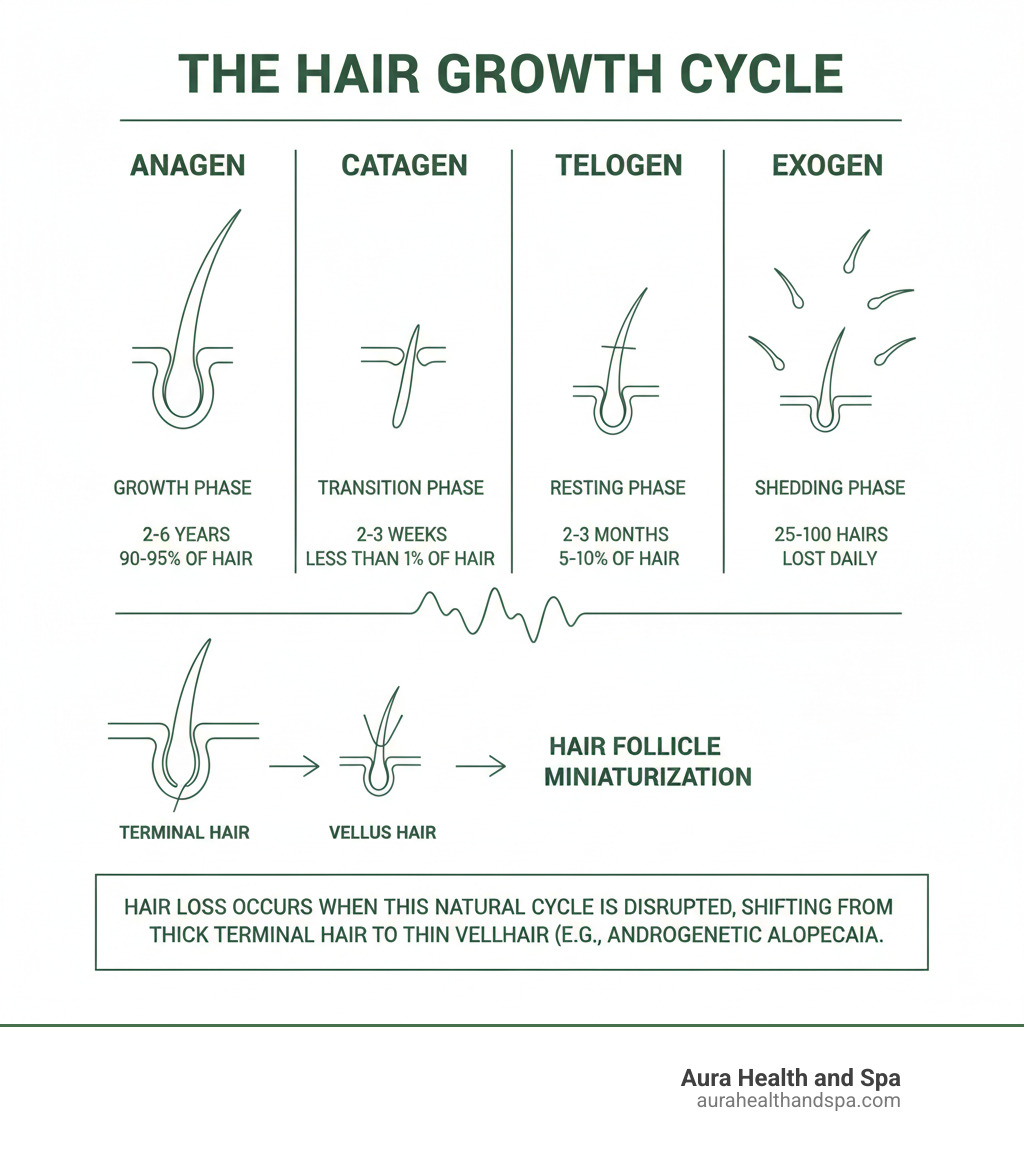
Understanding Hair Loss: The First Step to Restoration
Before exploring treatments, it’s helpful to understand what causes hair loss. It isn’t just a cosmetic issue—it carries an emotional weight that can affect your confidence and how you steer the world.
Noticing a receding hairline or more hair on your pillow can be unsettling. Many of my patients feel self-conscious, avoid photos, or withdraw from activities they once enjoyed. As our patient Erick S. shared, hair restoration helped him regain confidence and feel proud of his hair again. This emotional dimension is why understanding the root cause is the foundation for choosing the right path forward.
The most common reason for hair loss is androgenetic alopecia, or pattern baldness. This hereditary condition is driven by genetics and hormones, affecting men and women differently.
Male pattern baldness often begins with a receding hairline and thinning at the crown, which can expand until only a horseshoe pattern of hair remains. Female pattern baldness typically involves overall thinning across the top of the scalp rather than a receding hairline. While complete baldness is rare in women, the thinning can be significant. The number of women seeking surgical hair restoration grew by 16.5% between 2021 and 2024, showing how many are actively addressing this concern.
Beyond pattern baldness, other factors can trigger hair loss. Hormonal changes from pregnancy, menopause, or thyroid conditions can cause thinning. Aging naturally slows hair growth, and genetics plays a powerful role—if your parents experienced hair loss, your chances increase. We explore the causes of male hair loss in our article, Top Causes of Hair Loss in Men: Understand the Facts.
Let’s clear up some common myths. Wearing hats, poor scalp circulation, and dandruff do not cause hair loss. While severe vitamin deficiencies can contribute, minor dietary gaps are not a typical cause. And the idea that baldness is inherited only from your mother’s father is false; the genetics are far more complex.
Hair loss is a nuanced medical issue. Some people experience rapid progression, while others notice gradual thinning over decades. A proper medical assessment is required to understand what’s causing your hair loss. Tools like the Norwood scale for men and the Ludwig scale for women help categorize the extent of hair loss so you can make informed decisions about treatment.
Surgical Hair Restoration: A Permanent Solution
For those seeking a lasting solution, surgical hair restoration is a highly effective and often permanent option. Hair transplant surgery relocates healthy, genetically resistant hair follicles from a “donor area” (typically the back and sides of the head) to thinning or bald areas. These transplanted follicles retain their resistance to balding hormones and will continue to grow hair in their new location.
The benefits extend beyond a fuller head of hair. It’s a proven method for restoring a natural-looking hairline and increasing density, which can significantly boost self-confidence. The International Society of Hair Restoration Surgery (ISHRS) promotes high standards of medical practice and ethics in this field, ensuring patient safety. For a comprehensive overview, you can refer to the Hair Transplantation overview from the National Library of Medicine.
Follicular Unit Transplant (FUT) vs. Follicular Unit Extraction (FUE)
When considering surgical hair restoration, the two main techniques are Follicular Unit Transplant (FUT) and Follicular Unit Extraction (FUE). They differ in how donor hair is harvested.
-
Follicular Unit Transplant (FUT), or the “strip method,” involves removing a strip of hair-bearing skin from the donor area. This strip is dissected into individual follicular units. FUT allows for a large number of grafts in a single session and can have high graft survival rates. Its main drawback is a linear scar at the donor site, which may be visible with very short hair.
-
Follicular Unit Extraction (FUE) involves extracting individual follicular units directly from the donor area with a small punch tool. This leaves tiny, dot-like scars that are less noticeable, making it ideal for those who wear their hair short. FUE is less invasive with a quicker donor area healing time but can be more time-consuming. Robotic-assisted FUE is an advancement that uses technology to aid in precise extraction.
Here’s a comparison of FUT and FUE:
| Feature | Follicular Unit Transplant (FUT) | Follicular Unit Extraction (FUE) |
|---|---|---|
| Scarring | Linear scar at donor site, potentially noticeable with short hair | Tiny, circular dot scars, less noticeable, allows for shorter hair |
| Recovery Time | Longer healing for donor incision (approx. 1 week) | Quicker healing for donor area (a few days) |
| Procedure Time | Often shorter for harvesting large number of grafts | Can be longer due to individual follicle extraction |
| Ideal Candidate | Patients needing a large number of grafts, okay with linear scar, prefer longer hair | Patients wanting minimal scarring, prefer shorter hair, or have tighter scalps |
The Hair Transplant Journey: From Consultation to Recovery
Your hair restoration journey begins with a thorough consultation to discuss your concerns and establish realistic expectations. We recommend seeking a board-certified specialist with experience in hair restoration.
During your consultation, be ready to discuss your medical history and hair loss progression. Ask about the surgeon’s experience, the recommended technique, potential outcomes, and costs.
The procedure typically involves these steps:
- Anesthesia: Local anesthesia is used to numb the donor and recipient areas for your comfort.
- Harvesting: Hair follicles are harvested from the donor area using either the FUT or FUE method.
- Implantation: Tiny incisions are made in the recipient areas, and the harvested follicular units are delicately placed to create a natural-looking pattern. The process can take several hours.
The recovery phase is crucial. Your scalp may be tender with some swelling, managed with medication. Transplanted hairs typically shed within 2-3 weeks—this “shock loss” is normal. New hair growth usually appears within 3-4 months, with significant improvement by 6-9 months and final results at 12-18 months. Following post-operative care instructions is essential for success. For detailed guidance, see our article on Key Best Practices for Hair Care Post Restoration Treatment.
Potential Risks and Realistic Expectations for Hair Restoration
While modern hair restoration is generally safe, it’s important to be aware of potential risks and have realistic expectations. Side effects can include temporary swelling, numbness, bleeding, or infection. Scarring is inherent to the procedures, but proper technique minimizes visibility. Folliculitis (inflammation of hair follicles) can also occur. Choosing a qualified, experienced surgeon is paramount to avoid unnatural-looking results.
It’s also crucial to know the signs of a hair transplant gone wrong, such as poor growth after 9-12 months, an unnatural hairline, or highly visible scars. A rare but serious complication is scalp necrosis (death of scalp tissue). Contact your doctor immediately if you experience heavy bleeding, signs of infection (pus, fever), an open wound, dusky skin, or severe facial swelling.
The success rate of hair restoration is high, with 68% of surgeons surveyed typically requiring only one procedure for a successful transplant. However, results vary, and multiple sessions may be needed for desired density. The full, mature results take 12-18 months to develop.
Exploring Non-Surgical Hair Restoration Options
Not everyone is ready for surgery, and non-surgical hair restoration options offer effective alternatives. These less invasive approaches can work well on their own or to improve surgical results. They are especially valuable for early-stage thinning or for those who prefer a gentler path to fuller hair.
Starting with non-surgical treatments allows you to actively address hair loss while exploring your options. At Aura Health and Spa, we offer a comprehensive range of professional solutions to meet you where you are in your journey. You can explore these in our article Discover Professional Hair Restoration Options for Hair Loss.
FDA-Approved Medications
Two FDA-approved medications have helped countless people maintain and regrow hair.
Minoxidil (Rogaine) is an over-the-counter topical treatment (foam, liquid, or shampoo) applied directly to the scalp. It works by increasing blood flow to hair follicles and extending the hair’s growth phase. It is effective for thinning on the crown but requires patience and consistency. Results typically take at least six months to appear, and you must continue using it to maintain the benefits.
Finasteride (Propecia) is a prescription oral medication for men. It works by blocking the enzyme that converts testosterone to DHT, the hormone that shrinks hair follicles in pattern baldness. By reducing DHT levels, finasteride can slow hair loss and encourage new growth. Like minoxidil, it requires ongoing use and a discussion with your healthcare provider to see if it’s right for you.
Advanced Therapies: PRP and Laser Treatments
Cutting-edge therapies are also available for hair restoration, using your body’s healing abilities and technology to stimulate growth.
Platelet-Rich Plasma (PRP) therapy is a promising non-surgical treatment. We draw a small amount of your blood, concentrate the platelets rich in growth factors, and inject this plasma into your scalp. These growth factors can awaken dormant follicles, encourage new growth, and improve hair thickness. PRP works well as a standalone treatment or alongside a hair transplant. Our blog post, Essential PRP Hair Restoration Benefits for Thinning Hair, explores its advantages.
Low-Level Laser Therapy (LLLT) offers another non-invasive path. These FDA-approved devices (combs, helmets, or caps) emit low-power laser light onto the scalp. This energy stimulates cellular activity in hair follicles, encouraging them to enter the growth phase and produce thicker hair. LLLT is approved for hereditary hair loss in both men and women and is convenient for home use.
At Aura Health and Spa, we use advanced Folix Laser Technology. This system delivers improved performance and superior results for clients seeking to revitalize their hair. Learn more in our article, Folix Laser Technology: Enhancing Performance and Results.
Frequently Asked Questions about Hair Restoration
It’s natural to have questions when considering hair restoration. Here are answers to some of the most common concerns we hear from patients.
How much does hair restoration cost?
The cost of hair restoration depends on the treatment type, the extent of your hair loss, and your location. Prices can differ between our clinics in Plymouth, Sterling Heights, and Ann Arbor, Michigan.
Surgical hair transplants generally range from $4,000 to $15,000. The final price depends on the number of grafts needed and the technique used. FUE procedures may have a higher per-graft cost due to the time-intensive nature of individual follicle extraction. Your surgeon’s experience also influences the price.
Non-surgical options have a different pricing structure. Medications like minoxidil and finasteride involve ongoing monthly costs. PRP therapy is typically priced per session, with a series of treatments recommended for best results. Our article on PRP Hair Restoration: Understand the Average Treatment Costs breaks this down. At-home laser therapy devices require a one-time investment.
Most insurance plans do not cover hair restoration as it is considered a cosmetic procedure. We will provide a precise cost estimate during your personalized consultation at Aura Health and Spa.
Are hair transplants permanent?
Yes, the results of a hair transplant are permanent. The transplanted follicles are taken from areas of your head where hair is genetically programmed to resist balding. When moved to a new area, they retain this resistance and will continue to grow hair for life.
However, it’s important to understand that your native (non-transplanted) hair may continue to thin over time. The transplanted hair is protected, but the hair that was already vulnerable remains so.
This is why many patients combine their transplant with non-surgical treatments like minoxidil or finasteride. These medications help protect your existing hair, preventing further loss and preserving your overall density for years to come.
Who is a good candidate for a hair transplant?
Not everyone is an ideal candidate for surgical hair restoration, but other solutions may be right for you.
The best candidates have sufficient healthy donor hair on the back and sides of their head. A relatively stable pattern of hair loss is also preferred. Certain conditions, like active alopecia areata, may not be suitable for transplantation, as the underlying issue could affect the survival of transplanted hair.
Realistic expectations are crucial. Hair restoration can create dramatic improvements, but it works with the donor hair you have. Good overall health is also important for any surgical procedure.
While statistics show that 95% of first-time hair restoration patients in 2024 were between ages 20-35, many surgeons prefer to wait until hair loss patterns stabilize, often after age 25, to ensure better long-term results.
During your consultation at Aura Health and Spa, we will evaluate your hair loss, assess your donor hair, and discuss your goals to determine if you are a good candidate for surgery or if non-surgical options would better serve your needs.
Conclusion: Your Path to Renewed Confidence
Your hair restoration journey is about more than regaining hair—it’s about reclaiming the confidence that hair loss can diminish. We’ve explored the full spectrum of options, from permanent surgical solutions like FUT and FUE to non-surgical approaches like medications, PRP, and laser therapy. The right choice depends on your individual goals, circumstances, and lifestyle.
What matters most is that you don’t have to steer this journey alone. At Aura Health and Spa, we understand that hair restoration is deeply personal. Under the guidance of Dr. Reema Sethi, who brings over 15 years of clinical experience to every consultation, we create treatment plans that honor your whole person.
Our holistic approach means we see the bigger picture. We use advanced medical treatments and technology, but we also recognize that true well-being comes from feeling comfortable in your own skin. Whether you’re just noticing thinning or have been dealing with hair loss for years, we’re here to provide compassionate, evidence-based care.
The most important step is often the first one: reaching out for a conversation. During a professional consultation at any of our locations in Plymouth, Sterling Heights, or Ann Arbor, Michigan, we’ll listen to your concerns and map out a realistic path forward. You’ll leave with clarity about your options and confidence in your next steps.
If you’re curious about how advanced laser technology might fit into your plan, we invite you to learn more about our advanced Folix Laser hair restoration services. This is just one of the many tools we use to help you achieve the natural, lasting results you deserve.
Your hair restoration journey can begin today, leading you back to feeling like yourself again.