Introduction: Why the Donor Area is a Major Concern for Hair Transplant Patients
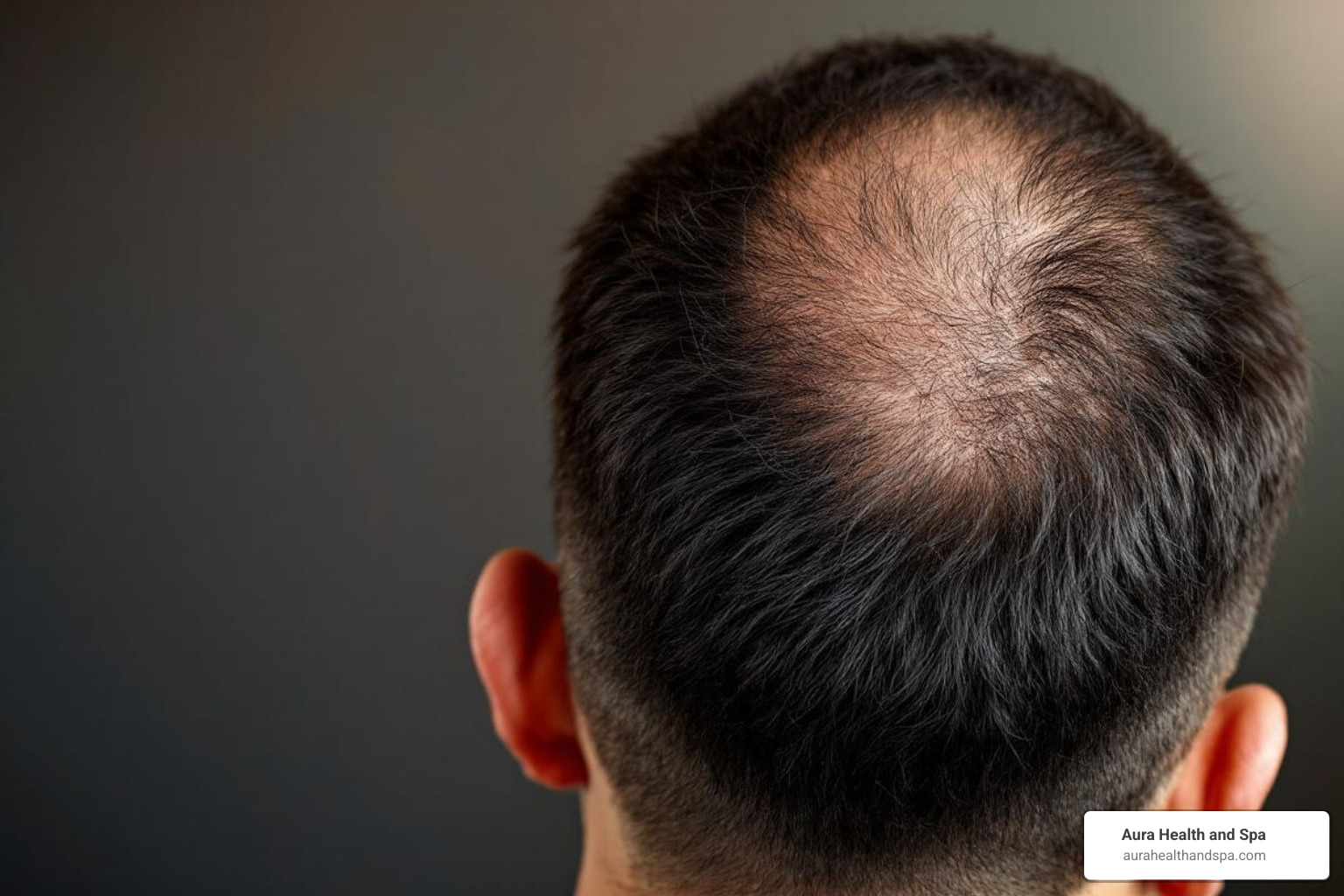
In the context of traditional hair transplants, the FUT donor area is the strip of scalp tissue surgically removed from the back of the head during a procedure called Follicular Unit Transplantation (FUT), also known as strip harvesting. While Aura Health & Spa in Plymouth, Michigan does not perform FUT or any surgical hair transplant procedures, many of our clients come to us after researching these options or wanting to avoid them altogether.
Here is what patients are usually told about the FUT donor area:
- Location: Runs horizontally across the back of the scalp, typically above the occipital protuberance (the bony bump at the back of the skull)
- Scar: Leaves a permanent linear scar, usually 0.5–1.5 cm wide and 5–30 cm long
- Visibility: Can sometimes be hidden by hair longer than 2–3 cm, but may show when hair is worn very short
- Recovery: Requires 1–2 weeks of wound care, with sutures or staples removed around days 8–14
- Limitations: May permanently restrict very short hairstyles and limit strenuous activity during healing
Because the donor area is changed permanently by surgery, many people in and around Plymouth, Michigan are understandably cautious about FUT. Studies show that wider donor strips tend to create wider, more noticeable scars and are associated with lower patient satisfaction. These concerns are a major reason why some individuals look for alternatives that do not require scalpels, stitches, or permanent scarring.
I am Dr. Reema Sethi, a board-certified physician with more than 15 years of clinical experience. As the Medical Director at Aura Health & Spa in Plymouth, Michigan, I oversee a team of licensed nurses and aestheticians who focus exclusively on non-surgical, medical-grade hair restoration. Instead of surgically altering the FUT donor area, we use advanced technologies like the FolixMD treatment with the Lumenis FoLix fractional laser and De|Rive Ultra Plus serum to support natural hair growth in a way that avoids incisions and linear or dot scars.
At Aura, our philosophy is simple: confidence should start with results you can see, not with a scar you have to hide. Our premium, comprehensive packages are designed to improve hair density, thickness, and scalp health while keeping downtime minimal and prioritizing safety for all skin types.
Understanding the FUT Donor Area and Its Associated Concerns
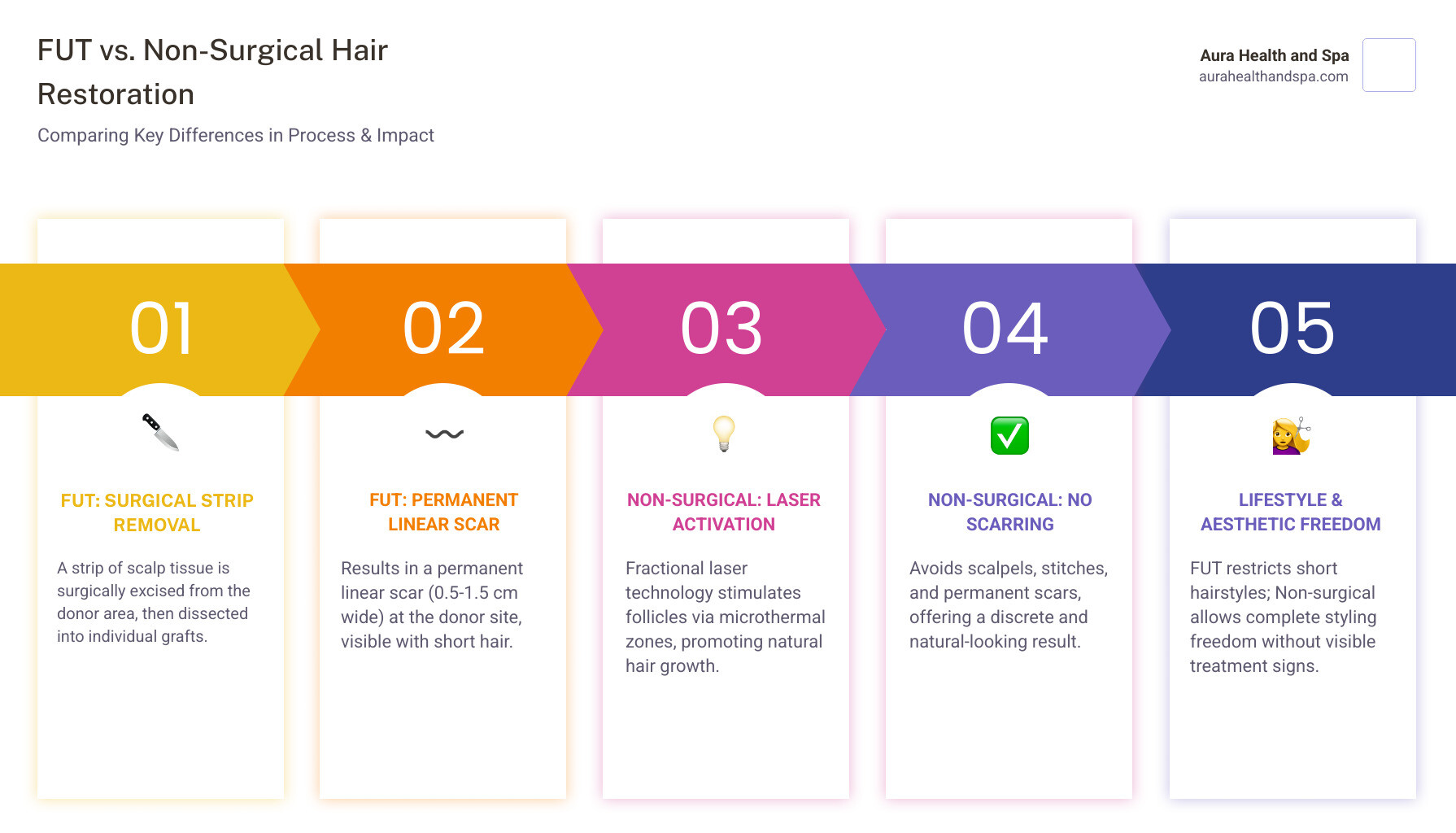
Follicular Unit Transplantation (FUT), often referred to as strip harvesting, is a surgical hair restoration method that involves removing a thin strip of scalp from the back or sides of the head. This region, commonly called the FUT donor area, is chosen because the hair follicles there are generally more resistant to the hormonal changes that contribute to male and female pattern baldness.
Although Aura Health & Spa in Plymouth, Michigan does not perform FUT or any surgical hair transplant procedures, many clients seek us out after learning about the long-term implications of altering this donor area and wanting to pursue a non-surgical path instead.
In a typical FUT procedure, a strip of tissue between 0.5 to 1.5 cm in width and 5 to 30 cm in length is removed. Studies show that the strip width in the donor area often varies from 10 to 15 mm. The exact dimensions depend on factors like scalp laxity (how loose or tight the scalp skin is) and the number of grafts required. However, research has confirmed a key drawback: wider donor strips tend to result in wider, more noticeable scars, which can significantly reduce patient satisfaction over time.
After the strip is removed, it is dissected into individual follicular units (naturally occurring groups of 1–4 hairs) that are implanted into thinning or balding areas. The wound in the donor area is then closed with sutures or surgical staples. Even with meticulous technique, the invasive nature of FUT means that a permanent linear scar in the donor area is unavoidable.
Recovery from FUT requires managing a significant surgical wound. Patients are typically advised to expect post-operative pain and tightness in the donor area. Some sources report that this discomfort can be more pronounced than with other surgical techniques. Most people can return to non-physical work within 2–5 days, but those with physically demanding jobs are often advised to wait longer to avoid stretching the incision and worsening the final scar.
By contrast, hair restoration at Aura Health & Spa is centered on non-surgical treatments like FolixMD (using the Lumenis FoLix fractional laser) combined with De|Rive Ultra Plus serum. These treatments are performed by our licensed providers under medical oversight and are designed to stimulate and support the health of existing follicles without removing tissue from the donor area or creating surgical wounds.
The Reality of the FUT Donor Scar
The most significant concern with the FUT donor area is the permanent linear scar left behind. Even when surgeons use careful closure techniques, the scar remains a visible reminder of the procedure and can influence hairstyle choices for life.
Data highlight this relationship clearly: the width of the scar correlates directly with the width of the donor strip taken. One study showed that scar width increases in a linear positive fashion (r = 0.744) with the width of the strip (P < 0.001). Patient satisfaction, meanwhile, significantly decreases (r = −0.534) as strip width increases (P = 0.002). In other words, gathering more grafts through a wider strip often comes at the cost of a wider scar and lower long-term contentment.
Specialized closure techniques, such as trichophytic closure, attempt to camouflage the scar by allowing hair to grow through the scar line. While this can soften the appearance of the scar for some patients, outcomes are not guaranteed. Possible issues include:
- Hypertrophic scarring (raised, thickened scars)
- Effluvium (shedding of surrounding hairs) along the suture line
- Variability in how the scar looks over time depending on individual healing and tension on the wound
The final appearance is influenced by the surgeon’s skill, the patient’s biology, and adherence to post-operative care instructions. Even when everything goes well, a linear scar remains a permanent feature of the donor area.
At Aura Health & Spa in Plymouth, Michigan, we see many individuals who want to improve hair density but prefer to avoid the risk of a FUT donor scar altogether. Our FolixMD and De|Rive Ultra Plus protocols are designed for precisely these clients, offering a way to support thicker, healthier hair while keeping the scalp free of surgical incisions.
How the FUT Donor Area Impacts Lifestyle and Hairstyles
A linear scar in the FUT donor area can have lasting effects on lifestyle and hairstyle choices:
- Limitations on short hair: While a well-healed FUT scar can sometimes be hidden by hair an inch or longer, it typically becomes visible with very short cuts, fades, or shaved styles. This can permanently limit haircut options for people who like to keep their hair very short.
- Activity restrictions during healing: To protect the incision, patients are often advised to avoid strenuous exercise, heavy lifting, or contact sports for several weeks. Excessive tension on the healing wound can cause the scar to stretch and widen.
- Shock loss around the donor area: Temporary shedding, also called telogen effluvium, may occur around the incision line due to surgical trauma. Although this is usually temporary, it can be distressing while it lasts.
- Folliculitis and discomfort: Folliculitis-like lesions have been reported in more than half of FUT patients in some series, causing localized bumps and sensitivity that require additional care.
Because of these concerns, many people in the Plymouth, Michigan area seek non-surgical alternatives for hair restoration. At Aura Health & Spa, our approach is built around preserving scalp integrity while enhancing hair health. Treatments like FolixMD (Lumenis FoLix fractional laser) and De|Rive Ultra Plus serum are designed to fit seamlessly into active lifestyles, with minimal downtime and no restrictions related to surgical wound healing.
Surgical Hair Restoration: A Comparison of Donor Site Impact
When researching hair restoration, it is helpful to understand why some people are drawn to surgery and why others choose to avoid it. Historically, the two main surgical options have been Follicular Unit Transplantation (FUT) and Follicular Unit Extraction (FUE), both of which harvest follicles from the back and sides of the head and create scars in the donor area.
Aura Health & Spa in Plymouth, Michigan does not perform FUT or FUE and does not offer any surgical hair transplant procedures. Instead, our focus is on advanced, non-surgical laser-based hair restoration that leaves the donor area intact. The table below is included strictly for educational comparison, so you can better understand why so many of our clients decide that a non-surgical path is the right choice for them.
| Key Factor | Follicular Unit Transplantation (FUT) | Follicular Unit Extraction (FUE) | Non-Surgical Laser Restoration (Aura Health & Spa) |
|---|---|---|---|
| Scarring | Single linear scar (0.5-1.5 cm wide), often hidden by longer hair | Hundreds to thousands of tiny, circular “dot” scars across a wider area | No surgical scars whatsoever |
| Procedure Type | Surgical: Strip excision, sutures/staples | Surgical: Individual follicle extraction with micro-punches | Non-surgical: Lumenis FoLix fractional laser (FolixMD) plus serums |
| Shaving Required | Only the strip area is trimmed; rest of hair can remain long | Large area of donor scalp typically shaved for extraction | No shaving required in most cases |
| Recovery Time | 1-2 weeks for wound healing; restrictions on strenuous activity | Faster initial healing (days); some activity restrictions | Minimal downtime; redness or swelling may last hours to days |
| Ideal Candidate | Patients accepting a linear scar and downtime for higher graft counts | Patients who accept dot scarring and shaving for surgical restoration | Early to moderate thinning; want natural regrowth without surgery |
| Graft Quality / Preservation | High; microscopic dissection preserves tissue around follicles | Variable; risk of transection during extraction | Not applicable; strengthens existing follicles and supports regrowth |
Follicular Unit Transplantation (FUT) Donor Impact
In FUT, the FUT donor area is defined by the removal of a strip of scalp, which leaves one continuous linear scar. This method is often selected for its ability to yield a large number of grafts in a single session, and only the strip region is trimmed while surrounding hair stays long to help conceal the area.
However, FUT is a fully surgical procedure involving:
- A long incision across the donor area
- Sutures or staples to close the wound
- A permanent linear scar that may widen over time
- Potential temporary numbness or altered sensation around the incision line due to nerve disruption
Healing typically takes 1–2 weeks for the incision to close, with ongoing remodeling for months. During this time, strenuous activity is usually restricted to prevent tension on the scar, which can worsen its appearance.
Follicular Unit Extraction (FUE) Donor Impact
Follicular Unit Extraction (FUE) is another surgical technique that removes individual follicular units using a small circular punch. Instead of one continuous line, the donor area is left with numerous small dot scars where each follicle was extracted.
Key considerations for FUE include:
- Diffuse dot scarring: Hundreds to thousands of tiny circular scars scattered through the donor zone
- Shaving requirements: A large portion of the donor area often needs to be shaved for proper access
- Risk of overharvesting: Removing too many follicles from a concentrated region can lead to a visibly thinned or “moth-eaten” appearance
- Use of a broader donor region: Harvesting from areas that may not be as resistant to future thinning can compromise long-term density
Because both FUT and FUE permanently alter the donor area, many people in Plymouth, Michigan prefer a method that preserves scalp integrity. At Aura Health & Spa, our non-surgical FolixMD protocol with the Lumenis FoLix fractional laser is specifically designed to:
- Avoid any surgical removal of scalp tissue
- Leave the donor area free from linear or dot scars
- Support hair health using controlled, fractional laser energy and medical-grade serums rather than grafts or incisions
Our licensed team delivers these treatments under close medical supervision, aligning with our results-first philosophy while keeping the donor area intact.
The Modern Alternative: Scar-Free Hair Restoration in Plymouth, MI
At Aura Health & Spa in Plymouth, Michigan, we understand that the idea of surgical scars and extended recovery times can be discouraging for anyone exploring hair restoration. Many of our clients come to us specifically because they want to improve hair density without altering the FUT donor area or undergoing any form of hair transplant.
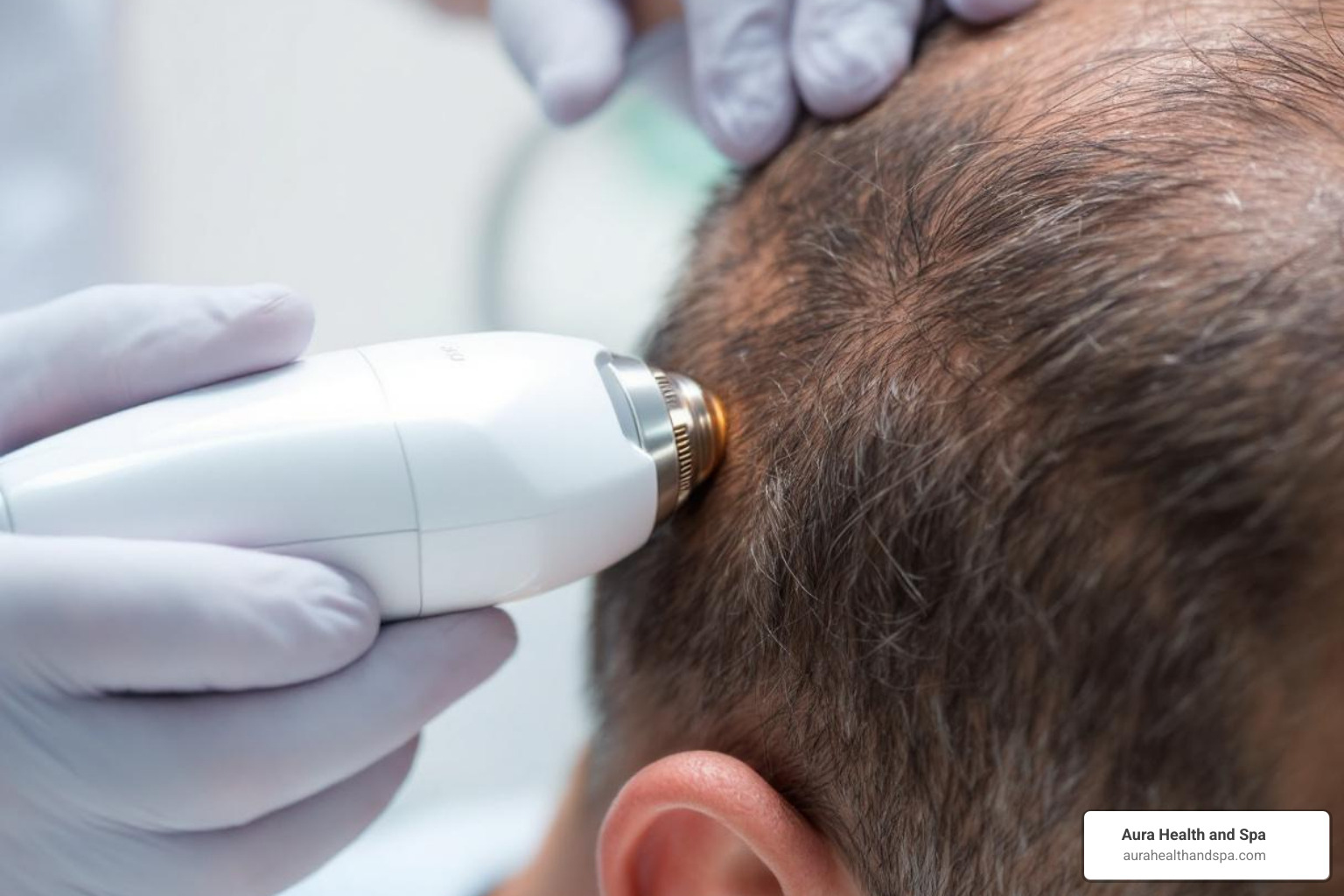
Our solution is a modern, scar-free approach centered on advanced, non-surgical technology. Under the guidance of our Medical Director, Dr. Reema Sethi, our licensed nurses and aestheticians use premium protocols to stimulate your body’s natural hair growth pathways. We do this with no scalpels, no sutures, and no permanent scarring, allowing you to keep your donor area intact while still pursuing fuller, healthier hair.
How Non-Surgical Treatments Revitalize Hair Follicles
A cornerstone of our approach is FolixMD, which uses the Lumenis FoLix fractional laser. This device is not a low-level laser therapy (LLLT) device. Instead of emitting broad, diffuse light, the Lumenis FoLix system delivers targeted, concentrated energy into the scalp.
This fractional laser technology creates precise microthermal zones within the skin of the scalp. These microscopic zones of controlled thermal energy activate the body’s natural healing response, triggering a cascade of beneficial processes:
- Stimulation of growth factors: Local release of natural growth factors that support hair follicle function and health
- Improved microcirculation: Improved blood flow, bringing oxygen and nutrients to fragile or miniaturizing follicles
- Strengthening of existing hair: Support for weakened follicles, helping hair strands become thicker, stronger, and more resilient
- Encouragement of dormant follicles: Some resting follicles can be prompted to re-enter an active growth phase
Because the energy is delivered fractionally and in a controlled manner, most clients experience only mild, temporary redness or sensitivity. Potential side effects such as redness or swelling typically resolve within hours to a few days, and in some cases may last up to two weeks. There are no incisions and no sutures to manage, which makes this an attractive alternative for people who want to avoid FUT or FUE.
For additional details on how this treatment works and what to expect, you can visit our dedicated service page: More info about our advanced hair restoration services.
Our Advanced Hair Restoration Solutions
At Aura Health & Spa in Plymouth, Michigan, we focus on premium, comprehensive treatment packages rather than basic, standalone services. For hair restoration, this means thoughtfully combining advanced technology with medical-grade topical therapies and home care recommendations to maximize your results and long-term hair health.
Here are the key benefits of our non-surgical hair restoration approach:
- No linear scar or dot scars: Your scalp is never cut, and no follicles are surgically removed.
- Minimal to no downtime: Most clients return to work and daily activities immediately; visible redness typically fades within hours to a few days.
- Safe for all skin types: Our team has experience treating a wide range of skin tones while prioritizing safety and consistent outcomes.
- Promotes thicker, healthier hair naturally: By amplifying the body’s own repair mechanisms, we support natural-looking density and scalp wellness.
- Quick, in-office sessions: Treatments are efficient and fit easily into your schedule.
Our primary hair restoration treatment is the FolixMD laser treatment, using the state-of-the-art Lumenis FoLix fractional laser to deliver controlled microthermal energy. Because this is not LLLT, it offers a more powerful and direct way to activate the scalp’s healing response.
We frequently pair FolixMD with De|Rive Ultra Plus serum, a professional-grade topical serum applied by our licensed providers during or after your session. This serum delivers targeted nutrients and growth factors directly to the scalp, complementing the effects of the laser by further supporting follicle health and hair quality.
By integrating FolixMD and De|Rive Ultra Plus into comprehensive care plans, Aura Health & Spa provides a sophisticated, non-surgical alternative for clients who want to address hair thinning without ever touching the FUT donor area with a scalpel.
Frequently Asked Questions about Hair Restoration Options
Many of our clients in Plymouth, Michigan arrive at Aura Health & Spa after researching surgical options like FUT and FUE online. While we do not perform hair transplants, it is helpful to compare what you might experience with surgery versus our non-surgical protocols.
Is non-surgical hair restoration painful compared to FUT?
In a traditional FUT procedure, local anesthesia is used to numb both the FUT donor area and the recipient areas where grafts are implanted. The surgery itself is usually comfortable because of the anesthesia, but afterward patients can experience:
- Tightness and aching in the donor area
- Swelling and tenderness around the incision
- A healing period that may involve sleeping carefully and avoiding certain positions
These symptoms are managed with pain medications, but they are an inherent part of recovering from a surgical wound.
At Aura Health & Spa, our FolixMD treatments with the Lumenis FoLix fractional laser are non-surgical and generally well tolerated. Clients often describe the in-office sensation as mild warmth or a light snapping or prickling feeling on the scalp. We prioritize comfort and can adjust settings for sensitive areas.
After treatment, you may notice:
- Temporary redness
- Mild swelling or sensitivity
These potential side effects typically resolve within hours to a few days, and in some cases can last up to two weeks. There are no incisions, no sutures, and no linear or dot scars to manage.
Who is a better candidate for non-surgical restoration vs. FUT?
FUT is traditionally reserved for individuals willing to accept a permanent linear scar in exchange for surgical relocation of hair follicles. It is often considered for people with advanced hair loss who need large numbers of grafts and are comfortable with the downtime and lifestyle limits associated with healing a donor incision.
At Aura Health & Spa in Plymouth, Michigan, our ideal candidates for non-surgical hair restoration are people who:
- Want to avoid surgery, scalpels, and stitches entirely
- Are concerned about the visibility of a linear or dot scar in the donor area
- Are experiencing early to moderate hair thinning or shedding
- Prefer a natural, gradual thickening of existing hair rather than transplanting follicles
- Need minimal downtime and want to maintain an active lifestyle
Our licensed providers create customized plans using FolixMD (Lumenis FoLix fractional laser) and De|Rive Ultra Plus serum, often combined with medical-grade home care, to support sustainable improvements in hair density and scalp health.
How long does it take to see results from non-surgical treatments?
With FUT surgery, transplanted hairs typically shed first and then regrow over several months. Initial growth may appear at 3–4 months, with more complete results visible between 9–12 months or longer.
Our non-surgical approach at Aura Health & Spa also works with the natural hair growth cycle, so results are gradual and cumulative, not overnight. Most clients begin to notice:
- Improved hair texture and shine
- Reduced shedding during washing or brushing
- Early signs of increased fullness
within a few months of starting a series.
For optimal results, we typically recommend a series of 3–4 FolixMD sessions, spaced according to your customized plan. This is often followed by a maintenance schedule to sustain and build on your progress. Our team will discuss realistic timelines and set expectations during your consultation, ensuring that your treatment journey is aligned with your goals and lifestyle.
Conclusion: Choose Confidence Without the Surgical Scar
The decision to address hair thinning is deeply personal, and understanding the long-term implications of each option is essential. While Follicular Unit Transplantation (FUT) has historically been a common surgical solution, its FUT donor area involves a permanent linear scar and a meaningful recovery period. For many people, especially those who prefer flexibility with hair length and an active lifestyle, this trade-off is hard to accept.
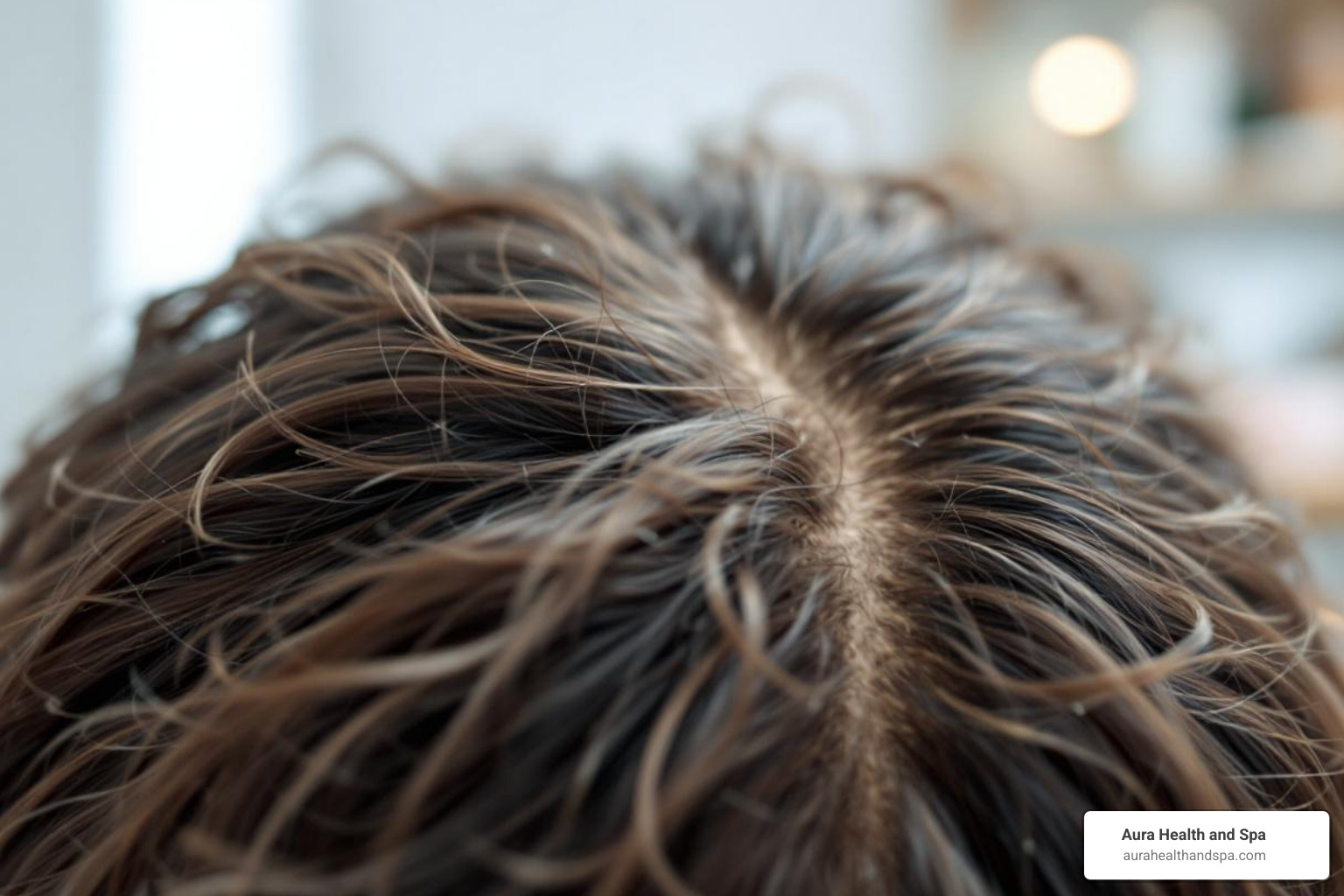
Aura Health & Spa in Plymouth, Michigan offers a different path. Rather than surgically altering the donor area, we focus on advanced, non-surgical hair restoration that preserves the scalp and avoids linear or dot scarring. Under the medical direction of Dr. Reema Sethi, our licensed team uses the FolixMD protocol with the Lumenis FoLix fractional laser, paired with De|Rive Ultra Plus serum, to:
- Activate your body’s natural repair processes with targeted, microthermal laser energy
- Support healthier, stronger hair growth over time
- Deliver visible improvement with minimal downtime and no incisions
For residents in and around Plymouth, Michigan who want a powerful, medically guided hair loss solution without the risks and scarring of surgery, our comprehensive laser and growth-factor–based treatments provide a compelling alternative. You do not have to choose between your hair confidence and your donor area.
If you are ready to explore a scar-free, results-driven approach to hair restoration, Aura Health & Spa is here to help you build a plan custom to your goals, your lifestyle, and your long-term confidence.