by Aura Health and Spa | Feb 28, 2026 | Skincare
Understanding Surgical Hair Restoration Recovery
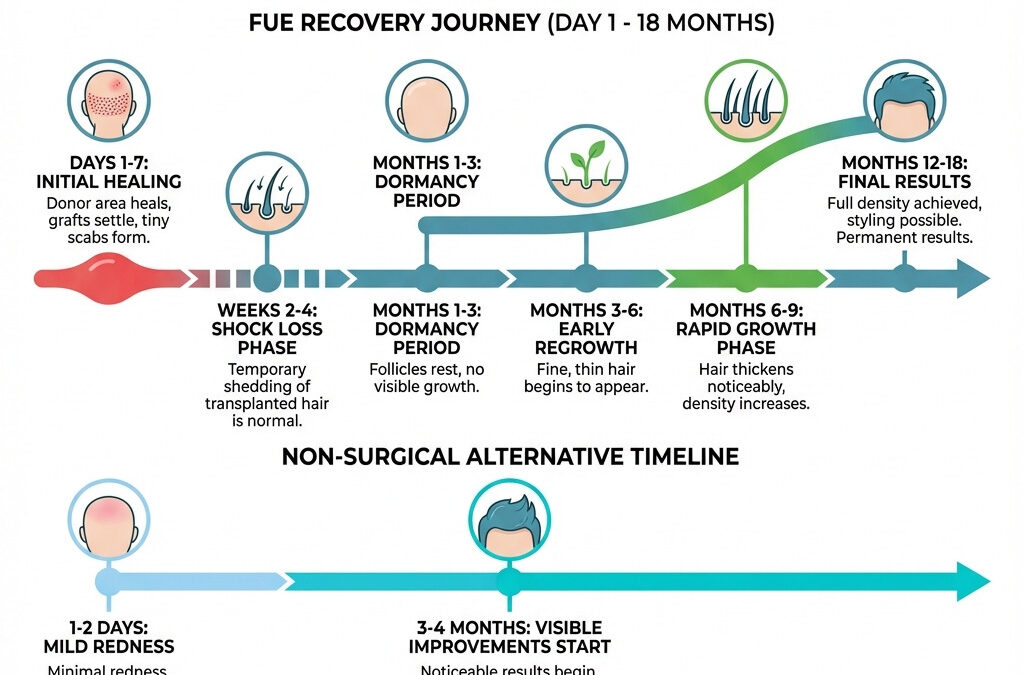
Surgical hair restoration recovery is a gradual healing process that unfolds over 12-18 months, requiring patience and careful aftercare. Here’s what you need to know:
Key Recovery Milestones:
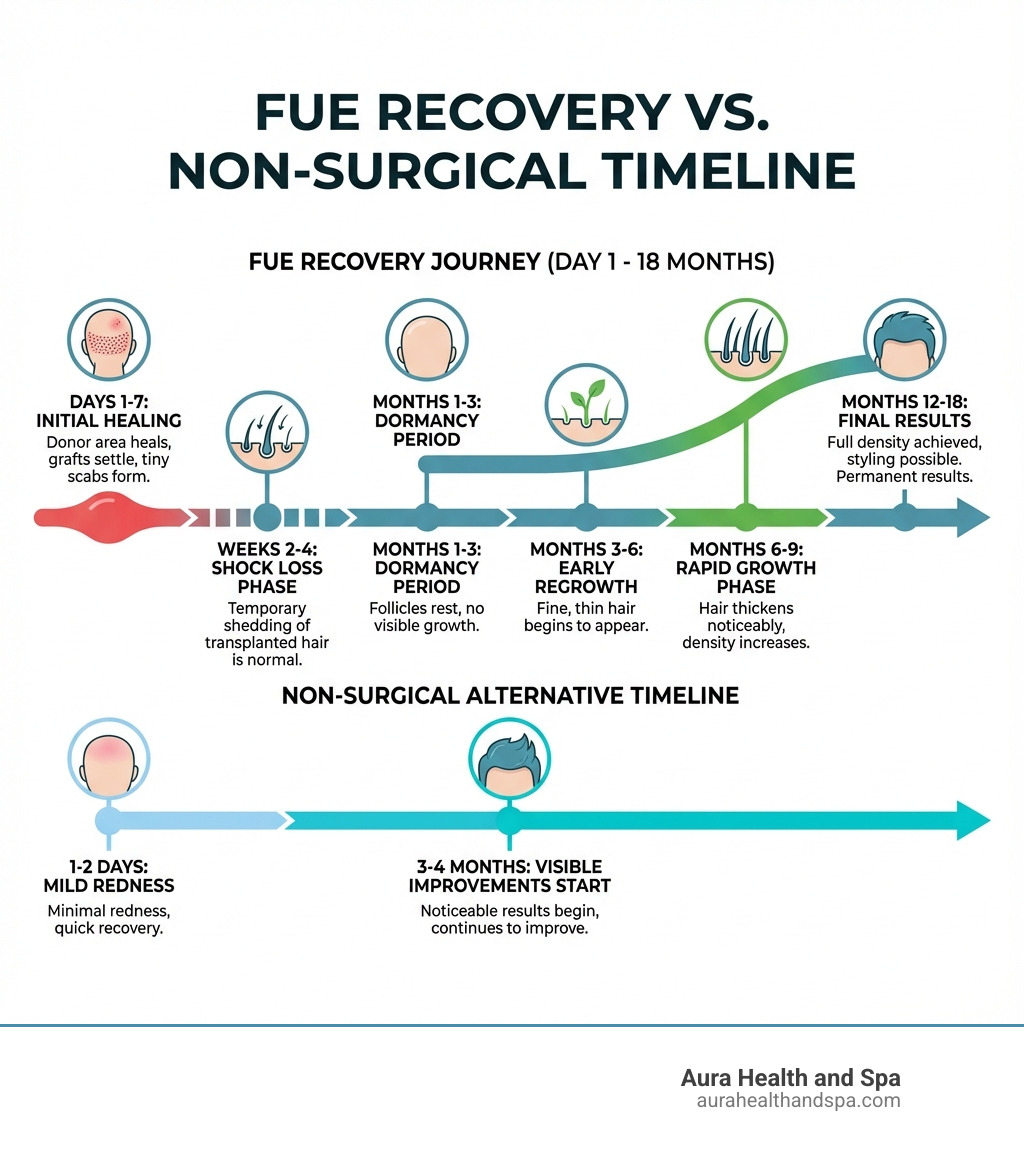
- Days 1-7: Donor area heals with tiny red holes; grafts begin to settle
- Weeks 2-4: “Shock loss” occurs (temporary shedding is normal)
- Months 3-4: First new hair growth appears, thin and fine
- Months 6-9: Rapid growth phase begins; hair thickens noticeably
- Months 12-18: Final results visible with full density and styling possible
Since 2016, surgical hair restoration procedures have increased by more than 16% worldwide. These procedures involve removing individual hair follicles from a donor area (typically the back of your head) and implanting them to thinning or balding regions. Each extraction creates tiny incisions no more than a millimeter wide, making some methods minimally invasive compared to older strip methods.
But recovery takes time. The surgery itself lasts 4-8 hours, but the surgically implanted hair will shed within weeks, then slowly regrow over many months. Most patients can return to work within 1-2 days, though many choose to take a full week off. Patients must avoid strenuous exercise, protect their scalp from sun exposure, and follow strict washing protocols during the critical first weeks.
The good news for those who choose surgery is that once the surgically implanted follicles settle in, they’re permanent. The challenge is the waiting period and the careful aftercare required to protect the investment.
At Aura Health & Spa in Plymouth, Michigan, we understand that a lengthy surgical recovery isn’t right for everyone. That’s why our Medical Director oversees advanced non-surgical hair restoration treatments like the FolixMD fractional laser and De|Rive Ultra Plus, which deliver results with virtually no downtime. I’m Dr. Reema Sethi, and with over 15 years of experience in emergency medicine, I’ve developed a deep understanding of healing processes. I now apply this expertise to help clients make informed decisions about their hair restoration journey, whether they are considering surgery elsewhere or are interested in our advanced non-surgical alternatives. This guide will help you understand what to expect from surgical recovery and how it compares to faster, non-invasive options.
Simple guide to surgical hair restoration recovery:
The Surgical Hair Restoration Recovery Timeline: What to Expect After Surgery
Starting on a surgical hair restoration journey is an exciting step towards regaining confidence, but understanding the surgical hair restoration recovery timeline is paramount. It’s a marathon, not a sprint, with each stage playing a crucial role in the final outcome. While the procedure itself can be minimally invasive, the healing process is gradual, marked by distinct milestones in both the donor and recipient areas. Knowing what to expect day-by-day and month-by-month helps set realistic expectations and ensures patients follow all necessary aftercare protocols for the best possible results.
The First Week: Immediate Post-Op Care and Healing
The immediate aftermath of a surgical procedure sets the stage for the entire surgical hair restoration recovery. Right after surgery, patients will notice some changes in their scalp, but these are normal parts of the healing process.
What to Expect:
- Swelling: It’s common to experience swelling, particularly on the forehead and around the eyes. This usually peaks around day 4 and then gradually subsides. Surgical teams often emphasize that elevating the head while sleeping, using 3-4 pillows or a neck pillow, can significantly help manage this in the first 3-5 days. Applying a cold compress can also provide relief.
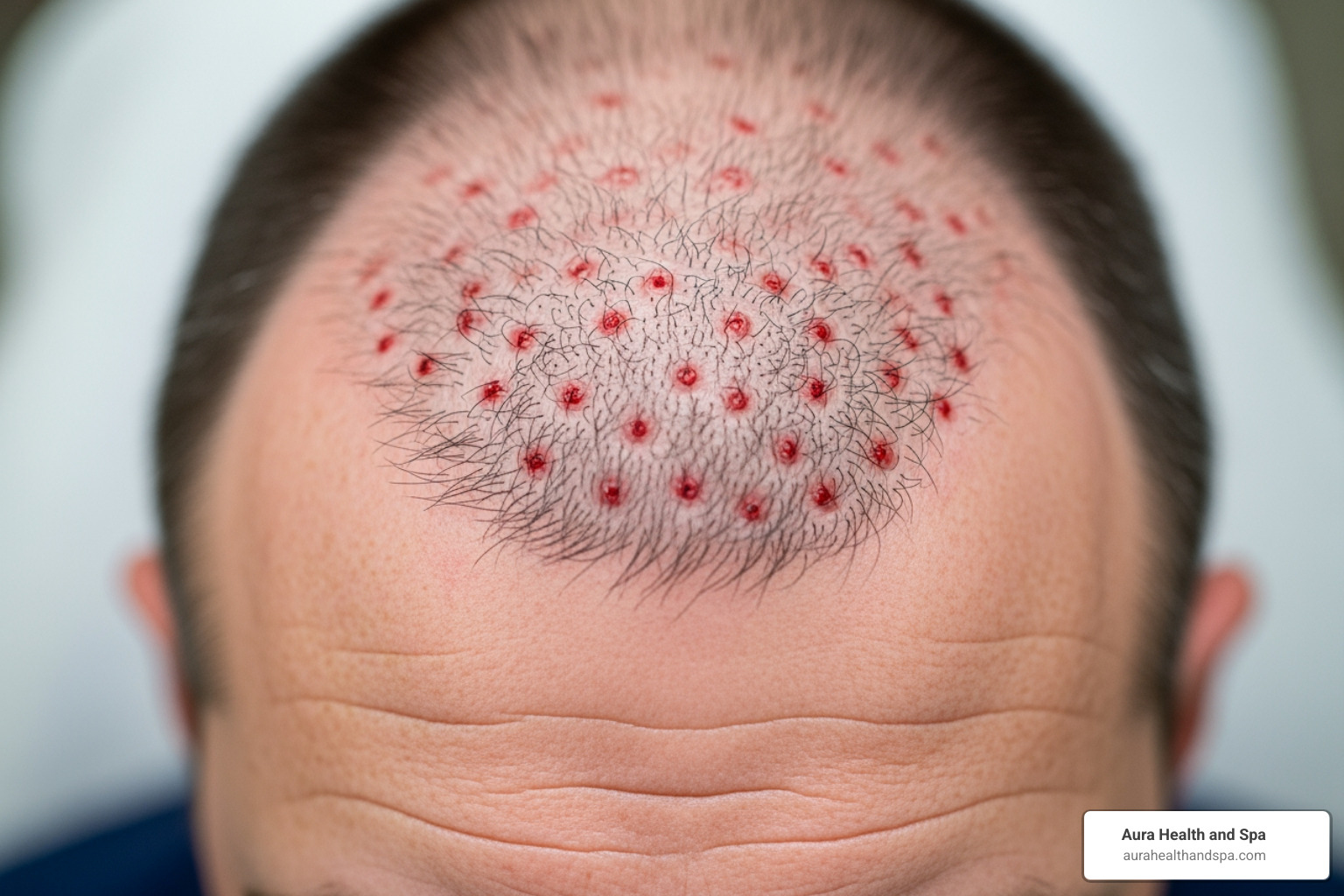
- Redness: Both the donor and recipient areas will appear red. The recipient area might look like it has tiny red dots where the grafts were placed, while the donor area will show small red holes from where the follicles were harvested.
- Scabbing: Small scabs will form around each implanted follicle in the recipient area. This is a natural protective mechanism.
Donor Area Healing:
The donor area, typically at the back of the head, experiences tiny incisions, usually less than a millimeter wide. These usually heal remarkably quickly, often within 2-3 days. By day 7, most patients show very little sign of a procedure in their donor area.
Recipient Area Care:
The newly implanted grafts are delicate during this initial phase.
- Avoiding Touch: It’s crucial for patients to avoid touching, scratching, or rubbing the implanted area for at least the first 4 days to prevent dislodging the grafts.
- Grafts Settling: The grafts begin to settle within 5-7 days. By day 7-10, they are generally considered securely established, significantly reducing the risk of dislodgement.
- Pain Management: While the procedure is usually painless due to local anesthetics, some mild discomfort or tenderness might occur. This is typically manageable with mild painkillers prescribed by the surgeon.
- Activity Restrictions: During this critical first week, minimal exercise is recommended. Patients should avoid strenuous activities that could increase blood pressure to the scalp or cause excessive sweating, which might compromise the healing grafts.
Adhering strictly to the surgeon’s aftercare instructions during this first week is vital for the success of the procedure.
The Second Week to First Month: Navigating ‘Shock Loss’
As patients progress into the second week of their surgical hair restoration recovery, they’ll observe further scalp healing. The scabs in the recipient area will gradually begin to fall off, and the redness will start to subside. This is also the period when many patients encounter a phenomenon known as ‘shock loss.’
What is Shock Loss?
Around two weeks after a surgical procedure, patients may notice that their newly implanted hairs are falling out. This is ‘shock loss,’ and it’s a completely normal and expected part of the recovery process. It’s the hair shaft that falls out, not the follicle itself. The implanted hair follicles, having undergone the trauma of relocation, enter a resting phase (telogen effluvium) before beginning their new growth cycle. This temporary hair shedding makes way for robust, new hair growth. The resting phase of shock loss can last up to two months.
Managing Expectations:
While seeing new hairs fall out might be alarming, it’s essential to remember that this is a sign that the process is working. The root is still there, securely embedded, preparing to grow new, permanent hair. This phase can sometimes have a psychological impact, but surgical teams typically reassure their clients that it’s a temporary and necessary step.
Months 2-6: The First Signs of New Growth
After navigating the initial healing and the ‘shock loss’ phase, patients enter what’s often referred to as the dormancy period, typically lasting from month 1 to month 3. During this time, it’s common to feel impatient, as visible results are minimal. The follicles are resting and preparing for their next growth cycle.
New Hair Emerges:
The real excitement usually begins around months 3-4, when the first signs of new hair growth appear. Initially, these hairs will be thin and fine, almost like peach fuzz. This is entirely normal, and these delicate strands are the precursors to thicker, stronger hair.
Noticeable Density and Thickening:
As patients move into months 4-6, the growth accelerates, becoming much more noticeable. This is a rapid growth phase where the newly emerged hairs begin to thicken and gain density. Patients start to get a good idea of the final appearance. Hair typically grows about 1 cm per month, so by the fifth month, about 20% progress in hair growth may be observed. The biggest improvement generally occurs between the fifth and ninth months, with coverage reaching up to 80% by six months. This period marks a significant visual improvement as the hairline starts to take shape.
Months 6-18: The Long Road to Final Results
The journey doesn’t end with initial growth. The period from 6 to 18 months is where the magic truly unfolds, leading to the full and final results of a surgical procedure.
Continued Growth and Maturation:
- Significant Improvement (6-9 months): By six months, hair growth is at its most rapid rate, with strands getting thicker and stronger each day. Many patients see significant improvement, and coverage can reach up to 80%.
- Final Maturity (9-12 months): The hair continues to grow and mature. By the end of the 12th month, hair growth reaches almost 90%. The implanted hair begins to blend seamlessly with existing hair, both in texture and color.
- Full Results (12-18 months): The entire process is finalized at the end of the 14th month, though it can take as long as 18 months for the full results of the surgical procedure to be visible and for the hair to reach its final maturity and appearance. This is when hair density is at its peak, and patients can truly appreciate the full change.
Styling and Care:
Once the hair is fully established and mature, it can be treated just like natural hair. This includes styling, cutting, and even coloring. Surgeons generally recommend waiting at least four weeks before the first haircut and at least one month before coloring the hair, performing a patch test first, as new follicles might be more sensitive. The patience exercised during this long road to recovery is ultimately rewarded with a natural-looking, permanent solution to hair loss.
Key Surgical Hair Restoration Recovery Challenges: Side Effects and Activity Restrictions
While the promise of a fuller head of hair is exciting, navigating surgical hair restoration recovery requires diligence and adherence to specific aftercare practices. A surgeon’s instructions are the roadmap to success, and compliance is crucial to protecting the investment. Understanding and managing common side effects, along with adjusting one’s lifestyle, are key components of a smooth recovery.
Managing Common Side Effects of Surgical Hair Restoration Recovery
Even though some surgical methods are minimally invasive, it’s still a surgical operation, and the body will react. Knowing how to manage these common side effects can make the recovery much more comfortable.
- Swelling Management: As mentioned, swelling, particularly around the forehead and eyes, is common. It usually peaks around day 4. To help manage this, patients are advised to keep their head liftd while sleeping for the first 3-5 days. Using a cold compress on the swollen areas can also provide relief. Proper hydration is also beneficial.
- Itching Management: Itching is a very common sensation during the healing process, indicating that the scalp is mending. It’s important for patients to avoid scratching, as this can dislodge the implanted follicles or introduce infection. A surgeon may recommend antihistamines or specific moisturizing sprays to alleviate itchiness.
- Scab Management: Small scabs will form around the implanted grafts. These are a normal part of healing. Patients receive specific instructions on how to gently wash their hair starting around day 5. This gentle washing helps soften and eventually remove the scabs. It is absolutely crucial not to pick at the scabs, as this can dislodge the delicate grafts, leading to poor growth or even infection.
- Folliculitis: Sometimes, small, pimple-like lesions (folliculitis) can appear as the new hairs begin to grow. In most cases, these subside on their own without intervention. However, if they become painful, inflamed, or if a patient notices more than 2-3 pimples, they should contact their doctor for advice.
What to Avoid During the Surgical Recovery Period
Protecting newly implanted grafts and ensuring optimal healing involves avoiding certain activities for specific periods.
- Strenuous Exercise: Surgeons advise against strenuous exercise for at least the first two weeks, and ideally for up to four weeks. Activities that cause excessive sweating or increase blood pressure can put stress on the grafts, potentially dislodging them or increasing swelling. Light activities, like gentle walking, can usually be resumed after a week.
- Sun Exposure: Direct sun exposure to a healing scalp can cause damage and affect pigmentation. For the first week, sun exposure should be limited to no more than 5 minutes. For up to six months, it is recommended to wear a loose-fitting hat or use a high-SPF sunscreen (SPF 30+) if outdoors for prolonged periods.
- Alcohol and Smoking: Both alcohol and smoking can impair the healing process. Alcohol can thin the blood and increase swelling, while smoking restricts blood flow, which is vital for graft survival and proper healing. It’s best for patients to avoid both for at least a few weeks post-procedure.
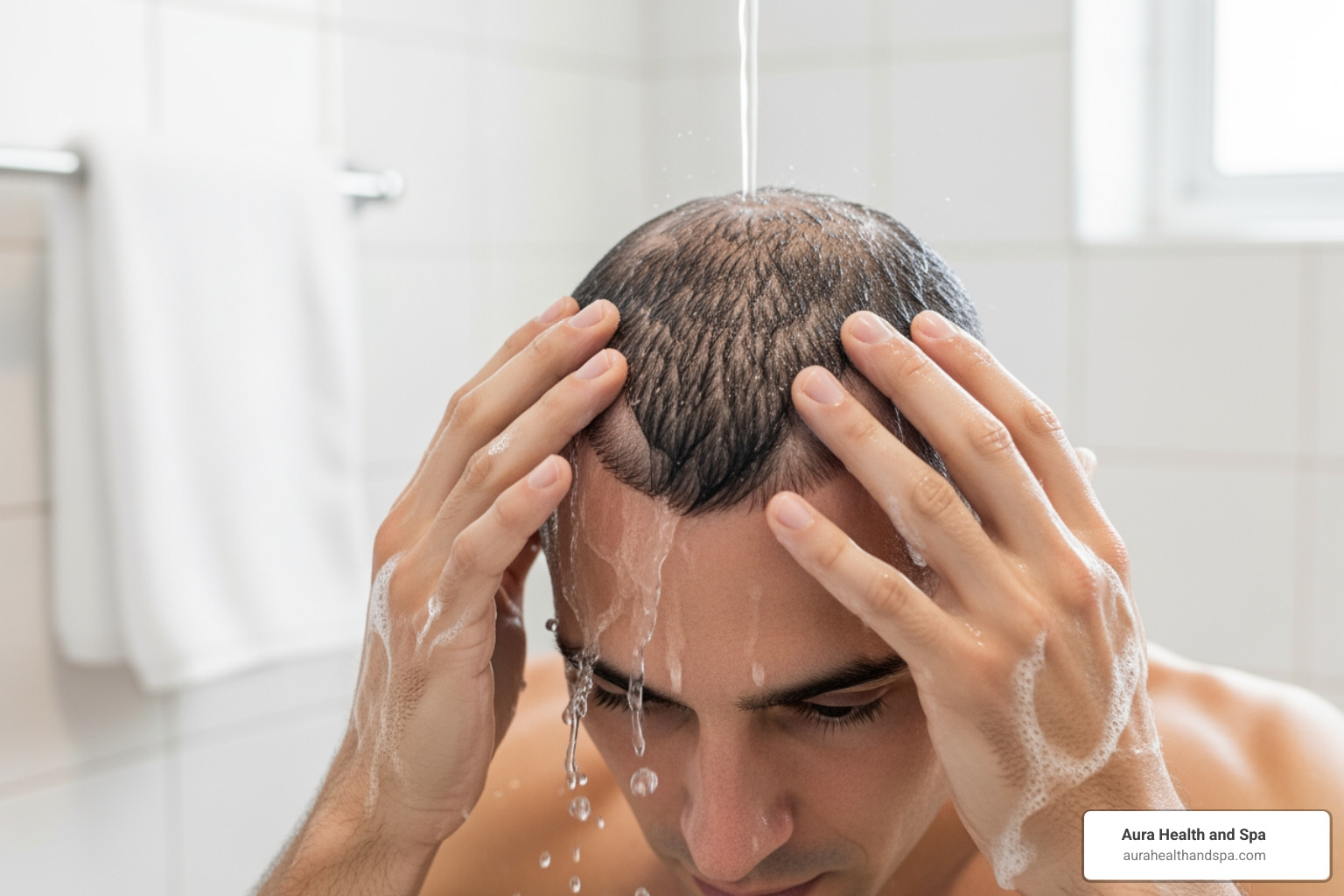
- Hair Washing: Patients receive detailed instructions on when and how to wash their hair. Typically, gentle washing with a special shampoo starts around day 5. Aggressive scrubbing or using harsh water pressure should be avoided.
- Hair Styling, Cutting, or Coloring: Patients should wait at least four weeks after their procedure before getting a haircut, and ensure any redness, swelling, or scabbing has resolved. For hair coloring, it’s advised to wait at least one month, and always perform a patch test as the new follicles may be more sensitive. Harsh chemical products and heated styling tools should be avoided in the initial months to protect the delicate new growth.
A Faster Path: Recovery from Non-Surgical Hair Restoration
While understanding surgical hair restoration recovery is essential for those considering surgical options, it’s also important to know that a faster, less invasive path to hair restoration exists. At Aura Health & Spa in Plymouth, Michigan, we specialize in advanced, non-surgical solutions that offer remarkable results with virtually no downtime, contrasting sharply with the extensive recovery period of surgical procedures.
Our approach focuses on stimulating your body’s natural growth mechanisms without the need for incisions, donor site harvesting, or the prolonged healing associated with surgery. This means you can return to your daily routine almost immediately, making it an ideal choice for those who prioritize convenience and minimal interruption to their lives. We believe in providing visible results without the downtime, aligning with our core idea that “Confidence starts with results you can see.”
You can learn more about our comprehensive approach to non-surgical hair restoration, including our advanced laser and regenerative therapies, by visiting our dedicated page: Hair Restoration Folix Laser. We also use cutting-edge treatments like Platelet-Rich Plasma (PRP) to harness your body’s own healing power for hair regrowth. Explore the benefits of PRP on our site.
Recovery After Folix™ Laser and De|Rive Treatments
At Aura Health & Spa, we are proud to offer innovative non-surgical hair restoration treatments like FolixMD and De|Rive Ultra Plus, which provide a significantly easier recovery experience compared to surgical methods.
- FolixMD Laser Treatment: Our FolixMD treatment uses the Lumenis FoLix fractional laser. This is not a low-level laser therapy (LLLT) device. Instead, it works by creating precise microthermal zones with targeted, concentrated energy. This sophisticated approach activates the body’s natural healing response, stimulating dormant hair follicles and promoting new hair growth. The recovery from FolixMD is exceptionally gentle: you might experience mild redness in the treated area immediately after, which typically subsides within a few hours. There is virtually no downtime, allowing you to resume your normal activities right away.
- De|Rive Ultra Plus: This advanced plant-based serum complements our laser treatments, providing essential nutrients and growth factors to the scalp. Applied topically, it supports hair health without any recovery period.
For both treatments, the aftercare is straightforward, primarily involving following our licensed providers’ instructions for gentle scalp care and product application. The contrast with the weeks and months of surgical hair restoration recovery is striking, offering a truly convenient path to hair rejuvenation.
To find more about how these treatments can help you achieve your hair goals with minimal fuss, visit our page: More info about our advanced hair restoration services.
Recovery After PRP and PDGF+ Injections
Another cornerstone of our non-surgical hair restoration offerings at Aura Health & Spa involves advanced injectable therapies like Platelet-Rich Plasma (PRP) and PDGF+. These treatments leverage your body’s natural healing capabilities to revitalize hair follicles, with a recovery process far less demanding than surgical hair restoration recovery.
- PRP Therapy Explained: Platelet-Rich Plasma (PRP) therapy involves drawing a small amount of your blood, processing it to concentrate the platelets (which are rich in growth factors), and then injecting this concentrated plasma into your scalp. These growth factors stimulate dormant hair follicles, encouraging new growth and strengthening existing hair. The procedure is quick, and while you might feel minimal discomfort during the injections, it’s generally well-tolerated.
- PDGF+ Explained: We also use PDGF+ (Platelet-Derived Growth Factor), a potent concentrate of growth factors that can be combined with PRP or used as a standalone treatment to further improve follicular stimulation.
Post-Treatment Experience:
After PRP or PDGF+ injections, you may experience mild scalp tenderness and minor swelling for 1-2 days. This is typically mild and resolves quickly. We advise avoiding strenuous exercise for 24 hours post-treatment to allow the injected solution to settle properly. Beyond that, you can return to your regular activities. There are no incisions, no scabs, and no prolonged healing phases, making these treatments a fantastic option for those seeking effective hair restoration without the significant commitment of surgical recovery.
Our comprehensive spa services, including these innovative hair restoration treatments, are designed to help you look younger, feel more confident, and love your reflection again. Explore all our offerings: Spa Services.
Frequently Asked Questions About Hair Restoration Recovery
We often hear many questions from our clients in Plymouth, Michigan, about what to expect after hair restoration treatments. Whether you’re considering surgical options or our non-surgical options, understanding the recovery and expected outcomes is key.
How long does the donor area take to fully heal after a surgical procedure?
The donor area after a surgical procedure heals relatively quickly compared to the overall surgical hair restoration recovery timeline. Immediately after the procedure, you’ll see small red holes where each individual follicle was extracted. These tiny incisions typically heal within 2-3 days. By day 7, most people show very little sign of the procedure in their donor area. The redness will subside, and the small scabs will fall off. However, while the surface healing is fast, the donor hair, once removed, is gone forever. This is why careful planning and judicious use of the donor area are critical in surgical hair restoration.
With our non-surgical hair restoration methods at Aura Health & Spa, there is no donor area involved. This means no incisions, no healing time for a donor site, and absolutely no scarring, offering a significant advantage for those seeking to avoid any surgical aftermath.
When can I see the final results from hair restoration?
Patience is truly a virtue when it comes to hair restoration, regardless of the method.
- For Surgical Procedures: The full journey to final results is quite long. You’ll typically start seeing initial thin hair growth around 3-4 months, with noticeable thickening and density by 6-9 months. However, the final appearance, with full density and maturation of the implanted hair, can take anywhere from 12 to 18 months. The biggest improvement generally occurs between the 5th and 9th months, with coverage reaching up to 80% by 6 months. The entire process is often finalized around the 14th month.
- For Non-Surgical Treatments: With our advanced non-surgical treatments like FolixMD, PRP, and PDGF+, clients often begin to see initial improvements in hair texture and reduced shedding within 3-4 months. Optimal results usually become evident around 6 months, especially after completing a recommended series of treatments. While the growth is gradual, the timeline for visible improvement is generally faster than surgical options, and without the initial shock loss phase. We focus on consistent, measurable improvement to help you achieve your hair goals sooner and with less interruption.
Conclusion: Choosing the Right Path for Your Hair Goals in Michigan
Navigating hair restoration can feel overwhelming, but understanding the recovery process is key to making an informed decision. As we’ve explored, surgical hair restoration recovery is a significant commitment, requiring considerable time and patience—often 12 to 18 months—to see the full, permanent results. It involves immediate post-operative care, managing swelling and scabbing, enduring the ‘shock loss’ phase, and patiently waiting for new hair to grow and mature.
For many in Plymouth, Michigan, a faster, easier path with minimal to no surgical downtime is a more appealing option. This is where Aura Health & Spa excels. Our advanced, non-surgical hair restoration treatments, including the FolixMD fractional laser, De|Rive Ultra Plus, PRP, and PDGF+, offer a compelling alternative. These methods stimulate natural hair growth without incisions, donor site healing, or the prolonged recovery associated with surgery. You can often return to your normal activities immediately, with initial improvements visible in months, not over a year.
The factors influencing the success of any hair restoration journey include your overall health, diligent adherence to aftercare instructions, and, crucially, the skill and expertise of your chosen provider. At Aura Health & Spa, our Medical Director oversees all procedures, and our licensed providers deliver precision, professionalism, and visible results you can trust. We are dedicated to helping our clients in Metro Detroit look younger, feel more confident, and love their reflection again.
Whether you’re weighing the long-term commitment of surgical restoration or seeking the convenience and rapid recovery of non-surgical solutions, we invite you to explore the best path for your hair goals.
Find the best hair restoration plan for you.
by Aura Health and Spa | Feb 24, 2026 | Skincare
Why Aura Photography Michigan Captures Attention
Aura photography Michigan is growing in popularity as people search for unique ways to visualize their energy and explore self-findy. Whether you’re curious about the colors surrounding you or looking for a memorable experience, here’s what you need to know:
What to Expect:
- Session uses biofeedback technology and specialized cameras to capture your “energetic signature”
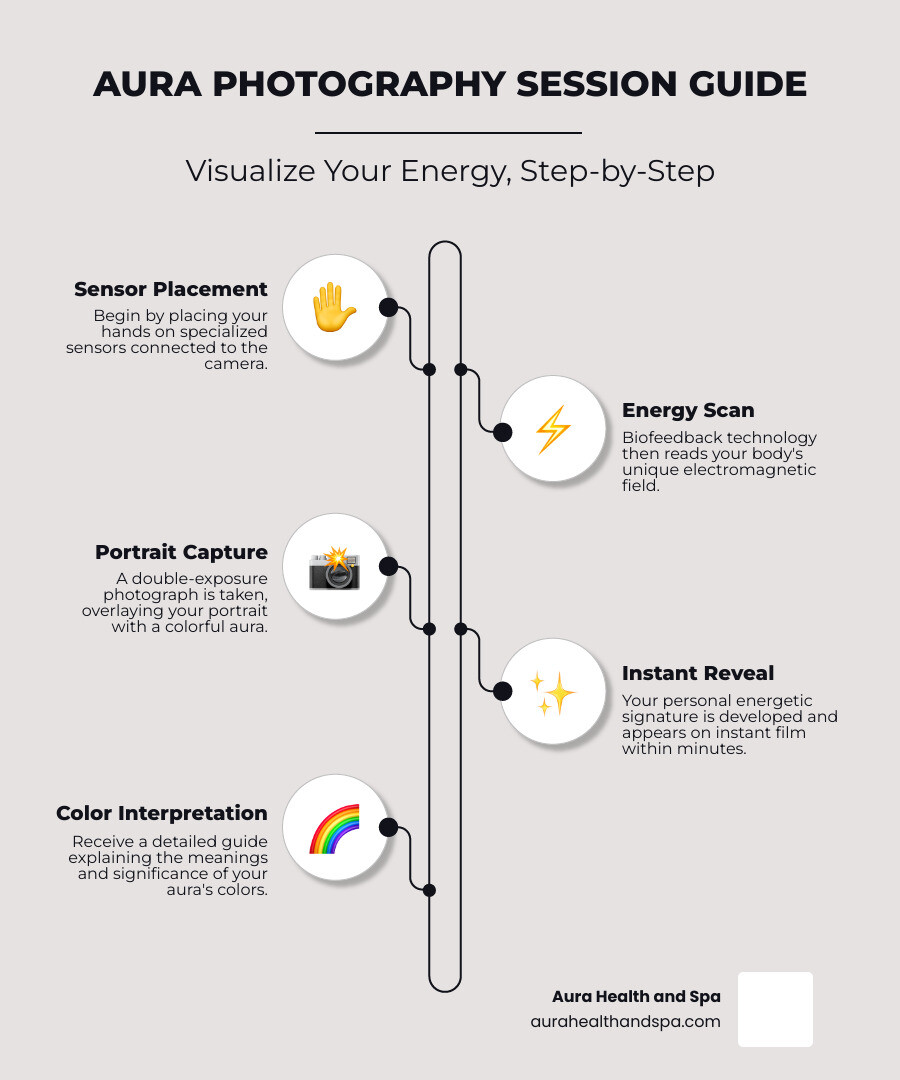
- Results appear on instant film within minutes
- Colors represent different aspects of your emotional and spiritual state
- Sessions available for individuals, couples, and even pets (with specialized equipment)
Typical Session Experience:
- Place hands on sensors connected to the camera
- Biofeedback reads your electromagnetic field
- Double-exposure photography captures your portrait with colorful aura overlay
- Receive interpretation guide explaining what the colors mean
Aura photography isn’t new—the technology dates back to the late 1970s. Today’s practitioners in Michigan use both vintage analog cameras with rare, out-of-production packfilm and modern digital equipment. The experience blends art, energy work, and personal reflection.
Some view aura photography as a window into their metaphysical energy field. Others see it as a fun, introspective experience that sparks self-awareness. Either way, the colorful portraits serve as unique snapshots of a moment in time—capturing how you felt in that specific instant.
As Dr. Reema Sethi, I’ve spent over 15 years in emergency medicine before expanding into medical aesthetics at Aura Health & Spa in Plymouth, Michigan, where I’ve witnessed how people seek ways to align their inner vitality with their outer appearance, including experiences like aura photography Michigan. Whether you’re exploring the metaphysical side of energy visualization or looking for tangible ways to improve your visible radiance through services like Glo2facial, Hydrafacial, Morpheus8 RF Microneedling, ResurFX laser, or the medium depth perfect derma peel (performed by my highly trained staff), understanding both paths can help you make confident choices about your wellness journey.
What is Aura Photography and How Does it Work?
At its core, aura photography offers a visual representation of the energy field believed to surround every living being. This “aura” is often described as an electromagnetic field, a vibrant mix of colors that reflects our inner state. The process of capturing this invisible energy into a tangible image is a fascinating blend of technology and intuition.
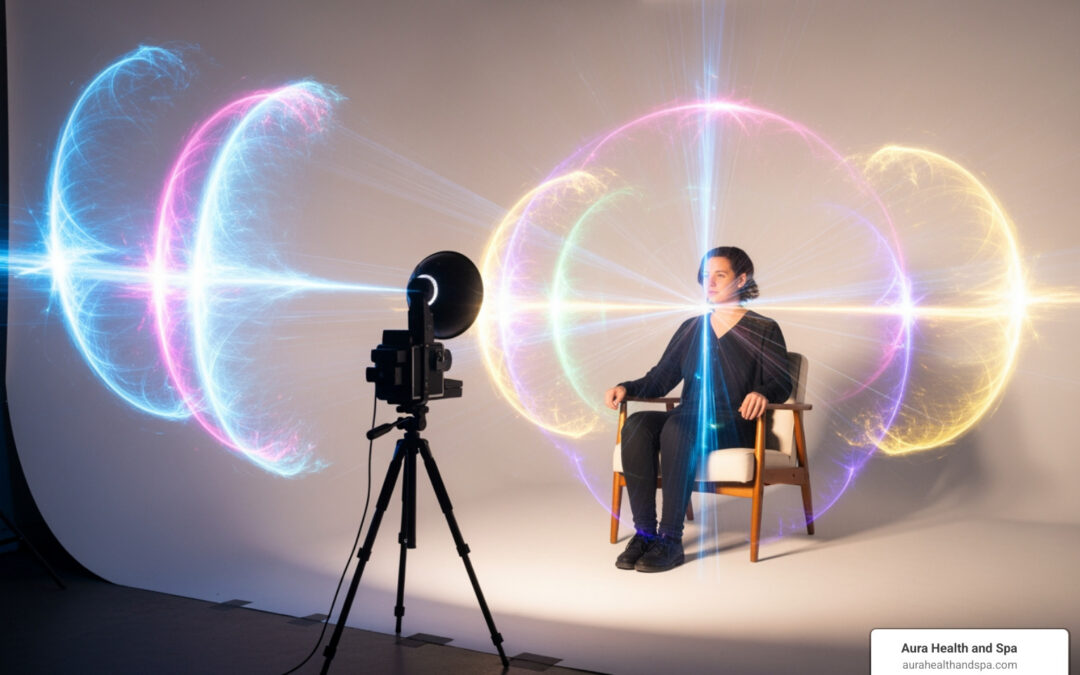
The technology behind aura photography, pioneered in the late 1970s, relies on biofeedback. When you place your hands on specialized sensors, these sensors measure the electromagnetic data emitted by your body. This data, unique to your energetic signature, is then translated into specific colors and patterns. An analog camera, often using instant film, captures your portrait simultaneously, creating a double exposure that overlays your image with these vibrant energy fields. It’s truly a moment where the metaphysical becomes visible.
Early forms, sometimes linked to Kirlian photography, focused on capturing the electrical discharge around objects. Modern aura cameras, like the NextGen Auracam 6000 mentioned in some practices, have evolved to offer detailed, colorful interpretations of your personal energy. The film used, especially the legacy analog biofeedback technology and professional instant peel-apart film, is often out-of-production, making each portrait a unique and sometimes rare artifact. You can learn more about the history of instant film to appreciate the technology involved.
This process aims to make your human atmosphere visible, offering a snapshot of your bio-magnetic, vibrational energy at that precise moment. It is an experiential portrait, inviting you to see your energy in a whole new light.
The Meaning Behind the Colors
Once your aura portrait is developed, you’ll be greeted by a spectrum of colors, each carrying its own significance. Understanding these colors is key to interpreting your energetic snapshot. While interpretations can vary slightly between practitioners, some common meanings include:
- Red: Often associated with passion, energy, strength, and a fiery spirit. It can indicate a strong will and a desire for action.
- Blue: Suggests calm, serenity, intuition, and communication. A prominent blue might mean you’re in a peaceful state or a gifted communicator.
- Green: Points to healing, growth, balance, and a connection to nature. It can signify personal development or a nurturing personality.
- Yellow: Represents optimism, joy, intellect, and creativity. A bright yellow often indicates a sunny disposition and an active mind.
- Purple/Violet: Linked to spirituality, wisdom, and intuition. These colors often appear in those with a deep spiritual connection or strong psychic abilities.
The placement of these colors also matters. Colors appearing above the head might relate to thoughts and aspirations, while those around the heart area could reflect emotional states. Our energy fields are dynamic, constantly shifting with our emotions, situations, and life stories. This means your aura colors can and do change, offering a unique reflection of your journey each time you have a portrait taken.
What to Expect During a Session
Starting on an aura photography session is a journey of self-findy. When you visit us at Aura Health & Spa in Plymouth, Michigan, we ensure a warm and welcoming environment for your experience.
The process typically begins with a brief discussion to help you relax and set an intention for your session. You’ll then be guided to sit in front of the specialized aura camera. For the portrait, you’ll place your hands gently on metal sensors. These sensors are crucial, as they read the biofeedback from your body, capturing your unique energetic data.
As the camera captures your image, it simultaneously translates the energy readings into a vibrant display of colors, which are then imprinted onto instant film. Within minutes, your unique aura portrait develops right before your eyes. It is always a moment of excitement and curiosity as the colors emerge.
After your portrait is ready, we provide you with an interpretation guide. This guide helps you understand the general meanings of the colors and their placement in your specific portrait, offering insights into your current energetic state. The duration of our sessions is designed to be comfortable and comprehensive, ensuring you have enough time to capture your aura and receive an initial understanding of its meaning. We believe in making this an insightful and thoughtful experience, focusing on the self-findy aspect rather than rushing the process.
In addition to aura photography, many guests at Aura Health & Spa choose to complement their experience with visible, results-driven treatments. Our licensed nurses and aestheticians, under the supervision of our Medical Director, perform services like the Glo2facial and Hydrafacial for a refreshed glow. To address expression lines, we provide neuromodulators like Dysport, Jeuveau, and Daxxify. For skin rejuvenation, we offer Morpheus8 RF Microneedling, ResurFX laser treatments, and premium microneedling packages with PRP, EXOE exosomes, or PDGF+. Our offerings also include the medium depth perfect derma peel, performed by Dr. Reema Sethi’s highly trained staff, and non-surgical hair restoration with FolixMD and De|Rive Ultra Plus.
Aligning Your Outer Self with Your Inner Energy
At Aura Health & Spa in Plymouth, Michigan, we believe true confidence comes from aligning your inner vitality with an outer appearance you love. While aura photography offers a glimpse into your energetic self, our science-backed aesthetic treatments are designed to deliver visible, lasting results that empower you to feel your best. Our approach focuses on science-backed solutions that deliver visible improvements, helping you love your reflection again. Rather than basic, one-off services, we emphasize premium, comprehensive treatment packages that often pair in-office procedures with professional skincare for superior, long-term results.
A Comprehensive Guide to Our Advanced Treatments
Our expert team of licensed nurses and aestheticians, overseen by our Medical Director, provides a range of advanced, non-surgical services designed to create a vibrant, healthy glow. It is important to note that with any aesthetic treatment, potential side effects like temporary bruising, redness, and swelling may occur. Our team will provide detailed aftercare instructions to ensure a smooth recovery and optimal results.
-
Neuromodulators: To soften expression lines, we offer neuromodulators like Dysport, Jeuveau, and Daxxify. These treatments relax facial muscles for a smoother, more refreshed appearance.
-
Advanced Facials: For an instant glow, our technology-driven facials like the Glo2facial and Hydrafacial cleanse, exfoliate, and hydrate the skin.
-
RF Microneedling: For skin tightening and texture improvement, Morpheus8 RF Microneedling combines microneedling with radiofrequency energy to stimulate collagen deep within the skin. We can enhance results by pairing it with advanced serums like EXOE exosomes or PDGF+.
-
Laser Rejuvenation: Our ResurFX laser is a powerful, non-ablative fractional laser that safely and effectively improves skin tone and texture for all skin types.
-
Premium Microneedling: Our premium microneedling packages utilize your body’s healing response, enhanced with PRP (Platelet-Rich Plasma), Exosomes (EXOE), or PDGF+ to promote smoother, more radiant skin.
-
Chemical Peels: The medium depth perfect derma peel, our strongest peel, is expertly performed by Dr. Reema Sethi’s highly trained staff to improve skin clarity and tone.
-
Hair Restoration: For non-surgical hair restoration, we offer FolixMD, which uses a fractional laser to activate the body’s natural healing response, and De|Rive Ultra Plus to support hair health and regrowth.
Your Guide to Aura Photography in Plymouth, Michigan
In Plymouth, Michigan, we believe in embracing all avenues that lead to self-findy and well-being. Aura photography Michigan offers a unique lens through which to view your inner self, complementing our holistic approach to beauty and confidence. While the metaphysical aspects of aura photography provide a fascinating insight into your energetic state, we understand that a visible, confident glow often stems from a combination of inner peace and outer care.
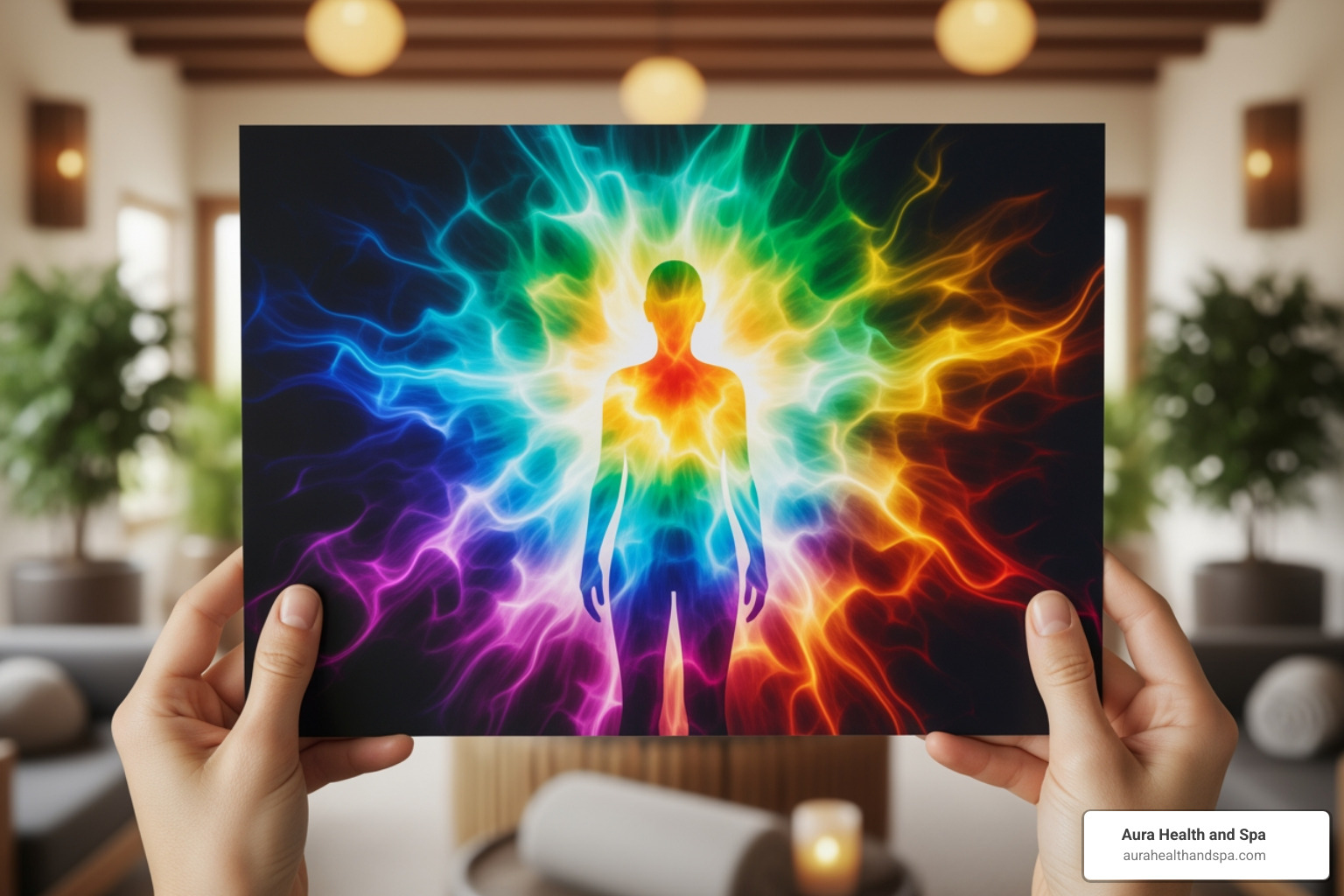
At Aura Health & Spa, we are proud to offer wellness-focused aura photography experiences. We aim to integrate this unique service into our offerings, providing a space where you can explore your energetic signature alongside our advanced aesthetic treatments. This allows us to cater to both your inner and outer radiance, ensuring a truly comprehensive approach to your well-being.
Experiencing Aura Photography at Aura Health & Spa
When you choose Aura Health & Spa in Plymouth, Michigan, for your aura photography session, you’re opting for an experience rooted in our commitment to your overall wellness. We incorporate aura photography as a way to improve your self-understanding, offering a visual representation of your current energy.
Our sessions are designed to be a peaceful and introspective experience. We provide a comfortable setting where you can connect with your inner self before capturing your unique energetic signature. Our team is dedicated to guiding you through the process, from positioning your hands on the sensors to explaining the vibrant colors that appear on your instant film portrait.
Booking a session with us is straightforward. We offer scheduled appointments to ensure personalized attention and a relaxed atmosphere. You can inquire about session availability and book directly through our website or by contacting our Plymouth location. We believe this unique, holistic approach allows you to gain deeper insights into your personal energy, complementing the visible changes we help you achieve with our aesthetic services.
Special Sessions for Couples and Pets
We understand that energy extends beyond the individual, encompassing our relationships with loved ones—both human and animal. That’s why at Aura Health & Spa, we also offer special aura photography sessions for couples and even for your beloved pets in Plymouth, Michigan.
For couples aura photography, two individuals sit together, and the camera captures their combined energy field. This provides a fascinating visual representation of how your energies blend and interact, offering insights into your connection and dynamic. It’s a beautiful way to celebrate your bond and see your shared energetic signature.
Pet aura photography is a truly unique offering, allowing you to glimpse the energetic essence of your furry companions. We use specialized pet sensors, distinct from human hand sensors, specifically designed to pick up the energy fields of dogs and cats. During these sessions, your pet will comfortably place their front paws on a metal plate for a brief moment while their aura is captured. We understand pets can be sensitive, so our sessions are designed to be calm and stress-free, often including complimentary organic treats and fresh water. We recommend bringing only one owner to minimize distractions and ensure your pet’s comfort.
Pet sessions are a wonderful way to honor the unique spirit of your animal companion. As a testament to our commitment to the community, a portion of the net proceeds from our pet portrait sessions are donated to local animal non-profits in Metro Detroit, such as Rebel Dogs Detroit, Detroit Dog Rescue, or Friends of Detroit Animal Care and Control. This allows your pet’s unique energy to contribute to the well-being of other animals in need.
Conclusion: Revealing Your Most Radiant Self
Exploring aura photography Michigan offers a captivating journey into the unseen world of your personal energy. Whether you’re drawn to the metaphysical insights it provides or simply enjoy the unique experience, it serves as a powerful reminder of the intricate connection between our inner states and how they manifest.
At Aura Health & Spa in Plymouth, Michigan, we believe in supporting both paths to confidence. We recognize that true radiance is a symphony of inner vitality and outer well-being. While aura photography provides a snapshot of your energetic signature, our advanced aesthetic treatments are designed to improve your visible glow. Our services include neuromodulators like Dysport, Jeuveau, and Daxxify to smooth expression lines; technology-driven facials like Glo2facial and Hydrafacial; Morpheus8 RF Microneedling and ResurFX laser for skin rejuvenation; the medium depth perfect derma peel performed by Dr. Reema Sethi’s highly trained staff; premium microneedling packages with PRP, Exosomes (EXOE), or PDGF+; and non-surgical hair restoration with FolixMD and De|Rive Ultra Plus. These ensure your outer appearance reflects the vibrant, confident person you are within.
We are dedicated to helping you achieve results you can see, empowering you to love your reflection again. Rather than basic, one-time services, we focus on premium, comprehensive treatment packages and professional skincare that support superior, long-term outcomes. Whether you’re seeking to understand your energetic blueprint or to refresh your skin with science-backed treatments, we are here to guide you. Find how we can help you reveal your most radiant self.
Book a consultation to enhance your visible glow today.
by Aura Health and Spa | Feb 23, 2026 | Skincare
Understanding Safety and Effectiveness for Melanin-Rich Skin
Morpheus8 on black skin is a safe and effective treatment option that addresses long-standing concerns about aesthetic procedures for darker skin tones. Unlike traditional lasers and resurfacing methods that carry a high risk of post-inflammatory hyperpigmentation (PIH), Morpheus8 works beneath the skin’s surface to deliver radiofrequency energy deep into the dermis while protecting the epidermis.
Key Safety Points for Morpheus8 on Black Skin:
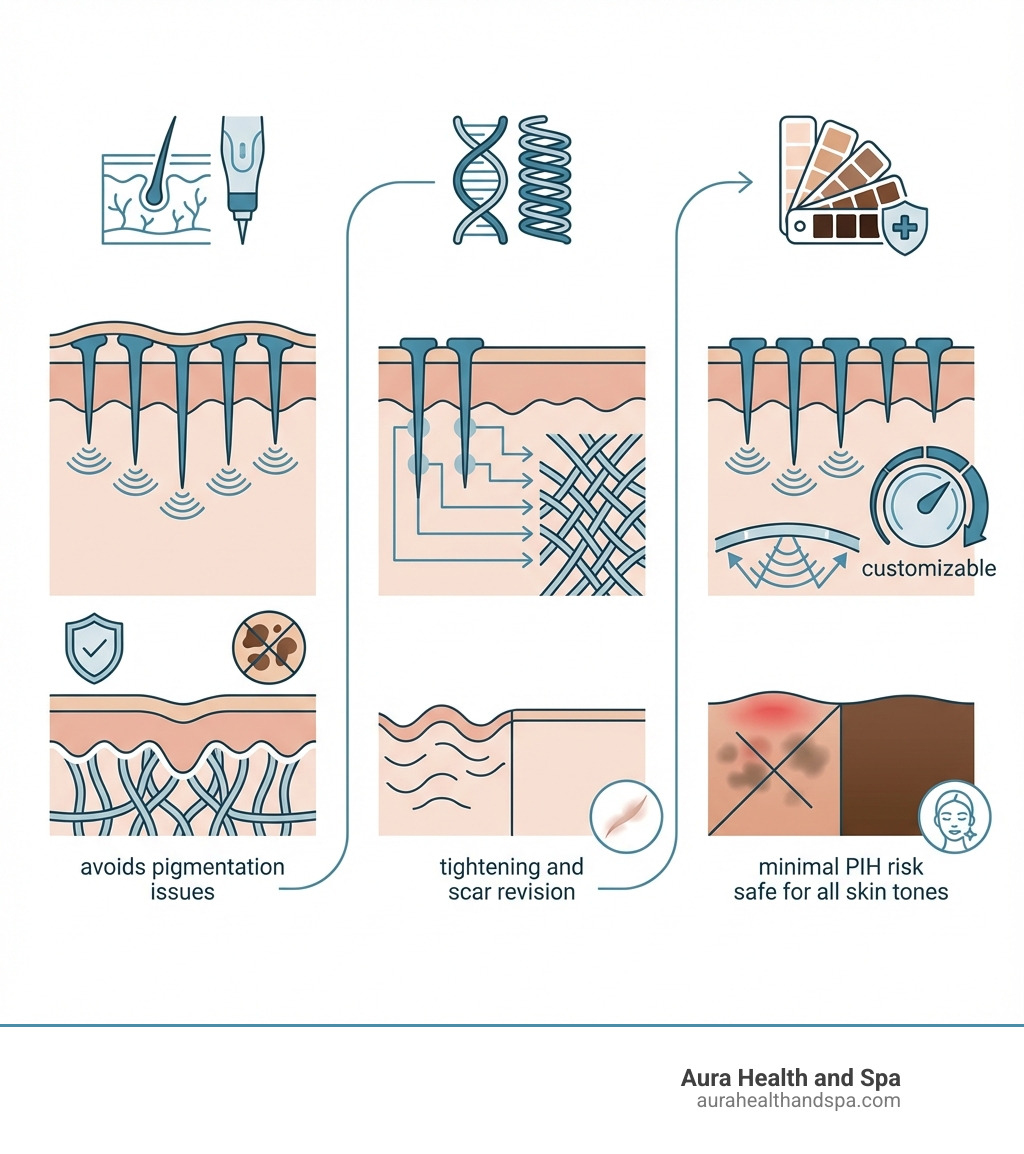
- Chromophore-Independent Technology – RF energy doesn’t target melanin, making it safe for all Fitzpatrick skin types (I-VI)
- Minimal PIH Risk – Coated microneedles protect the surface layer where pigmentation occurs
- Customizable Settings – Providers adjust depth and energy levels specifically for darker skin tones
- Proven Track Record – Clinical studies confirm safety and efficacy on Fitzpatrick type VI skin with no adverse pigment changes
What Morpheus8 Can Address:
- Acne scars and textural irregularities
- Fine lines, wrinkles, and skin laxity
- Uneven skin tone and dark spots
- Sagging jowls and neck concerns
- Under-eye concerns (with proper technique)
Treatment Overview:
- Sessions Needed: Typically 3-4 treatments spaced 4-6 weeks apart
- Downtime: 3-7 days of redness and swelling (may last up to two weeks)
- Results Timeline: Progressive improvement with full effects visible after 3-6 months
- Longevity: Results can last 1-3 years with proper maintenance
As Dr. Reema Sethi, I’ve seen how Morpheus8 on black skin delivers transformative results when performed with the right expertise and customized approach. At Aura Health & Spa in Plymouth, Michigan, our licensed providers specialize in treating all skin tones safely, pairing Morpheus8 with premium improvements like EXOE exosomes or PDGF+ to optimize healing and results.
Related content about morpheus8 on black skin:
What is Morpheus8 and How Does It Work?
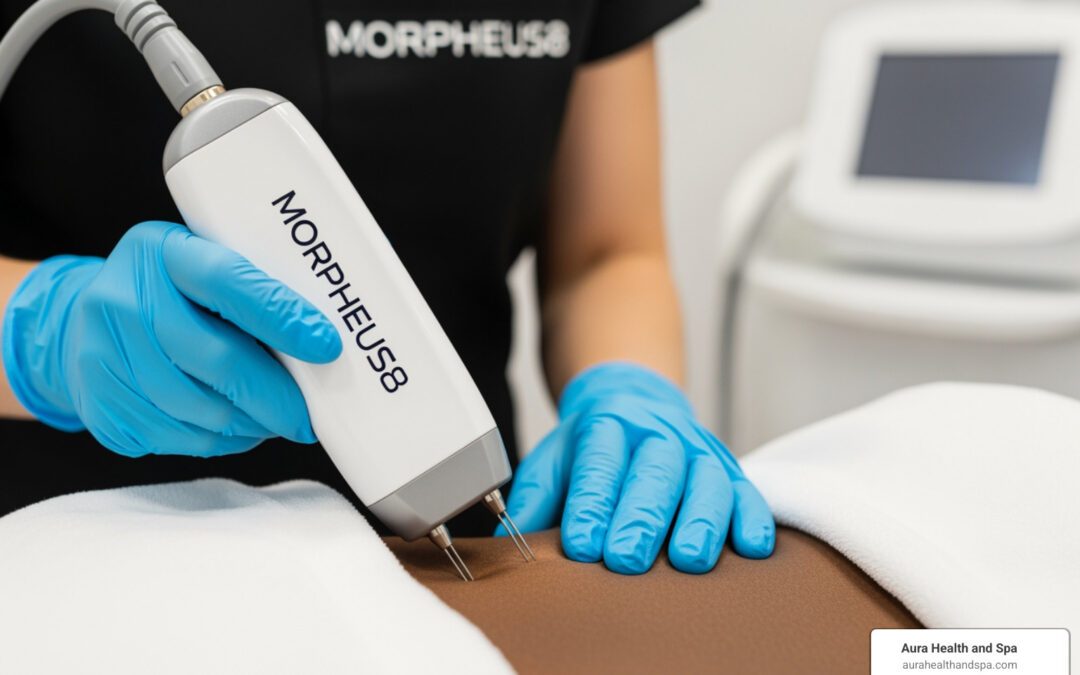
Morpheus8 is a cutting-edge, non-invasive skin resurfacing treatment that combines two powerful technologies: microneedling and radiofrequency (RF) energy. Imagine tiny, hair-thin needles creating microscopic channels in your skin, but with an added superpower: these needles also deliver controlled heat energy deep into the dermal layers. This dual-action process is what makes Morpheus8 so effective for a wide range of skin concerns.
Unlike traditional microneedling, which primarily relies on the physical micro-injuries to stimulate collagen, Morpheus8 takes it a step further by adding RF energy. This allows for subdermal adipose remodeling, meaning it can remodel the fat cells beneath the skin’s surface. This unique capability helps to sculpt and contour the treated area, offering a more comprehensive rejuvenation.
The device itself features 24 coated microneedles that penetrate the skin. The coating on these needles is crucial, especially for darker skin tones, as it allows the RF energy to be delivered precisely to the deeper dermal layers without causing thermal damage to the outermost layer of the skin, the epidermis. This bypasses the melanin-rich surface, significantly reducing the risk of unwanted pigmentation.

The Science of Skin Remodeling
The magic of Morpheus8 lies in its fractional treatment approach. When the tiny microneedles create controlled micro-injuries, your body’s natural healing response kicks in. Simultaneously, the RF energy delivered through these needles generates thermal heating in the dermis, which is the deeper layer of your skin. This heat stimulates a process called neocollagenesis – the production of new collagen – and the formation of elastin. Collagen and elastin are the essential proteins that provide structure, elasticity, and firmness to your skin.
By stimulating this natural renewal process, Morpheus8 helps to tighten existing collagen fibers and produce fresh, healthy collagen and elastin. This leads to a significant improvement in skin elasticity, texture, and overall skin quality.
At Aura Health & Spa, we improve these natural healing processes by pairing our Morpheus8 treatments with premium topical solutions like EXOE exosomes or PDGF+. These advanced serums are applied immediately after your Morpheus8 session to further improve healing, accelerate cellular regeneration, and optimize your results. This comprehensive approach ensures that your skin receives the maximum benefit from each treatment. You can learn More info about RF Microneedling on our website.
The Unique Advantages of Morpheus8 on Black Skin
For too long, individuals with darker skin tones have faced limited options for aesthetic treatments due to the heightened risk of post-inflammatory hyperpigmentation (PIH) and scarring from traditional lasers and resurfacing techniques. This is where Morpheus8 shines, offering a truly groundbreaking solution.
The key advantage of Morpheus8 for Fitzpatrick skin types IV-VI (which include Black and darker skin tones) is its ability to bypass the epidermis. The coated microneedles deliver RF energy directly into the dermis, the layer beneath the epidermis, without heating the surface. This is critical because the epidermis is where melanin (pigment) is concentrated. By avoiding thermal damage to the melanin-rich surface, Morpheus8 dramatically minimizes the risk of triggering PIH, which is a common concern for our clients with darker skin.
In contrast, many surface-level treatments, such as certain ablative lasers, cause controlled injury to the epidermis. While effective for lighter skin tones, this can lead to an overproduction of melanin in darker skin, resulting in dark spots or patches that can be more distressing than the original concern. Morpheus8’s innovative design and mechanism of action make it a much safer and more predictable option for achieving significant skin rejuvenation without these adverse pigmentary effects.
Addressing Common Concerns for Melanin-Rich Skin
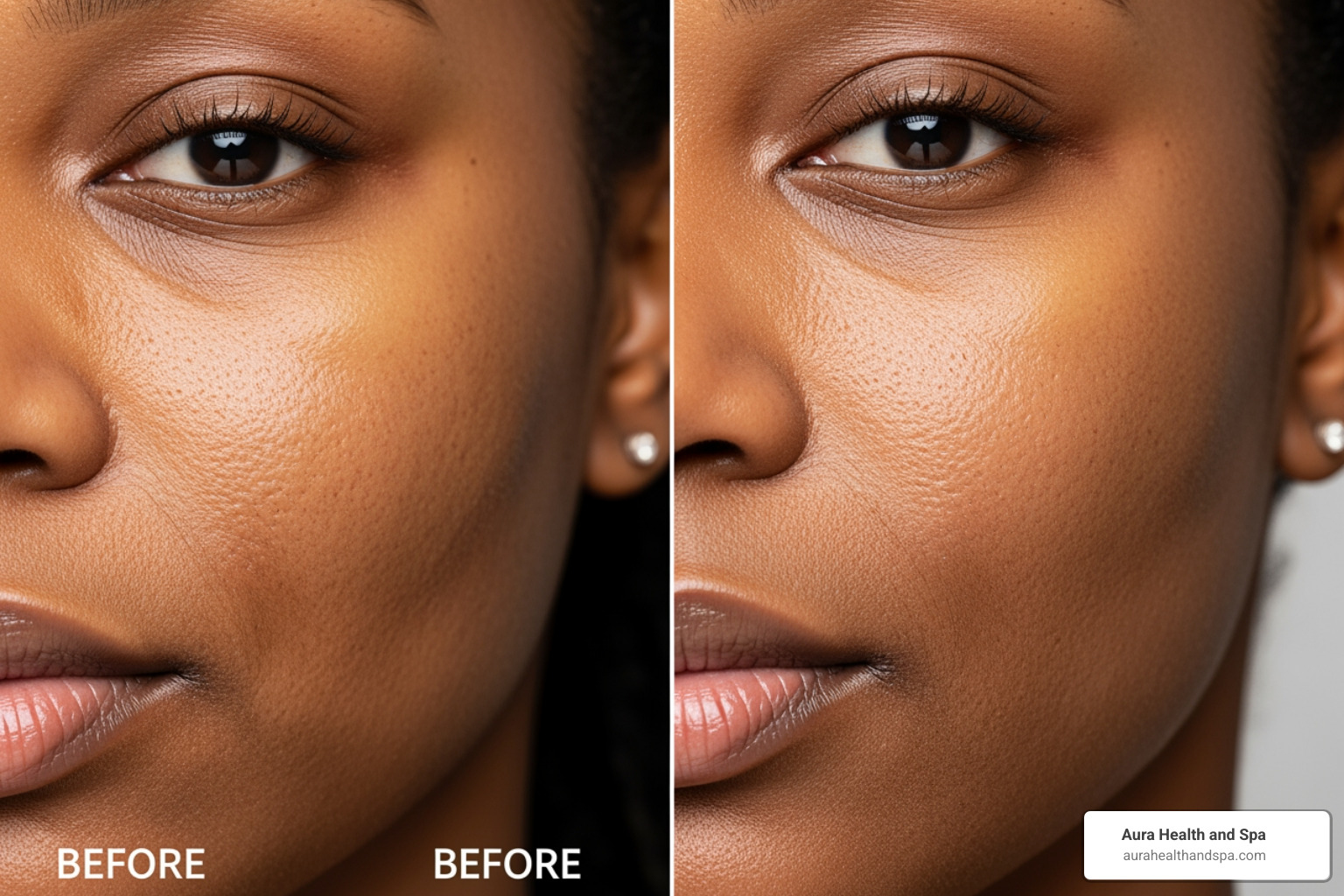
Morpheus8 on black skin is incredibly versatile and can effectively address a wide array of skin concerns that are prevalent among individuals with melanin-rich skin. These include:
- Acne Scars: Morpheus8 is a powerful tool for scar revision, particularly for atrophic acne scars. By stimulating deep collagen remodeling, it helps to smooth out depressed scars, improving overall skin texture.
- Uneven Skin Texture and Enlarged Pores: The treatment refines the skin’s surface, leading to a smoother feel and minimizing the appearance of enlarged pores.
- Fine Lines and Wrinkles: The collagen and elastin stimulation works wonders on early signs of aging, reducing the visibility of fine lines and wrinkles.
- Sagging Skin, Jowls, and Neck Laxity: Morpheus8’s ability to remodel subdermal fat and tighten tissues makes it excellent for improving skin laxity in the lower face, jawline, and neck, providing a more lifted and firm appearance.
- Under-Eye Rejuvenation: For concerns like skin laxity and undereye discoloration, Morpheus8 can be safely and effectively used to tighten the delicate skin around the eyes, though we do not offer under-eye fillers. Instead, we recommend treatments like Morpheus8, the medium depth perfect derma peel, and PDGF+ (used off-label) for this area.
These benefits contribute to overall skin rejuvenation, helping our clients achieve smoother, firmer, and more radiant skin. Explore our range of Facial Treatments to see how we can help you achieve your aesthetic goals.
Can Morpheus8 Treat Melasma on Black Skin?
Melasma is a complex skin condition characterized by patches of hyperpigmentation, often triggered by hormonal changes, sun exposure, and genetics. It can be particularly challenging to treat, especially on darker skin tones, due to the risk of exacerbating the condition with certain treatments.
While Morpheus8 has been shown to be effective in treating various forms of hyperpigmentation, its effectiveness in treating melasma may vary depending on the individual and the severity of the condition. In our practice, we consider Morpheus8 as a valuable component of a multimodal approach for melasma on black skin. This means it’s often used in conjunction with other therapies, such as specialized topical agents and strict sun protection, to achieve the best possible outcomes.
The chromophore-independent nature of Morpheus8, which means it doesn’t directly target melanin, helps reduce the risk of worsening melasma. However, precision and expertise are paramount. It’s crucial to consult with an expert provider who has extensive experience treating melasma on darker skin tones. They can assess your specific situation, manage expectations realistically, and tailor a treatment plan that prioritizes safety and efficacy. While improvement is possible, complete eradication of melasma can be difficult, and ongoing maintenance is often required. Understanding Understanding hyperpigmentation is the first step towards managing it effectively.
Your Morpheus8 Journey: What to Expect
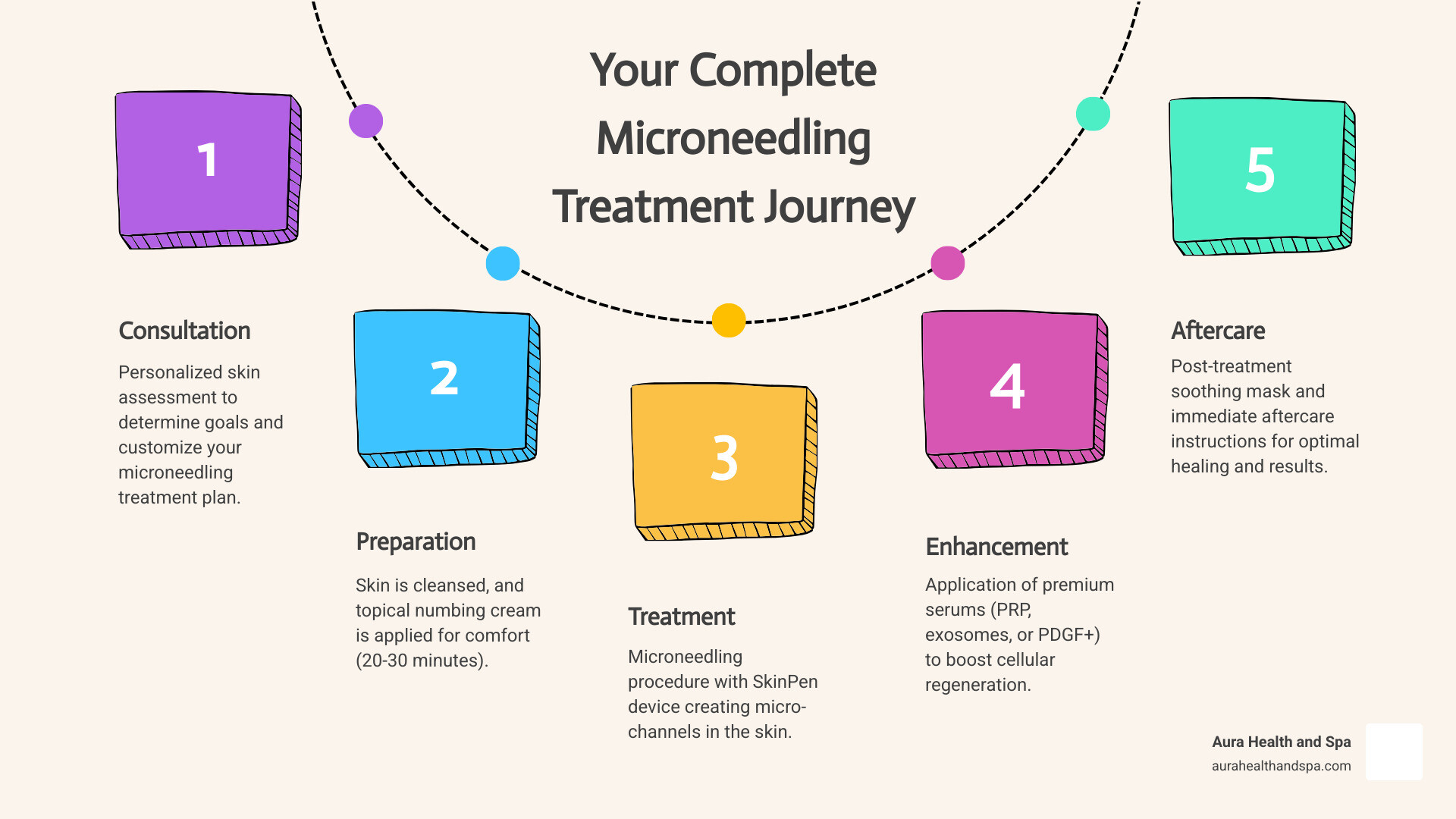
Starting on your Morpheus8 journey with us begins with a thorough and personalized consultation. This initial step is vital to ensure that Morpheus8 is the right treatment for your specific needs and skin type. Our licensed providers will carefully assess your skin type, discuss your aesthetic goals, and take a comprehensive medical history. This includes reviewing any current medications, past skin conditions, and previous cosmetic treatments to ensure your safety and tailor the most effective plan.
On the day of your treatment, your comfort is our priority. We apply a strong topical numbing cream to the treatment area, allowing it to take full effect for approximately 45-60 minutes. This ensures that the procedure is as comfortable as possible.
During the treatment itself, our skilled provider will use the Morpheus8 handpiece to apply the microneedles to your skin. You might feel a sensation of pressure and warmth as the RF energy is delivered. The treatment duration can vary depending on the size and number of areas being treated, but typically ranges from 30 minutes to an hour. Our team will guide you through each step, ensuring you feel informed and at ease.
Aftercare and Recovery for Morpheus8 on Black Skin
After your Morpheus8 treatment, it’s normal to experience some immediate side effects. You can expect redness, swelling, and tenderness in the treated areas. Some clients may also notice tiny scabs or grid-like marks on their skin, which are a natural part of the healing process. These side effects typically subside within 3-7 days, but for some individuals, particularly after more aggressive treatments, they might last up to two weeks.
Crucial aftercare steps are essential to ensure optimal healing and to minimize any potential risks, especially for darker skin tones:
- Strict Sun Avoidance: This is paramount. For at least one month post-treatment, avoid direct sun exposure. Wear protective clothing and a wide-brimmed hat when outdoors.
- Broad-Spectrum SPF 30+: Apply a high-factor, broad-spectrum sunscreen with an SPF of 30 or higher daily, even on cloudy days, and reapply frequently.
- Gentle Skincare: Use only mild cleansers and moisturizers recommended by our team. Avoid harsh skincare products, exfoliants, or active ingredients like retinoids.) or alpha-hydroxy acids (AHAs) for at least one week, or until your skin has fully healed.
- Hydration: Keep your skin well-hydrated with a gentle, non-comedogenic moisturizer.
- Avoid Picking: It’s vital not to pick at any scabs or peeling skin, as this can lead to scarring or hyperpigmentation.
- Heat Exposure: For at least 48 hours after treatment, avoid hot showers, saunas, steam rooms, and strenuous exercise that can increase blood flow and exacerbate swelling.
- Makeup: Do not apply makeup for at least 24-72 hours after treatment, or until symptoms resolve.
Following these instructions diligently will support your skin’s healing process and contribute to achieving the best possible results from your Morpheus8 treatment. If you have any questions or concerns during your recovery, please do not hesitate to Contact Us.
- Do: Use a gentle cleanser and moisturizer.
- Do: Apply broad-spectrum sunscreen daily.
- Do: Keep the skin hydrated.
- Don’t: Pick at scabs or peeling skin.
- Don’t: Use exfoliating products or harsh chemicals for at least one week.
- Don’t: Expose the treated area to direct sun, hot tubs, or saunas.
Achieving and Maintaining Your Best Results
The results from Morpheus8 on black skin are not immediate, but they are progressive and truly long-lasting. While some initial improvements in skin texture and tightness may be noticeable after your first session, the full effects of collagen remodeling take time to develop. You can typically expect to see optimal results emerge over 3-6 months as your body continues to produce new collagen and elastin.
The longevity of Morpheus8 results is impressive, often lasting from 1 to 3 years, depending on your skin condition, lifestyle, and how diligently you follow aftercare instructions. To maintain these fantastic results and continue to support your skin’s health, we often recommend periodic maintenance treatments. These can help to sustain collagen production and address any new signs of aging or skin concerns that may arise over time.
How Many Sessions Are Needed?
For most of our clients, we find that optimal results from Morpheus8 typically require a series of 3-4 sessions. These treatments are usually spaced approximately 4-6 weeks apart to allow your skin sufficient time to heal and regenerate between sessions. The exact number of sessions will depend on various factors, including the specific skin concerns you are addressing, the severity of those concerns, and your individual skin’s response to the treatment. During your consultation, our licensed providers will develop a customized treatment plan custom to your unique needs and aesthetic goals.
Morpheus8 vs. Other Treatments for Dark Skin
When considering skin rejuvenation treatments for darker skin tones, safety and efficacy are paramount. Here’s how Morpheus8 compares to other popular treatments we offer at Aura Health & Spa:
| Feature |
Morpheus8 RF Microneedling |
Microneedling |
ResurFX |
Perfect Derma Peel |
| Mechanism |
Microneedling + Radiofrequency Heat |
Mechanical Microneedling |
Non-Ablative Fractional Laser |
Medium-Depth Chemical Exfoliation |
| Primary Target |
Deep Dermis & Subdermal Tissue |
Epidermis & Upper Dermis |
Dermis |
Epidermis |
| Best For |
Skin tightening, deep scars, texture |
Fine lines, texture, superficial scars |
Texture, fine lines, scars, pigmentation |
Pigmentation, texture, acne |
| PIH Risk |
Very Low |
Low |
Low (with expert use) |
Low to Moderate (with proper care) |
| Downtime |
3-7 days of redness/swelling |
1-3 days of redness |
3-5 days of redness/swelling |
5-7 days of peeling |
Each treatment offers unique advantages for melanin-rich skin. Morpheus8 stands out for its ability to deliver RF energy deep into the dermis, making it exceptionally effective for significant skin tightening and deep scar revision with a very low risk of PIH. Our Microneedling service, which can be enhanced with PRP, EXOE exosomes, or PDGF+, is excellent for improving overall texture and superficial scars. For a laser-based approach, ResurFX is a non-ablative fractional laser that effectively targets texture, fine lines, and pigmentation with a strong safety profile for darker skin when performed by an expert. Our Perfect Derma Peel, a medium-depth chemical peel, is a fantastic option for addressing pigmentation and acne. We do not offer deep chemical peels, but our licensed providers are highly trained to perform the Perfect Derma Peel safely. For a gentler approach with no downtime, treatments like the Glo2facial or Hydrafacial can improve skin radiance and tone. Our team will help you determine the best option or combination for your specific concerns. For other aesthetic goals, such as reducing dynamic wrinkles or addressing hair thinning, we offer specialized treatments including Dysport, Jeuveau, Daxxify, FolixMD, and De|Rive Ultra Plus.
Frequently Asked Questions about Morpheus8 for Dark Skin
Does Morpheus8 hurt?
It’s a common and valid concern! While Morpheus8 involves microneedles and heat, we prioritize your comfort. Before the procedure, we apply a strong topical anesthetic cream to the treatment area, allowing it to numb for 45-60 minutes. This significantly minimizes discomfort. Most of our clients report feeling a sensation of pressure and warmth during the treatment, rather than sharp pain. Our experienced providers are also adept at adjusting settings and techniques to ensure your comfort throughout the session, making the experience as tolerable as possible. The incredible, long-lasting results are definitely worth it!
Are there specific Morpheus8 settings used for Black skin?
Absolutely. This is a critical aspect of ensuring both safety and efficacy for morpheus8 on black skin. Experienced and qualified providers understand that darker skin tones require a customized approach. This includes carefully adjusting:
- RF Energy Levels: Lower RF energy settings are often recommended at superficial depths for Fitzpatrick V-VI skin types to prevent overheating the epidermis.
- Depth of Microneedles: The Morpheus8 device allows for variable depth penetration, from 0.5 mm up to 4 mm. Our providers select the optimal depth to target your specific concerns (e.g., deeper for subdermal remodeling and scars, shallower for texture) while avoiding unnecessary epidermal trauma.
- Coated Needles: The coated microneedles are inherently designed to protect the epidermis. This ensures that the RF energy is delivered precisely to the deeper dermis, minimizing heat exposure to the melanin-producing cells on the surface and significantly reducing any risk of post-inflammatory hyperpigmentation.
Our licensed providers at Aura Health & Spa are extensively trained in these nuances, ensuring that your treatment is custom to your unique skin type and concerns, prioritizing your safety and optimal results.
How do I find a qualified provider in Michigan?
Finding a qualified provider for morpheus8 on black skin is essential for both your safety and achieving the best results. Here’s what we recommend looking for, especially if you’re in Plymouth, MI, or the broader Metro Detroit area:
- Medically Supervised Practice: Ensure the practice is medically supervised, meaning a Medical Director oversees all procedures. At Aura Health & Spa, our Medical Director, Dr. Reema Sethi, ensures the highest standards of care.
- Licensed and Registered Providers: Confirm that the individuals performing the treatments are licensed and registered professionals, such as licensed nurses or aestheticians. Our team consists of highly trained and certified providers.
- Experience with Darker Skin Tones: Ask about their specific experience and expertise in treating Fitzpatrick skin types IV-VI. A knowledgeable provider will understand the unique considerations for morpheus8 on black skin and be able to explain their customized approach.
- Before-and-After Photos: Request to see before-and-after photos of previous clients with a similar complexion and skin concerns. This can give you a realistic expectation of potential outcomes.
- Comprehensive Consultation: A qualified provider will conduct a thorough consultation, discussing your medical history, skin concerns, and treatment goals in detail. They should be transparent about the process, expected results, and potential side effects.
At Aura Health & Spa in Plymouth, Michigan, we are committed to providing safe, effective, and customized aesthetic treatments. Our licensed providers have extensive experience with Morpheus8 and other advanced skin rejuvenation techniques for all skin types, ensuring that “Confidence starts with results you can see.”
Conclusion: Accept Confidence with Morpheus8
Morpheus8 represents a significant advancement in aesthetic technology, offering a safe, reliable, and effective solution for skin rejuvenation on Black and darker skin tones. Its innovative combination of microneedling and radiofrequency energy allows for deep dermal remodeling without compromising the delicate epidermis, minimizing the risk of post-inflammatory hyperpigmentation – a long-standing concern for individuals with melanin-rich skin.
This groundbreaking treatment successfully addresses a wide array of concerns, from persistent acne scarring and textural irregularities to fine lines, wrinkles, and skin laxity. For those in Plymouth, MI, and the surrounding Metro Detroit area, Aura Health & Spa provides expert care with a deep understanding of diverse skin needs. Our licensed providers are dedicated to delivering visible results that inspire confidence, ensuring that your journey to revitalized skin is both safe and rewarding. We believe that every investment in modern beauty should be “Worth It,” and our commitment to precision, professionalism, and visible results is at the core of everything we do.
Schedule your Morpheus8 consultation at Aura Health & Spa today and find how we can help you achieve your aesthetic goals.
by Aura Health and Spa | Feb 17, 2026 | Skincare
Open uping Radiant Skin with Microneedling
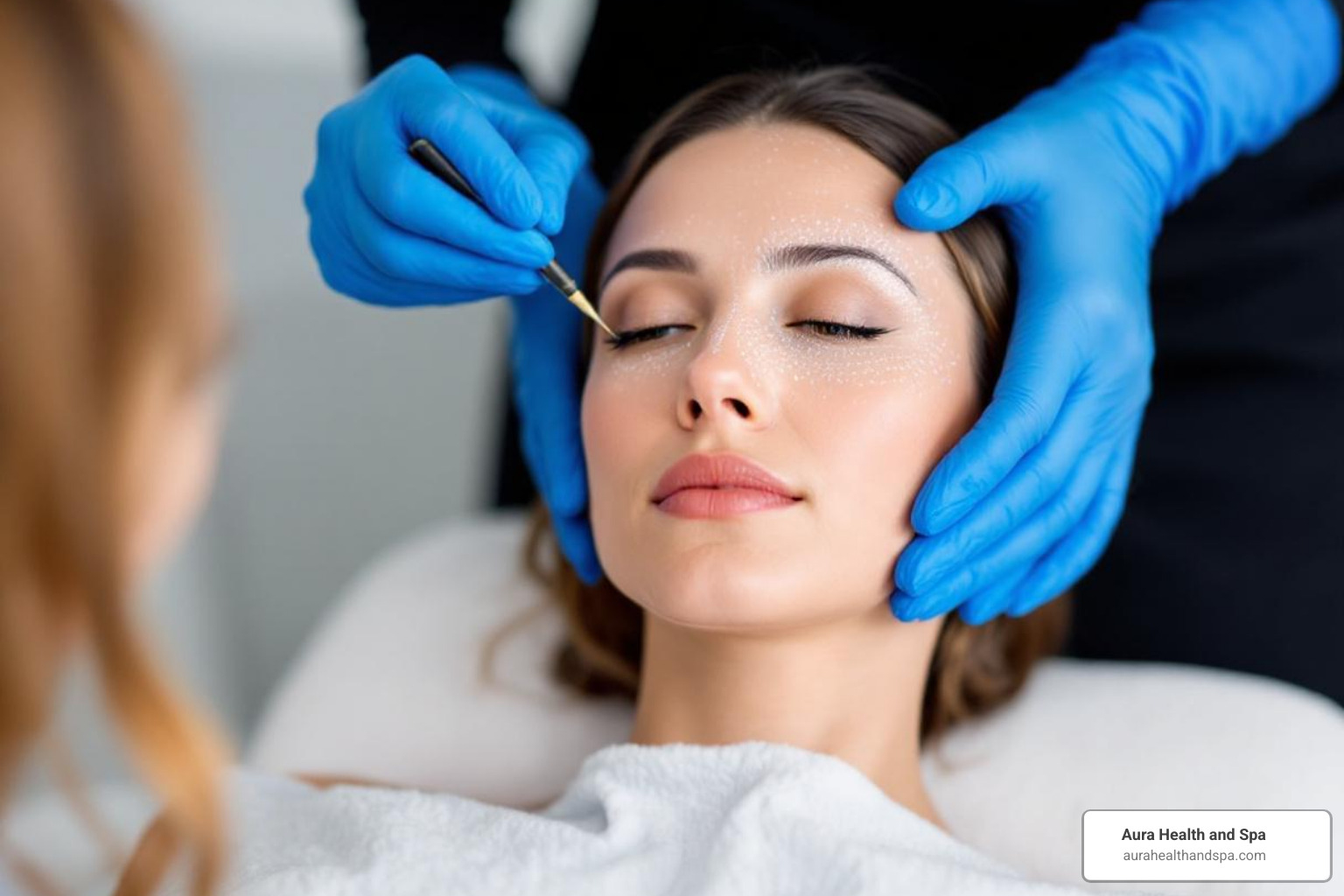
Microneedling offers near me can transform your skin by reducing scars, fine lines, and pores while boosting collagen production. At Aura Health & Spa in Plymouth, Michigan, all microneedling services are performed by licensed nurses and aestheticians under the direct medical supervision of our Medical Director, Dr. Reema Sethi, ensuring that every treatment is both safe and medically precise.
Quick Answer: Finding Microneedling Offers
- Look for package deals: Most providers offer 3-4 session bundles for optimal results.
- Premium add-ons matter: PRP, exosomes, and PDGF+ improve results significantly.
- Check credentials: Ensure treatments are performed by licensed nurses or aestheticians under medical supervision.
- Device quality counts: FDA-cleared devices like SkinPen
e deliver safer, more consistent results.
- Price vs. value: The cheapest option isn’t always the bestprioritize expertise and quality.
Microneedling, or collagen induction therapy, creates controlled micro-injuries in your skin to trigger its natural healing response. This stimulates new collagen and elastin, resulting in smoother texture, reduced scarring, smaller pores, and a youthful glow.
At Aura Health & Spa in Plymouth, Michigan, modern treatments have evolved beyond basic needling to include RF microneedling with Morpheus8 for deeper skin tightening and premium regenerative serums like exosomes (EXOE) and PDGF+ that amplify your skin’s regenerative power.
Finding legitimate microneedling offers near me in Plymouth is not just about price. Understanding what defines a quality treatment and a skilled provider is key to achieving transformative results.
As Dr. Reema Sethi, a board-certified physician with advanced training in medical aesthetics, I’ve seen how proper technique and premium protocols deliver superior outcomes. At Aura Health & Spa in Plymouth, Michigan, we focus on comprehensive microneedling packagesincluding Microneedling with PRP, Microneedling with Exosomes (EXOE), and Microneedling with PDGF+that pair expert application with regenerative add-ons. My background in emergency medicine instilled a commitment to precision and safety, principles I apply to every aesthetic treatment we provide to ensure you get the most value from any microneedling offer near me.
Microneedling offers near me terminology:
What is Microneedling and How Does It Work?
Microneedling is a sophisticated skin rejuvenation treatment that harnesses your body’s natural healing capabilities. At Aura Health & Spa in Plymouth, Michigan, our licensed nurses and aestheticians use tiny, sterile needles to create controlled micro-injuries in the skin’s surface. This process triggers a powerful healing cascade, significantly increasing the production of collagen and elastinthe two vital proteins responsible for your skin’s firmness and flexibility. By restarting this crucial production, microneedling encourages your skin to rebuild itself from within, combating signs of aging like wrinkles and sagging.
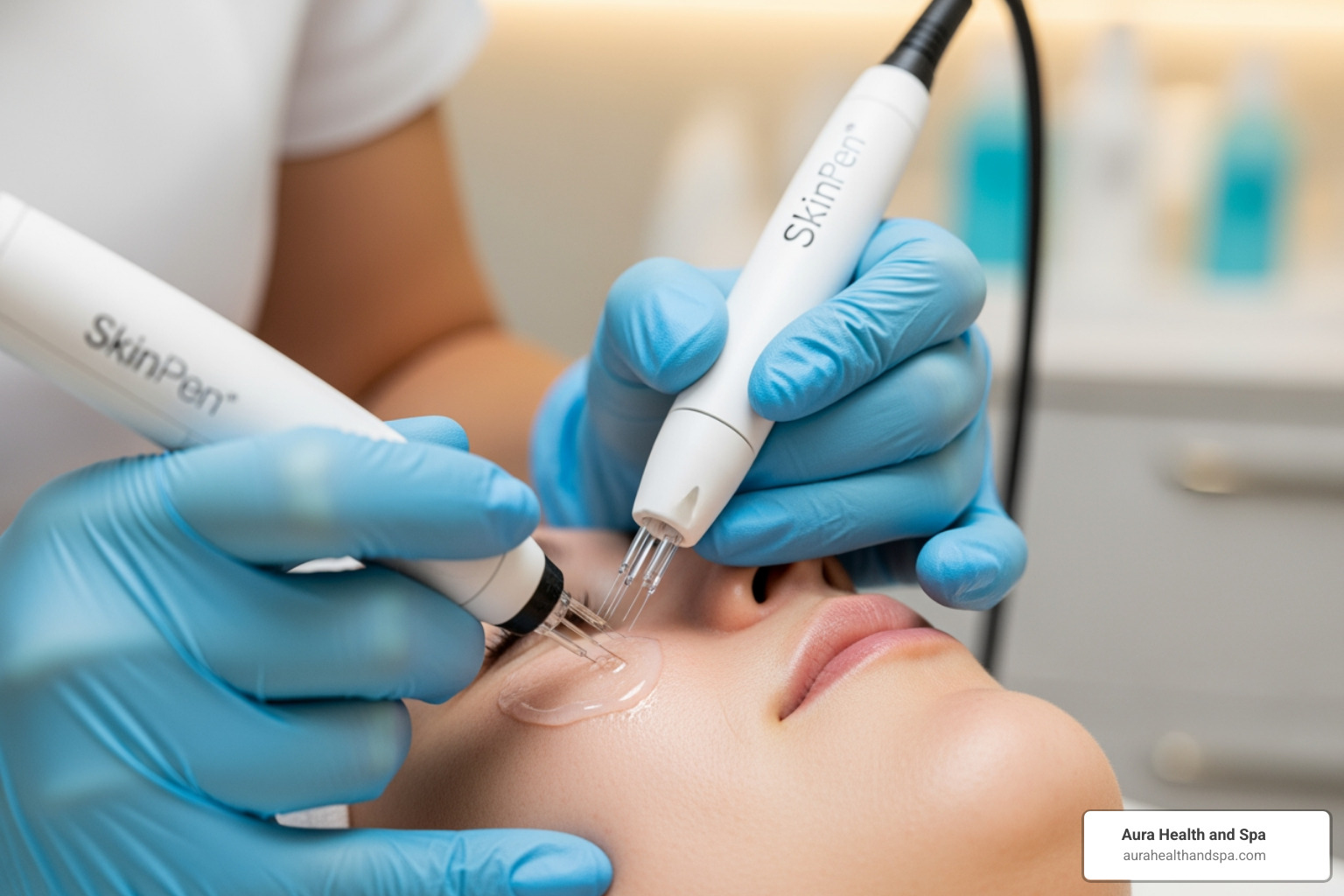
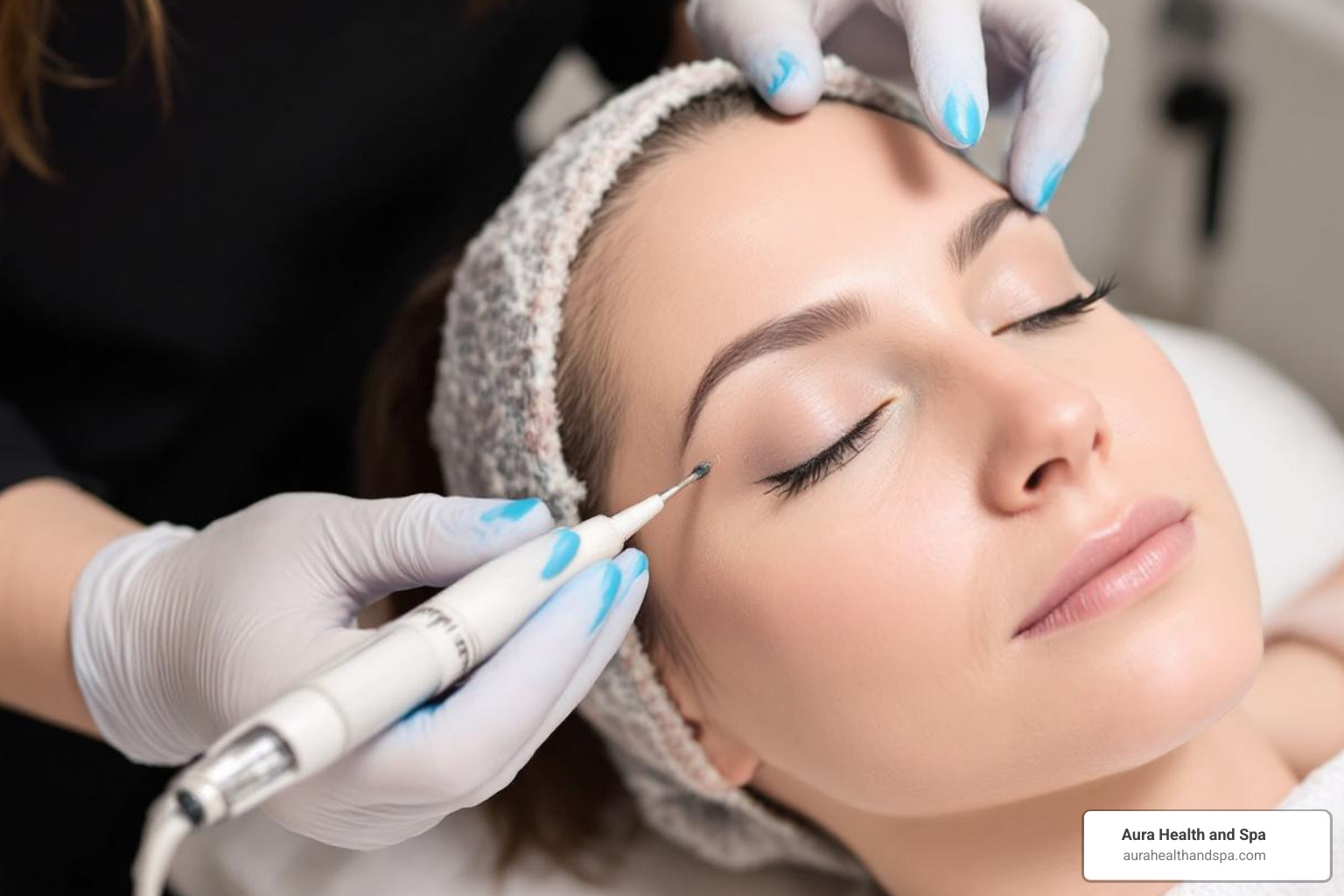
We use advanced, FDA-cleared devices like the SkinPen ae to ensure precision, safety, and consistent results. The device creates thousands of micro-perforations uniformly across the treatment area. These micro-channels also act as conduits, allowing regenerative serums to penetrate far deeper into the skin than they could alone. At Aura, this includes premium protocols such as Microneedling with PRP, Microneedling with Exosomes (EXOE), and Microneedling with PDGF+, all overseen by our Medical Director, Dr. Reema Sethi.
This improved absorption boosts the efficacy of the products, delivering growth factors and nutrients where they are most needed for cellular repair.
This process leads to significant improvements in skin texture and tone. You’ll see a noticeable reduction in imperfections like acne scars, a softening of fine lines and wrinkles, and a visible minimization of enlarged pores. The result is skin that feels smoother, looks firmer, and radiates a healthy, youthful glow.
For a deeper dive into how this transformative treatment can benefit you, we invite you to explore our page on Advanced SkinPen Microneedling.
The Key Benefits for Your Skin
The power of microneedling lies in its ability to address a wide array of skin concerns by tapping into your body’s regenerative processes. This minimally invasive treatment delivers dramatic, lasting skin renewal.
Here are the key benefits you can expect from microneedling at our Plymouth, MI clinic:
- Reduced Acne Scars: By breaking down old scar tissue and stimulating new cell growth, microneedling effectively smooths the texture of acne scars, making them far less noticeable.
- Diminished Wrinkles and Fine Lines: The boost in collagen and elastin plumps the skin, reducing the depth of fine lines and wrinkles for a smoother, more youthful look.
- Firmer Skin: Increased collagen and elastin levels restore your skin’s natural firmness, helping to combat laxity for a more lifted appearance.
- Even Skin Tone: Microneedling helps break up hyperpigmentation (like sunspots) and promotes new, evenly pigmented skin, resulting in a brighter, more uniform tone.
- Smaller Pores: By stimulating collagen production around pores, the treatment tightens the surrounding skin, making pores appear significantly smaller.
- Radiant Complexion: The combination of increased cell turnover and improved circulation results in a vibrant, healthy glow and revitalized appearance.
- Improved Skin Texture: Microneedling refines your skin’s overall texture, making it feel softer and smoother. It can also be used on the body to help with cellulite and stretch marks.
Clients often report visible improvements in tone and texture just days after their first treatment. The cumulative effect of a series of 3-4 sessions, which we typically recommend at Aura Health & Spa, leads to sustained skin health and renewed confidence. For those interested, scientific research on collagen induction therapy details the process.
Potential side effects like redness, swelling, and minor bruising can occur after treatment and may last for a few days, sometimes up to two weeks. Our team provides detailed aftercare instructions to support safe healing and optimal results.
Decoding Microneedling Offers Near Me: What to Look For
When searching for “microneedling offers near me” in Plymouth, Michigan, it’s crucial to understand that not all treatments are created equal. At Aura Health & Spa, our philosophy centers on delivering exceptional results through a blend of science, artistry, and trust. We prioritize value, safety, and expertise over a low price tag, because true value comes from the quality of the service, the practitioner’s qualifications, and the technology used. A cheap offer might lead to suboptimal results or complications; we believe confidence starts with results you can see.
A thorough consultation at our Plymouth med spa is paramount. It allows us to assess your skin, discuss your goals, and create a custom treatment plan. While this article focuses on microneedling, a comprehensive plan might feature our premium packages—Microneedling with PRP, Microneedling with Exosomes (EXOE), Microneedling with PDGF+, and Morpheus8 RF Microneedling—or integrate other advanced services we offer. Our other services include neurotoxins like Dysport, Jeuveau, and Daxxify to smooth dynamic wrinkles; advanced facials like the Glo2facial and Hydrafacial for exfoliation and nourishment; the medium depth Perfect Derma Peel for skin renewal; and ResurFX laser treatments for improving texture. We also provide innovative hair restoration solutions like FolixMD and De|Rive Ultra Plus. A consultation is your opportunity to ask questions and ensure you feel confident in your provider. Strict safety and hygiene protocols should always be non-negotiable.
How to Evaluate a “Microneedling Offers Near Me” Listing
Evaluating a microneedling offer requires looking beyond price to ensure you receive a safe, effective, and high-quality treatment. Here is what to scrutinize when comparing offers to Aura Health & Spa in Plymouth:
- Provider Credentials: This is the most critical factor. At Aura Health & Spa, all treatments are performed by licensed nurses and aestheticians under the oversight of our Medical Director, Dr. Reema Sethi. This medical supervision is crucial for your safety and is a standard we never compromise.
- Device Technology: The device used significantly impacts safety and results. We use FDA-cleared devices like the SkinPen® for standard microneedling and Morpheus8 for RF microneedling, which is renowned for its advanced radiofrequency technology. These tools ensure controlled depth, minimal downtime, and consistent outcomes. Avoid providers using older, less regulated devices.
- Before-and-After Photos: A reputable provider will have a portfolio of their work. Look for clear photos demonstrating tangible improvements in skin texture, tone, and specific concerns like scars or wrinkles.
- Real Patient Reviews: Online reviews on platforms like Google offer invaluable insight into client experiences. Look for consistent comments on professionalism, effectiveness, cleanliness, and customer service.
Our vision is to be Metro Detroit’s top destination for medical aesthetics, known for precision and visible results. This commitment is reflected in our highly trained team and state-of-the-art technology.
The Power of Premium Add-Ons: PRP, Exosomes, and PDGF+
While traditional microneedling is effective, its results are dramatically improved with advanced regenerative serums. At Aura Health & Spa in Plymouth, we pair our treatments with premium add-ons to maximize your results and provide long-term skin health benefits.
- PRP (Platelet-Rich Plasma): Known as “liquid gold,” PRP uses concentrated, growth-factor-rich platelets from your own blood. Applied during microneedling, it boosts healing, stimulates collagen, and promotes cell regeneration. Since it’s from your own body, it’s an incredibly safe and natural way to improve results.
- EXOE Exosomes: Exosomes are tiny vesicles that are key to cell-to-cell communication. When combined with microneedling, these powerful messengers help rebuild cellular signals, stimulating deep collagen and elastin synthesis. They are highly effective for advanced skin repair and offer remarkable improvements in texture and tone.
- PDGF+ (Platelet-Derived Growth Factor): PDGF+ is a potent growth factor that accelerates tissue repair. When applied after microneedling, it works with the micro-injuries to speed up healing and further stimulate collagen production, contributing to firmer, healthier skin.
By incorporating these add-ons into clearly defined packages—Microneedling with PRP, Microneedling with Exosomes (EXOE), and Microneedling with PDGF+—we transform microneedling into a comprehensive treatment. The micro-channels created by the device become perfect pathways for these regenerative compounds, ensuring deeper absorption and more profound, lasting results.
To learn more about how we integrate these powerful compounds, visit our page on Regenerative SkinPen Microneedling with PDGF Topical.
Types of Microneedling Treatments Available in Plymouth, MI
At Aura Health & Spa in Plymouth, Michigan, we know every client’s skin is unique. That’s why we offer a range of advanced microneedling treatments customized to your specific concerns and goals. Our approach is not one-size-fits-all; we tailor your plan during a thorough consultation to ensure the most effective solution.
Our primary modalities are Advanced SkinPen ae Microneedling and RF Microneedling with Morpheus8. Both use collagen induction therapy but differ in their depth and targeted concerns, allowing for precise, impactful results. All procedures are performed by licensed nurses and aestheticians under the direct supervision of our Medical Director, Dr. Reema Sethi, following strict safety and hygiene standards.
Advanced SkinPen ae Microneedling
Advanced SkinPen ae Microneedling is our versatile solution for overall skin rejuvenation. This FDA-cleared device creates precise micro-channels, triggering the body’s natural healing response to boost collagen and elastin.
At Aura Health & Spa, we offer this treatment as premium packages:
- Microneedling with PRP
- Microneedling with Exosomes (EXOE)
- Microneedling with PDGF+
This treatment is exceptional for:
- Collagen Boosting: Powerfully stimulates new collagen for firmer, more youthful-looking skin.
- Texture Refinement: Smooths rough texture, reduces the look of enlarged pores, and creates an even surface.
- Acne Scar Treatment: Breaks down scar tissue and promotes new cell growth to diminish acne scars.
- Hyperpigmentation: Fades sunspots and other discoloration for a brighter, more uniform skin tone.
These premium topicals penetrate deeply through the micro-channels, supercharging the healing process for superior outcomes. For optimal results, we recommend a series of 3-4 microneedling sessions, spaced about 4 weeks apart, to build collagen progressively. This treatment is suitable for all skin types and can be used on the face, neck, d e9colletage, and body.
Ready to revitalize your complexion? Book a consultation for SkinPen Microneedling with our expert team in Plymouth, Michigan.
RF Microneedling (Morpheus8) for Skin Tightening
For those seeking more intensive skin tightening and remodeling, RF Microneedling with Morpheus8 is a game-changer. This treatment combines microneedling with the deep tissue remodeling power of radiofrequency (RF) energy.
Morpheus8 uses a medically precise handpiece with gold-coated microneedles to deliver controlled RF energy deep into the skin’s subdermal layers. This heat contracts existing collagen and stimulates a much more robust production of new collagen and elastin, offering deeper remodeling than traditional microneedling alone.
The benefits of Morpheus8 are remarkable, especially for skin laxity and deeper wrinkles:
- Deep Tissue Remodeling: The combination of microneedling and RF energy remodels tissue and stimulates collagen deep within the skin for profound, lasting improvements.
- Jowl Reduction and Neck Tightening: Morpheus8 is exceptionally effective at tightening loose skin along the jawline and neck, helping redefine facial contours.
- Wrinkle Reduction: The intense collagen stimulation significantly reduces wrinkle depth, leading to smoother, firmer skin with ongoing results for months.
- Improved Collagen Production: By delivering RF energy into deep skin layers, this treatment results in more robust collagen production and skin tightening than standard microneedling.
At Aura Health & Spa in Plymouth, Morpheus8 RF Microneedling is always paired with EXOE exosomes or PDGF+ to further improve cellular regeneration and accelerate healing. For optimal results, we typically recommend a series of 3-4 Morpheus8 sessions, spaced about 4 weeks apart.
Learn more about our RF Microneedling services and how Morpheus8 can help you achieve a more sculpted appearance.
As with all energy-based treatments, temporary redness, swelling, and occasional bruising can occur and may last a few days or up to two weeks. Our team provides clear aftercare instructions to support safe healing and maximize your results.
How to Maximize Your Results and Find the Best Local Specials
Achieving transformative results with microneedling requires a comprehensive approach that includes personalized plans, diligent aftercare, and smart choices when exploring “microneedling offers near me.” At Aura Health & Spa in Plymouth, Michigan, we focus on delivering superior outcomes by combining advanced treatments with professional skincare.
Our premium microneedling options include Microneedling with PRP, Microneedling with Exosomes (EXOE), Microneedling with PDGF+, and Morpheus8 RF Microneedling paired with EXOE or PDGF+. We structure these as comprehensive packages rather than basic, one-off sessions to ensure you receive the full benefit of collagen stimulation and regenerative support.
We understand you’re looking for value, but our emphasis is on the long-term benefits of a premium, comprehensive treatment package. We build loyalty through results, which is why we offer treatment packages and our exclusive “Glow Club” membership to make high-quality aesthetics accessible and sustainable for Plymouth-area clients.
To maximize your results, we guide you from consultation to your customized aftercare routine, ensuring your skin maintains its newfound radiance long after your sessions are complete. We invite you to check out our current specials to see our latest offerings.
Why a Series of Treatments is Recommended
Patience and consistency are key with microneedling. While one session offers a glimpse of improvement, a series of treatments is necessary for dramatic, lasting results. It’s a journey of progressive skin rejuvenation, not a one-time fix.
Here is why a series is recommended at Aura Health & Spa in Plymouth:
- Optimal Results: Collagen production is a process that takes time. Each session builds upon the last, allowing for more complete skin remodeling. A series of 3-4 sessions is typical for both standard microneedling and Morpheus8 RF microneedling, though some may need more to kickstart significant changes.
- Cumulative Collagen Production: Like building muscle, consistent effort yields the best results. Each session triggers a new wave of collagen synthesis, leading to a thicker, firmer dermal layer. Most clients benefit from 3 to 6 sessions spaced 4 weeks apart.
- Targeted Concerns: Issues like deep acne scarring often require 4-6 sessions to achieve significant improvement.
- Maintenance Plan: After your initial series, maintenance treatments every 4-6 months help sustain collagen stimulation and keep your skin looking its best. Results typically last 3 to 5 months, and with advanced serums such as EXOE exosomes or PDGF+, they can extend further, making maintenance a valuable long-term investment.
Our comprehensive treatment packages are designed to provide the optimal number of sessions for superior, enduring improvements.
Finding Legitimate Microneedling Offers Near Me from Qualified Providers
When searching for “microneedling offers near me” in Plymouth, prioritize safety and expertise over the lowest price. A legitimate treatment depends on the practitioner’s qualifications and the facility’s standards.
Here is how to choose a qualified provider in the Plymouth, Michigan area:
- Check for a “Specials” page: Reputable med spas clearly outline promotions on their website.
- Inquire about package pricing: Ask about discounted packages for multiple sessions, which offer better value.
- Ask about loyalty programs: Memberships like our “Glow Club” provide ongoing savings for repeat clients.
- Prioritize safety over discounts: Ensure the clinic uses FDA-cleared devices like SkinPen ae or Morpheus8 and follows strict hygiene protocols.
- Look for medical oversight: At Aura Health & Spa, our treatments are performed by licensed providers under the direct supervision of our Medical Director, Dr. Reema Sethi, ensuring patient safety and optimal outcomes.
During your consultation, don’t hesitate to ask these crucial questions:
- What are the qualifications of the practitioner?
- What type of microneedling device do you use, and is it FDA-cleared?
- What are your safety and hygiene protocols?
- What are the potential side effects and post-treatment care requirements?
- Can I see before-and-after photos?
- How many sessions do you recommend for my concerns, and do you offer package deals?
At Aura Health & Spa in Plymouth, we focus on education and results that earn loyalty. Contact us to schedule your consultation and let us guide you on your journey to radiant skin.
Frequently Asked Questions About Microneedling
We understand that starting a new aesthetic treatment comes with questions. To help you feel informed, we’ve compiled answers to some of the most common questions we receive at Aura Health & Spa in Plymouth, Michigan.
How many sessions will I need and how long do results last?
For optimal results, we typically recommend a series of 3-4 sessions, spaced 4-6 weeks apart, for both standard microneedling (with PRP, Exosomes, or PDGF+) and Morpheus8 RF microneedling. This allows your skin to heal and build collagen progressively. Some clients may need more sessions depending on their skin concerns and goals.
You may notice initial improvements within a few days, but the full effects become more apparent over several weeks as new collagen develops. Results from a completed series typically last 3 to 5 months. With our advanced serums like EXOE exosomes or PDGF+, results can last up to six months. To maintain your youthful glow, we recommend maintenance treatments every 4-6 months as part of your long-term skin health plan.
What is the recovery process like after microneedling?
Microneedling has minimal downtime for most clients. Immediately after treatment, expect your skin to be pink and slightly swollen, similar to a mild sunburn. This typically subsides within 24-48 hours.
You may also feel some tightness or tenderness. Around 2-3 days post-treatment, you might notice mild dryness or light flaking as the skin renews. It is crucial to follow our post-care instructions, which include avoiding sun exposure and using a medical-grade tinted sunblock, as your skin will be more sensitive. We also recommend avoiding makeup for at least 24 hours.
Potential side effects can include redness, swelling, and minor bruising, which may last for a few days and, in some cases, up to two weeks. We will provide specific aftercare guidance and recommend products like our intensive moisturizer with Hyaluronic Acid to support healing and improve your results.
Is microneedling painful?
We prioritize your comfort to ensure microneedling is a tolerable procedure. Before the session, we apply a high-quality topical numbing cream for 20-30 minutes to desensitize your skin and minimize discomfort.
Most clients describe the sensation as a light pressure or vibration, not pain. Our experienced practitioners in Plymouth use advanced devices like the SkinPen ae and Morpheus8 and can adjust settings to suit your comfort level while ensuring an effective treatment. Many patients find the procedure very tolerable with little to no significant discomfort.
Your Next Step to Flawless Skin in Plymouth
Microneedling is a powerful treatment for concerns ranging from fine lines and scars to uneven tone and texture. When searching for microneedling offers near me in Plymouth, Michigan, true value comes from practitioner expertise, quality technology, and a comprehensive plan. This focus ensures lasting, confidence-boosting results, not just a temporary deal.
At Aura Health & Spa in Plymouth, our vision is to help you look younger, feel more confident, and love your reflection again. We achieve this by delivering safe, effective, and customized treatments overseen by our Medical Director, Dr. Reema Sethi. Our microneedling services are organized into premium, results-driven packages:
- Microneedling with PRP
- Microneedling with Exosomes (EXOE)
- Microneedling with PDGF+
- Morpheus8 RF Microneedling paired with EXOE or PDGF+
Each package is designed around a recommended series of 3-4 sessions and often combined with professional skincare to improve and maintain your results.
Ready to start your journey to smoother, more radiant skin in Plymouth, MI? We invite you to experience the Aura Health & Spa difference.
Contact Us to book your consultation today and let us craft a personalized microneedling plan for you.
Discover our advanced microneedling services

by Aura Health and Spa | Feb 16, 2026 | Skincare
Understanding Your Options for Facial Rejuvenation and Headache Relief
Neurotoxin treatments have become a leading choice for facial rejuvenation, and many people notice a welcome additional benefit: they often feel less facial and neck tension after treatment.
If you experience frequent tension-type headaches that disrupt your work and personal life, you have likely explored countless options. While cosmetic neurotoxin injections are primarily designed to smooth wrinkles, they can also relax the facial muscles that contribute to a feeling of tightness and strain in the upper face.
As Dr. Reema Sethi, a board-certified emergency medicine physician with over 15 years of clinical experience, I have seen how chronic tension impacts quality of life. At Aura Health & Spa in Plymouth, Michigan, we specialize in cosmetic neurotoxin treatments that may provide secondary tension relief while achieving natural-looking facial rejuvenation.
This guide will help you understand how cosmetic neurotoxin injections work, what to expect from treatment, and how they can align with your aesthetic goals while potentially easing facial muscle tension.
Understanding Neurotoxins: Cosmetic Applications for a Refreshed Look
Botulinum toxin, a substance derived from the bacterium Clostridium botulinum, is a type of medicine known as a neurotoxin. Its primary mechanism involves temporarily blocking nerve signals to muscles, which leads to targeted muscle relaxation. This unique ability makes it incredibly effective for cosmetic applications, helping to soften and prevent wrinkles.
In the cosmetic field, neurotoxins such as the well-known brand Botox, along with other major brands like Xeomin and Letybo, are widely used to reduce the appearance of dynamic lines. At Aura Health & Spa in Plymouth, Michigan, we focus on premium cosmetic neurotoxin brands Dysport, Jeuveau, and Daxxify to achieve these results. When “Botox” is mentioned in this article, it is used as a generic term for cosmetic neurotoxins; at Aura Health & Spa, your treatment will be performed with Dysport, Jeuveau, or Daxxify, customized to your needs.
These neurotoxins are expertly used to soften the appearance of dynamic wrinkles and fine lines. These are the lines created by repeated facial movements like frowning, squinting, or raising your eyebrows. By relaxing the underlying muscles, the skin appears smoother, helping our clients in Plymouth, Michigan, achieve a refreshed and more youthful look.
While the substance is the same at its core, the way it’s used, the dosage, and the specific injection sites are all custom to achieve specific aesthetic outcomes.
What Are Tension Headaches?
Before diving deeper into treatments, it’s helpful to understand tension-type headaches. These are the most common type of headache and are often described as a constant ache or pressure around the head, especially at the temples or back of the head and neck.
Unlike migraines, tension headaches are not usually associated with visual disturbances or nausea. They are often caused or exacerbated by:
- Stress and anxiety
- Poor posture
- Fatigue
- Chronic contraction of muscles in the face, scalp, and neck
Because they are linked to muscle tension, relaxing the specific muscles involved can sometimes provide noticeable relief in day-to-day discomfort for some people.
The Cosmetic Application: Smoothing Wrinkles and Easing Tension
Cosmetic neurotoxin treatments focus on superficial muscles to achieve aesthetic goals. At Aura Health & Spa in Plymouth, Michigan, we offer a range of premium cosmetic neurotoxins, including Dysport, Jeuveau, and Daxxify, to help you achieve a refreshed and youthful appearance.
Our cosmetic treatments are designed to:
- Reduce forehead lines: These horizontal lines across the forehead are often caused by repeated muscle contractions when raising eyebrows.
- Soften glabellar lines: Also known as “11 lines” or frown lines, these vertical creases between the eyebrows can make you look tired or angry.
- Diminish crow’s feet: These fine lines radiate from the corners of the eyes, often appearing with smiling or squinting.
By relaxing these specific muscles for aesthetic purposes, the treatment can simultaneously ease the chronic muscle contraction that contributes to tension-type head discomfort for many individuals. The goal is always natural-looking rejuvenation, allowing you to express yourself without the etched-in lines. Our skilled and licensed providers, under the direct supervision of Dr. Reema Sethi, carefully assess your facial anatomy to ensure precision and artistry in every treatment.
The Surprising Link: How Cosmetic Injections Can Affect Headaches
You might be surprised to learn that cosmetic neurotoxin injections, while primarily aimed at reducing wrinkles, can sometimes offer an unexpected bonus: many clients feel less tightness and strain in the muscles of the forehead and brow after treatment. This can translate into fewer day-to-day tension-type headaches for some individuals.
Tension headaches are often caused by chronic muscle contraction in the face, scalp, and neck. When we inject cosmetic neurotoxins into areas like the forehead and the glabellar complex (between the eyebrows) to soften wrinkles, we are relaxing these muscles. For individuals whose tension-type headaches are exacerbated by or originate from this muscle tension, the relaxation can lead to a noticeable reduction in headache frequency and severity as a secondary effect.
We have heard anecdotal evidence from many clients who, after receiving cosmetic neurotoxin treatments, report feeling a significant decrease in their everyday tension headaches. It can feel like unwinding a tightly coiled spring in your head.
Cosmetic Neurotoxins for Tension Headache Relief
Cosmetic neurotoxins primarily target the muscles of facial expression. By relaxing these muscles, they reduce the constant strain and contraction that can contribute to tension-type headaches. Think of it this way: if your forehead and brow muscles are constantly tensed from stress or concentration, it can lead to a persistent dull ache. When these muscles are relaxed by a neurotoxin, that source of discomfort may be alleviated.
What to Expect During a Cosmetic Neurotoxin Treatment
At Aura Health & Spa in Plymouth, Michigan, we pride ourselves on a transparent, professional, and comfortable experience. When you come in for a cosmetic neurotoxin treatment with Dysport, Jeuveau, or Daxxify, here is what you can expect:
- Personalized Consultation: Your journey begins with a thorough consultation with one of our registered and licensed providers. We’ll discuss your aesthetic goals, review your medical history, and analyze your facial anatomy. This is when we determine if Dysport, Jeuveau, or Daxxify is the best choice for you and craft a customized treatment plan. We believe in education over upselling, ensuring you understand every step.
- Preparation: On the day of your treatment, we ask that you come with clean skin, free of makeup, lotions, and serums. Our team will cleanse the treatment areas thoroughly. While most patients find the injections quite tolerable, a topical numbing cream can be applied beforehand for additional comfort if desired.
- The Injection Process: Our registered and licensed providers, overseen by Medical Director Dr. Reema Sethi, perform all injections with precision and expertise. Using very fine needles, they will administer small, targeted injections into the specific muscles identified during your consultation. You might feel a slight pinch or sting, but the discomfort is minimal and fleeting.
- Quick and Efficient: The entire injection process is surprisingly quick, usually taking only 15 to 30 minutes, depending on the number of areas being treated. You can typically resume most of your daily activities immediately after your appointment.
We are dedicated to providing results you can see, ensuring your experience is as smooth and comfortable as possible.
A Guide to Cosmetic Neurotoxins at a Med Spa
Understanding the nuances of cosmetic neurotoxin treatments, including safety, potential side effects, aftercare, and maintenance, is key to a satisfying experience. At Aura Health & Spa in Plymouth, Michigan, we prioritize your safety and informed decision-making.

Choosing Your Treatment: Dysport, Jeuveau, and Daxxify
While “Botox” is often used as a generic term for neurotoxins, several excellent brands are available, each with slightly different characteristics. In the broader aesthetics field, other major brands include Xeomin and Letybo. At Aura Health & Spa, we proudly offer Dysport, Jeuveau, and Daxxify, allowing us to tailor the best cosmetic treatment for your individual needs.
- Dysport: Known for its subtle and natural-looking results, Dysport often has a quicker onset of action compared to some other neurotoxins. It’s excellent for softening dynamic wrinkles, especially around the forehead and glabellar area.
- Jeuveau: Often referred to as “Newtox,” Jeuveau is a modern neurotoxin specifically designed for aesthetic purposes. It is effective in treating frown lines and offers comparable efficacy and safety to other leading brands.
- Daxxify: A newer innovation in the neurotoxin market, Daxxify stands out for its longevity. While most neurotoxins typically last three to four months, Daxxify can maintain its effects for up to six months in some individuals, offering extended periods of wrinkle reduction.
During your consultation, our expert providers will discuss these options with you, considering your desired results, lifestyle, and facial anatomy to recommend the neurotoxin that best suits your goals. We believe in using the most trusted medical technologies to ensure optimal outcomes. For more detailed information on our injectable services, please visit our page on More info about our Injectables.
Safety, Risks, and Post-Treatment Care
Your safety is our utmost priority. While cosmetic neurotoxin injections are generally safe when administered by licensed medical professionals, it’s important to be aware of potential side effects and follow post-treatment instructions carefully.
Common Side Effects:
- Injection site reactions: You might experience mild redness, tenderness, or slight swelling at the injection sites, which typically resolve within a few hours to a few days.
- Bruising: Small bruises can occur. They usually fade within a few days but can sometimes last for up to two weeks. These can often be covered with makeup.
- Headache: Some individuals might experience a mild, temporary headache after treatment, especially if it’s their first time.
- Eyelid ptosis (drooping eyelid): This is a rare, temporary side effect that can occur if the neurotoxin migrates slightly. Choosing an experienced injector significantly reduces this risk.
Important Post-Treatment Instructions:
To optimize your results and minimize risks, we recommend the following:
- Stay upright: Avoid lying down for at least four hours after your treatment.
- No rubbing or massage: Do not rub or massage the treated areas for 24 hours to prevent the neurotoxin from spreading to unintended muscles.
- Avoid strenuous activity: Refrain from vigorous exercise, heavy lifting, or activities that make you sweat for 24 hours.
- Avoid heat exposure: Steer clear of saunas, hot tubs, and direct sun exposure for 24 hours.
- Gentle cleansing: Use gentle cleansers and avoid exfoliating the treated areas for one day.
In rare cases, more serious side effects can occur if the neurotoxin spreads beyond the injection site, leading to problems with swallowing, speaking, or breathing. These are extremely rare with cosmetic dosages but require immediate medical attention. We encourage you to review the FDA Medication Guide for comprehensive safety information. Our licensed providers are extensively trained to ensure your treatment is as safe and effective as possible.
Long-Term Outlook and Cost of Cosmetic Neurotoxin Treatments
Cosmetic neurotoxin treatments offer temporary muscle relaxation, and therefore, the effects gradually wear off. To maintain your refreshed appearance and continue experiencing any secondary tension relief, regular maintenance treatments are necessary.
- Treatment Schedule: For most neurotoxins like Dysport and Jeuveau, results typically last three to four months. Daxxify, with its extended longevity, can last up to six months in some cases. Our providers will work with you to establish a personalized treatment schedule, usually recommending touch-up appointments every three to six months. Consistent treatment can sometimes lead to longer-lasting results over time, as muscles may become “trained” to remain more relaxed.
- Cost Considerations: The cost of cosmetic neurotoxin treatments varies depending on the type of neurotoxin used, the number of units required, and the specific areas being treated. During your personalized consultation at Aura Health & Spa in Plymouth, Michigan, we will provide transparent, upfront pricing based on your customized treatment plan. We focus on premium, comprehensive treatment packages, often pairing injectables with professional skincare or advanced treatments like Glo2facial, Hydrafacial, microneedling with PRP/Exosomes (EXOE)/PDGF+, the medium depth perfect derma peel, ResurFX laser, and Morpheus8 RF microneedling, which typically requires a series of 3-4 sessions for optimal results. Cosmetic neurotoxin treatments are generally not covered by insurance, as they are elective procedures.
Investing in consistent treatments is an investment in your confidence and comfort. Our comprehensive treatment packages are designed to provide superior outcomes and long-term benefits, often pairing neurotoxins with professional skincare to improve results and value.
Frequently Asked Questions About Neurotoxins and Headaches
We understand that you may have many questions about neurotoxins and their relationship to headaches. Here, we address some of the most common inquiries.
Can cosmetic neurotoxin injections help with my headaches?
By relaxing these specific muscles for cosmetic purposes (that is, to smooth wrinkles), the treatment can reduce the muscle strain that contributes to tension-type headaches for some people. This effect is limited to headaches linked to muscle tension in the treated areas and should be viewed as a possible added bonus rather than the main goal of treatment.
At Aura Health & Spa in Plymouth, Michigan, we believe that expertise and safety are paramount. All cosmetic neurotoxin injections with Dysport, Jeuveau, or Daxxify are performed by registered and licensed providers, such as licensed nurses and aestheticians, who possess advanced medical aesthetics training. Every treatment is conducted under the direct supervision of our Medical Director, Dr. Reema Sethi, a board-certified emergency medicine physician.
Choosing a reputable clinic with highly trained and experienced providers is crucial for ensuring both your safety and achieving natural-looking, effective results. Our team prioritizes continuous training on new injectables and techniques to provide the highest standard of care.
How is the dosage for cosmetic treatment determined?
The dosage for cosmetic neurotoxin treatments is highly personalized. Unlike a one-size-fits-all approach, our licensed providers at Aura Health & Spa conduct a detailed facial analysis to determine the precise number of units you need in areas like the forehead, glabella, and crow’s feet.
Factors that influence your dosage include:
- Your aesthetic goals: Whether you want to soften lines subtly or achieve a smoother look.
- Muscle strength: Stronger facial muscles (for example, in the brow area) may require a higher dose.
- Facial anatomy: The specific placement and number of injections are custom to your unique features.
- Treatment history: We adjust the dosage based on how you’ve responded to past treatments, if applicable.
This customized approach ensures you receive a result that looks natural and is custom specifically to you, reinforcing our commitment to personalized care and visible results.
Conclusion: Finding the Right Treatment for You in Plymouth, MI
Understanding the cosmetic applications of neurotoxins is key to making an informed decision about your aesthetic and wellness journey. While primarily celebrated for their ability to smooth wrinkles and restore a youthful appearance, these treatments can also offer the welcome secondary benefit of easing tension-type headaches for many individuals whose discomfort is linked to chronic facial muscle contraction.
At Aura Health & Spa in Plymouth, Michigan, we are dedicated to helping you look younger, feel more confident, and love your reflection again. Our expertise lies in advanced, non-surgical aesthetic treatments, including expertly applied Dysport, Jeuveau, and Daxxify for wrinkle reduction and facial contour improvement. We pair these cosmetic injectables with premium services like Glo2facial, Hydrafacial, microneedling with PRP/Exosomes (EXOE)/PDGF+, the medium depth perfect derma peel, ResurFX laser skin rejuvenation, and Morpheus8 RF microneedling (which typically requires a series of 3-4 sessions for optimal results), as well as advanced hair restoration treatments like FolixMD and De|Rive Ultra Plus, to create comprehensive treatment plans focused on visible, long-term results.
We are here to address your cosmetic concerns and, for many, help alleviate the muscle-related tension headaches that often accompany daily stress as a secondary benefit of facial muscle relaxation.
If you are a resident of Plymouth, Michigan, or the surrounding Metro Detroit area seeking expert cosmetic neurotoxin treatments, we invite you to experience the precision, professionalism, and visible results that define Aura Health & Spa. Our licensed providers, under the guidance of Dr. Reema Sethi, will provide a personalized consultation to discuss your goals and create a custom plan to achieve a refreshed appearance.
Confidence starts with results you can see, and we are here to help you achieve them.
Book a consultation today with us at Aura Health & Spa and find how we can help you on your journey to feeling your best.