by Aura Health and Spa | Feb 13, 2026 | Skincare
Why Crow’s Feet Happen (and How to Turn Back the Clock)
Neurotoxin injections for crow’s feet are a leading cosmetic treatment for smoothing the fine lines around the eyes. Here’s what you need to know about the services we offer:
- What it treats: Dynamic wrinkles (lines that appear when you smile or squint) and static wrinkles (lines visible at rest) around the outer corners of your eyes
- How it works: Neurotoxin injections temporarily relax the muscles that cause these lines, smoothing the overlying skin
- Results timeline: Improvements start in 3-7 days, with full results visible in 10-14 days
- How long it lasts: Typically 3-4 months, with options like Daxxify lasting up to six months
- Treatment time: 10-15 minutes with minimal discomfort
Those tiny lines that fan out from the corners of your eyes when you smile? They’re called crow’s feet (or lateral canthal lines in medical terms). They’re a natural part of aging and a sign of a life filled with laughter and expression.
But if you’ve noticed these lines deepening or becoming visible even when your face is at rest, you’re not alone. Crow’s feet form when the orbicularis oculi muscle around your eyes contracts repeatedly over time. Add in factors like sun exposure, loss of collagen and elastin, and genetics, and these lines can make you look tired or older than you feel.
The good news? Modern neurotoxin treatments offer a safe, effective, and minimally invasive way to smooth these lines and restore a more refreshed appearance.
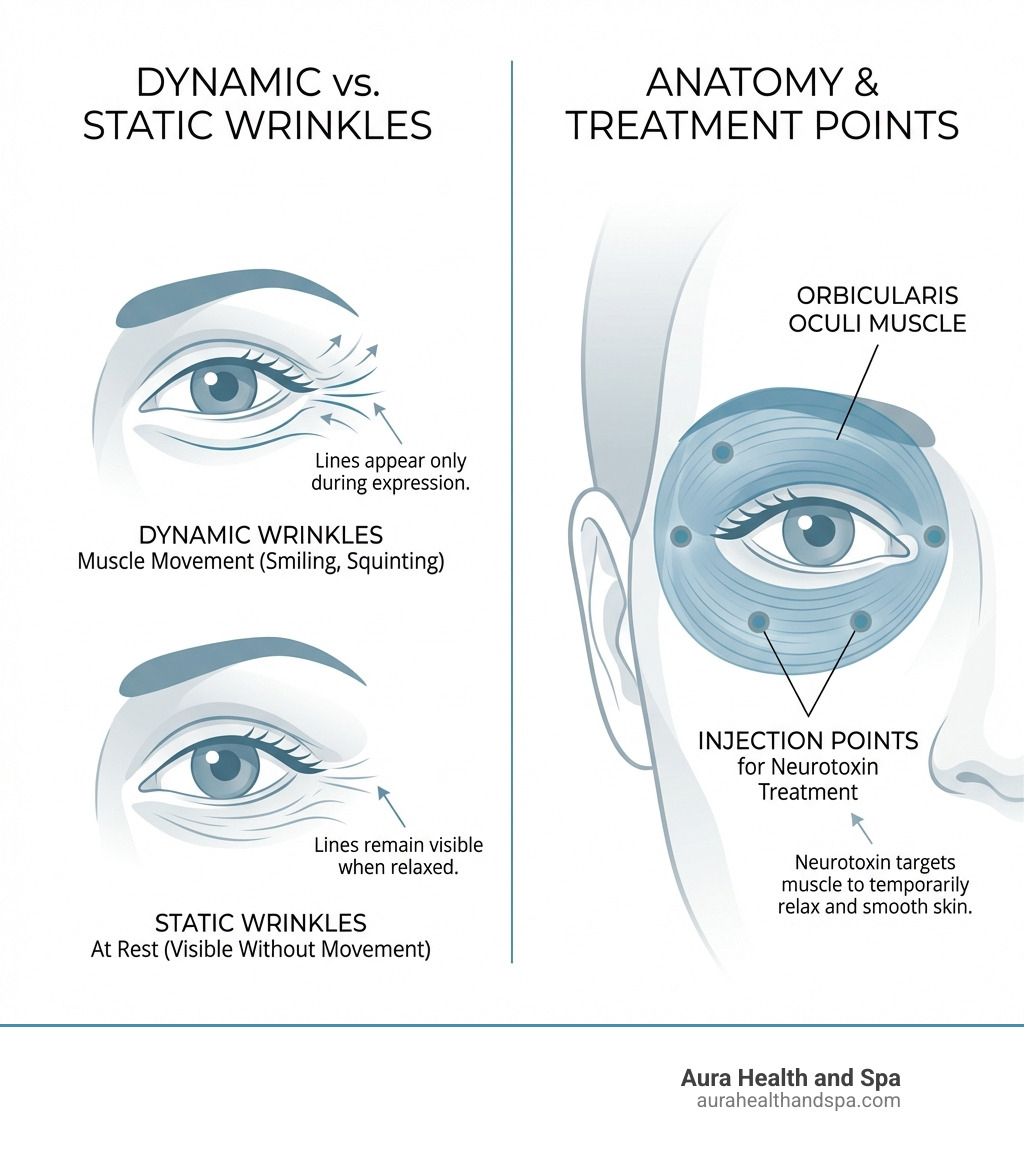
Dynamic wrinkles appear when you smile, squint, or make other facial expressions. Static wrinkles are visible even when your face is relaxed. Neurotoxins work best on dynamic lines but can also soften static lines with consistent treatment over time.
At Aura Health & Spa in Plymouth, Michigan, our team of licensed nurses and aestheticians specializes in achieving natural-looking results with neurotoxins for crow’s feet. Under the medical direction of Dr. Reema Sethi, a board-certified physician with specialized training in medical aesthetics, our approach combines medical precision with an artistic eye to help you look like the best version of yourself.
What Are Crow’s Feet and What Causes Them?
Crow’s feet are those distinctive lines that radiate from the outer corners of your eyes, resembling a bird’s foot. Medically, they are known as lateral canthal lines. While often associated with the natural aging process, their development is a complex interplay of several factors.
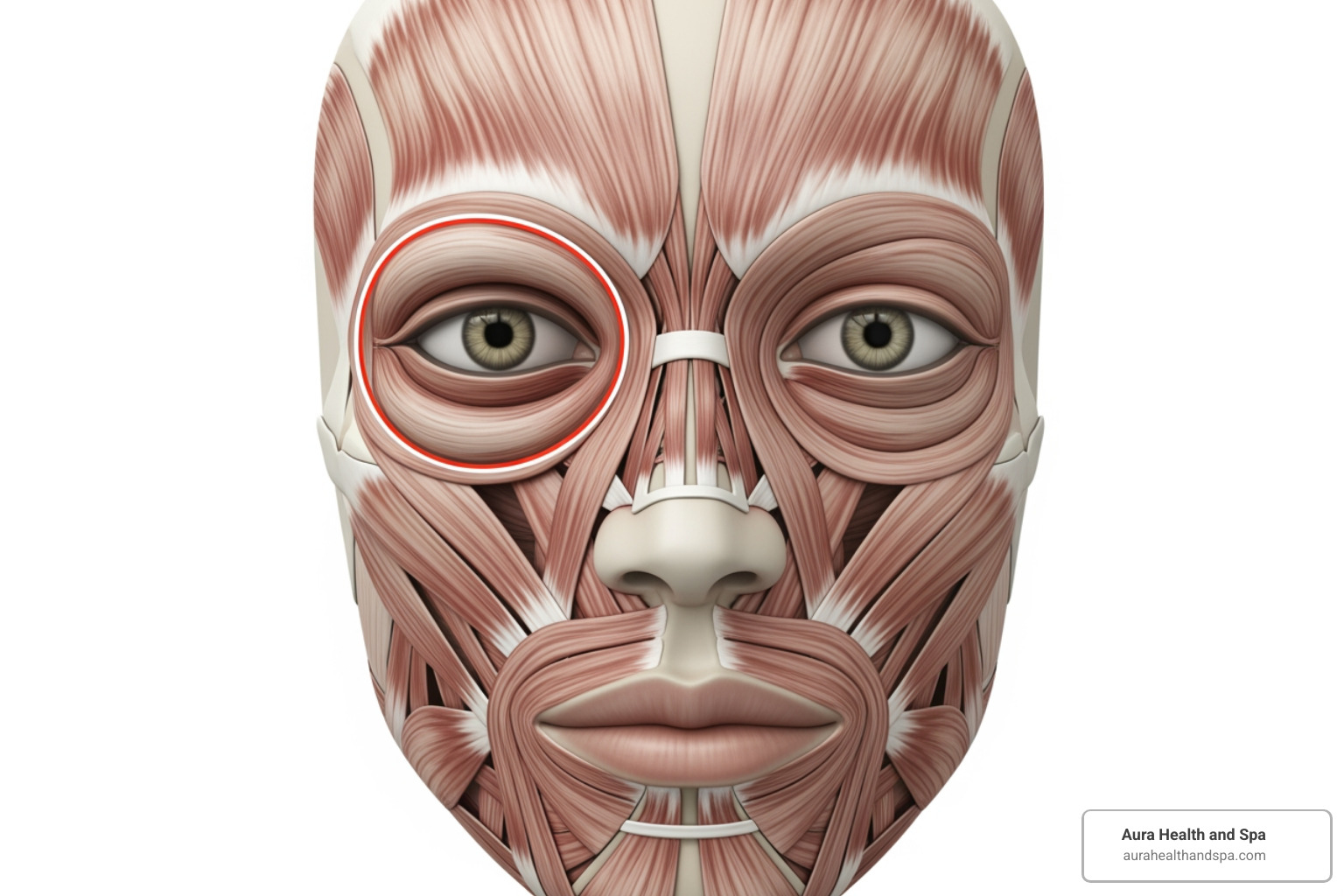
At the core of crow’s feet formation is the orbicularis oculi muscle. This circular muscle surrounds the eye and is responsible for actions like blinking, winking, and, most notably, squinting and smiling. Every time we express emotions—joy, laughter, concern—this muscle contracts, causing the overlying skin to crease. Over years of these repetitive muscle contractions, these temporary lines become etched into the skin.
Beyond muscle movement, several other factors contribute to the appearance and deepening of crow’s feet:
- Collagen and Elastin Loss: As we age, our bodies naturally produce less collagen and elastin, two vital proteins that keep our skin firm, elastic, and smooth. A decrease in these proteins means the skin loses its ability to bounce back, making wrinkles more prominent. This deficiency causes an early breakdown of healthy cells, contributing to wrinkles.
- Sun Exposure (Photoaging): Ultraviolet (UV) radiation from the sun is a primary culprit in premature skin aging. Sun exposure damages collagen and elastin fibers, leading to a loss of skin elasticity and the formation of wrinkles. Squinting in bright sunlight without sunglasses further exacerbates the issue by engaging the orbicularis oculi muscle.
- Genetics: Our genetic makeup plays a significant role in how our skin ages and how prone we are to developing wrinkles. If your parents developed crow’s feet early, there’s a higher chance you might too.
- Lifestyle Factors: Habits like smoking and a diet lacking in antioxidants can also accelerate skin aging. Stress can also contribute, as it can lead to repeated facial expressions and overall skin degradation. Men, for instance, tend to develop deeper crow’s feet earlier than women, partially due to less frequent use of sun protection and higher levels of collagen-degrading enzymes.
Dynamic vs. Static Lines Around the Eyes
Understanding the difference between dynamic and static lines is crucial when considering treatment options for crow’s feet.
- Dynamic lines, also known as expression lines, are those that appear when your facial muscles are in motion. These are the lines you see when you smile, laugh, or squint. For crow’s feet, these are the lines that radiate from your eyes during these expressions.
- Static lines, on the other hand, are wrinkles that remain visible even when your face is completely at rest. Over time, dynamic wrinkles can deepen and become static wrinkles as the skin loses its elasticity and volume due to the natural aging process, as well as extrinsic factors like sun damage. This means that the constant folding of the skin eventually leaves a permanent crease.
Neurotoxin treatments are particularly effective at addressing dynamic wrinkles by relaxing the underlying muscles. However, with consistent and appropriate treatment, they can also significantly soften static lines, preventing them from becoming even deeper and more noticeable. Early intervention, especially when crow’s feet are primarily dynamic, can be a powerful preventative measure against the formation of more stubborn static lines.
How Neurotoxins Erase Crow’s Feet
Neurotoxins are a treatment for smoothing facial lines, including crow’s feet. The most recognized of these is a brand often referred to generically as “Botox.” These treatments work by targeting the very source of dynamic wrinkles: muscle contractions.
The mechanism of action is scientific yet straightforward. When a neurotoxin is expertly injected into the specific muscles that cause wrinkles, it temporarily blocks the release of acetylcholine, a neurotransmitter responsible for signaling muscle contractions. This temporary blockage causes the targeted muscle to relax. For crow’s feet, this means the orbicularis oculi muscle around the eyes temporarily stops contracting with the same intensity. As the muscle relaxes, the overlying skin smooths out, significantly reducing the appearance of lines and wrinkles.
The active ingredient in these treatments, a purified neurotoxin, was approved by the US Food and Drug Administration (FDA) for treating crow’s feet lines after rigorous clinical studies demonstrated its efficacy and safety. These studies consistently show that a significant majority of treated individuals experience substantial improvement in the appearance of their crow’s feet and report high satisfaction with their results compared to placebo. This scientific backing is why the neurotoxin treatments we offer are so trusted and effective.
The beauty of this treatment lies in its precision. When administered by a skilled and experienced professional, it allows for targeted muscle relaxation, smoothing wrinkles while preserving natural facial expressions. This ensures you look refreshed and refreshd, not “frozen” or artificial.
Beyond the “Botox” Brand Name
While “Botox” is a widely recognized name and often used generically to refer to neurotoxin injections, it’s important to understand that it is a specific brand name. Just like “Kleenex” refers to tissues, “Botox” refers to a particular brand of botulinum toxin type A.
At Aura Health & Spa in Plymouth, Michigan, we are proud to offer a range of premium neurotoxin options to best suit your individual needs and aesthetic goals. Our selection includes:
- Dysport: Known for its quick onset of action and tendency to spread slightly more than some other neurotoxins, making it an excellent choice for larger areas like the forehead and crow’s feet.
- Jeuveau: A newer neurotoxin specifically designed for cosmetic use, often referred to as “Newtox.” It’s effective for dynamic wrinkles and provides excellent results.
- Daxxify: The newest addition to the neurotoxin family, Daxxify stands out for its longer-lasting results, which can extend up to six months in some individuals due to its unique peptide-powered formula.
We also recognize other major brands like Xeomin, which is sometimes called the “naked” injectable because it contains only the active neurotoxin without accessory proteins, making it suitable for patients who may develop resistance to other formulations.
Our expert providers will discuss each option with you during your consultation, taking into account your unique facial anatomy, muscle strength, and desired outcome to recommend the best product for you. Our goal is to ensure you receive the most effective and personalized treatment for your crow’s feet and other areas of concern.
The Treatment Journey: Your Guide to Getting Neurotoxins for Crow’s Feet
Starting on your journey to smoother, more youthful-looking skin around your eyes is a straightforward and comfortable process at Aura Health & Spa in Plymouth, MI. We prioritize your safety, comfort, and natural-looking results every step of the way.
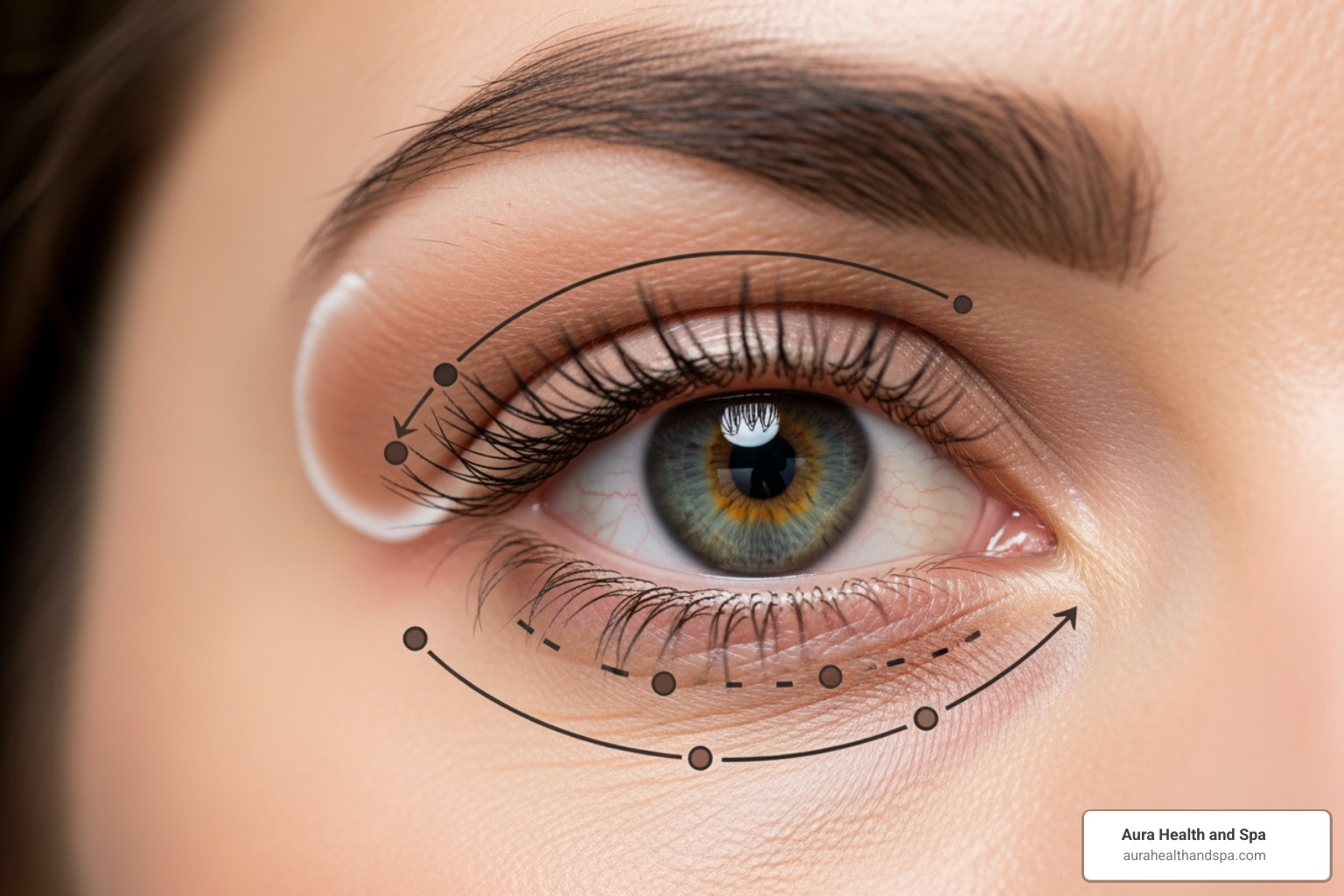
Step 1: Your Personalized Consultation in Plymouth, MI
Your experience begins with a comprehensive, personalized consultation. This is a crucial step where we get to understand your unique needs and aesthetic aspirations. During this no-obligation consultation at our Plymouth, MI location, our licensed nurses and aestheticians will:
- Discuss your aesthetic goals: We’ll listen attentively to what bothers you about your crow’s feet and what kind of results you hope to achieve.
- Review your medical history: We’ll go over your health background, including any allergies, current medications (especially blood thinners), and past cosmetic treatments to ensure neurotoxins are a safe and appropriate option for you.
- Perform a facial analysis: Our experts will carefully examine your facial anatomy, evaluate the depth and nature of your crow’s feet (dynamic vs. static), and assess your muscle activity.
- Determine candidacy: Based on our assessment, we’ll confirm if you are an ideal candidate for neurotoxin treatment around the eyes. We’ll also address any contraindications, such as pregnancy, breastfeeding, or certain neuromuscular disorders.
- Create a customized treatment plan: If neurotoxins are right for you, we’ll design a custom plan, recommending the specific neurotoxin (Dysport, Jeuveau, or Daxxify) and dosage that will yield the most natural and effective results for your crow’s feet. We believe in transparency and education, ensuring you understand every aspect of your treatment.
Step 2: Preparing for Your Appointment
To ensure the best possible results and minimize potential side effects, we provide clear pre-treatment instructions:
- Avoid blood thinners: We recommend discontinuing aspirin, ibuprofen, fish oil, and other non-steroidal anti-inflammatory drugs (NSAIDs) for 24-48 hours prior to your appointment, if medically cleared by your physician. This helps reduce the risk of bruising at the injection sites.
- Limit alcohol: Please avoid consuming alcohol for at least 24 hours before your session, as it can also increase bruising.
- Arrive with a clean face: For optimal hygiene and to allow for precise injection, please come to your appointment with a clean face, free of makeup, lotions, and serums.
- Inform us: Always let your injector know about any medications you are taking or any changes in your health conditions.
Step 3: The Quick and Comfortable Injection Process
The actual injection process for neurotoxins for crow’s feet is remarkably quick and comfortable, typically lasting only 10-15 minutes. Here’s what you can expect:
- Preparation: Your treatment area will be thoroughly cleansed. Your injector may ask you to make certain facial expressions, like smiling or squinting, to identify the precise muscles responsible for your crow’s feet.
- Precision injections: Using an ultra-fine needle, our licensed nurses and aestheticians, all operating under the direct supervision of Dr. Reema Sethi, our Medical Director, will administer a series of small, precise injections into the lateral orbicularis oculi muscles around your eyes. Most patients report only minimal discomfort, often describing it as a tiny prick or mild pinch. We can apply a topical numbing cream beforehand if you prefer, though it’s rarely necessary.
- Expertise and safety: Our team’s extensive training and experience ensure that the injections are placed accurately and safely, minimizing risks and delivering natural-looking results. You are in expert hands at Aura Health & Spa.
Step 4: Aftercare, Recovery, and Results
Following your neurotoxin treatment for crow’s feet, proper aftercare is essential for optimal results:
- Immediate aftercare: For at least four hours post-treatment, remain upright and avoid rubbing or massaging the treated area. This prevents the neurotoxin from spreading to unintended muscles.
- Activities to avoid: We recommend avoiding strenuous exercise, excessive heat exposure (like saunas or hot tubs), and alcohol for 24 hours after your session. These activities can increase blood flow and potentially lead to bruising or swelling.
- Potential side effects: You might experience some temporary mild redness, tenderness, or slight swelling at the injection sites, which typically resolves within a few hours. Minor bruising is uncommon but can occur and usually fades within a few days, easily covered with makeup. These potential side effects may last for days or up to two weeks.
- Results timeline: You’ll begin to notice initial improvements within 3 to 7 days as the muscles gradually relax. The full, smoothing effect typically becomes visible within 10-14 days.
- Duration of results: The effects of neurotoxins for crow’s feet generally last between 3-4 months. Daxxify, one of our offerings, can sometimes extend results up to six months. Individual longevity can vary based on your metabolism, muscle strength, and lifestyle.
We believe in a holistic approach to your aesthetic journey. For comprehensive facial rejuvenation, many of our clients combine neurotoxin treatments with other services. You can find more information about our advanced Facial Treatments to complement your results.
Benefits, Risks, and Is It Right for You?
Choosing to treat your crow’s feet with neurotoxins like those we offer at Aura Health & Spa comes with a host of compelling benefits, but it’s also important to understand the potential risks and determine if it’s the right treatment for you.
Benefits of Neurotoxins for Crow’s Feet:
- High Efficacy Rates: Clinical studies consistently demonstrate the effectiveness of neurotoxins in reducing the appearance of moderate to severe crow’s feet. For example, the neurotoxins used for this treatment have shown significant responder rates in clinical trials, with a large majority of patients reporting satisfaction with their appearance after treatment.
- Short Recovery Time: One of the most appealing aspects of neurotoxin injections is the minimal downtime. Most of our clients can return to their normal daily activities immediately after their 10-15 minute session.
- Natural-Looking Results: When administered by our expert licensed nurses and aestheticians under the guidance of our Medical Director, the goal is always to achieve a refreshed, natural look. We aim to soften lines while preserving your ability to express emotions, ensuring you look like the best version of yourself, not “overdone.”
- Wrinkle Prevention: Beyond treating existing lines, neurotoxins are an excellent tool for preventative skincare. By relaxing the muscles that cause dynamic wrinkles, we can help prevent these lines from deepening and becoming static (permanent) wrinkles over time. This proactive approach can maintain smoother, younger-looking skin for longer.
Who Is an Ideal Candidate for Neurotoxins for Crow’s Feet?
Neurotoxin treatments are suitable for a wide range of individuals seeking to refresh their appearance. You might be an ideal candidate if you are:
- An adult over 18: Neurotoxins are FDA-approved for cosmetic use in adults.
- In good physical health: Generally, candidates should be healthy and free from acute infections or skin conditions in the treatment area.
- Experiencing dynamic wrinkles around the eyes: If your crow’s feet are most noticeable when you smile or squint, neurotoxins are likely a very effective solution. They can also help soften static lines, though deeper static lines might benefit from combination treatments.
- Have realistic expectations: Neurotoxins reduce muscle activity and smooth lines; they won’t drastically alter your facial structure. Our consultations ensure your expectations align with what the treatment can realistically achieve.
However, certain conditions are contraindications for neurotoxin injections. You are typically not a candidate if you are:
- Pregnant or breastfeeding: Due to a lack of sufficient safety studies in these populations, we do not recommend neurotoxin treatments during pregnancy or while breastfeeding.
- Have certain neuromuscular disorders: Conditions like Myasthenia Gravis or Lambert-Eaton syndrome can increase the risk of complications.
- Have an allergy to any component of the neurotoxin formulation.
- Have an infection or inflammation at the proposed injection site.
Understanding the Potential Side Effects
While neurotoxin injections are generally safe when performed by qualified professionals, it’s important to be aware of potential side effects. The majority of these are mild and temporary:
Common Side Effects:
- Temporary bruising and swelling: This is the most common side effect and typically subsides within a few days to a week. Avoiding blood thinners and alcohol before treatment can help minimize this risk.
- Redness at injection sites: Small red bumps may appear immediately after injection but usually disappear within an hour.
- Mild headache: Some individuals report a mild headache after treatment, which can be managed with over-the-counter pain relievers.
- Asymmetry: In rare cases, slight asymmetry in expression can occur, but this is often correctable with a touch-up.
Rare, More Serious Risks:
- Eyelid ptosis (drooping): This is a rare complication where the upper eyelid or eyebrow may temporarily droop. It often occurs if the neurotoxin migrates to unintended muscles and typically resolves as the effects of the neurotoxin wear off. The incidence of eyebrow or eyelid ptosis is uncommon, generally ranging from 1% to 5% in studies.
- Spread of toxin effects: While extremely rare with cosmetic doses, there’s a theoretical risk of the toxin spreading beyond the injection site, leading to symptoms like muscle weakness, vision problems, or difficulty swallowing or breathing. This is why it’s crucial to choose an expert injector and follow aftercare instructions diligently.
The importance of an expert injector cannot be overstated. Our licensed nurses and aestheticians at Aura Health & Spa are highly trained and experienced in facial anatomy and injection techniques, minimizing the risk of adverse effects and ensuring your safety and satisfaction. We adhere to rigorous standardization protocols to ensure consistent results and client experience.
Frequently Asked Questions about Neurotoxins for Crow’s Feet
We know you might have more questions, and we’re here to provide clear, comprehensive answers. Here are some of the most common inquiries we receive about treating crow’s feet with neurotoxins.
How much does treatment for crow’s feet cost?
The cost of neurotoxin treatment for crow’s feet can vary depending on several factors. We structure our pricing based on the number of units required, which is determined by:
- Your individual muscle strength: Individuals with stronger facial muscles may require more units to achieve desired relaxation.
- The severity of your crow’s feet: Deeper or more extensive lines may need more units.
- The specific neurotoxin chosen: While all our neurotoxins (Dysport, Jeuveau, Daxxify) are premium options, their unit equivalencies and overall pricing may differ.
During your personalized consultation at Aura Health & Spa in Plymouth, MI, our expert team will assess your unique needs and provide a transparent, customized quote. We believe in clear pricing and honest consultations, ensuring no unnecessary add-ons.
Will my face look “frozen” or unnatural?
This is one of the most common concerns we hear, and we’re happy to reassure you: absolutely not. Our primary goal at Aura Health & Spa is to achieve natural-looking results. We adhere to a philosophy of “Look Good, Not Done.”
When administered by our skilled licensed nurses and aestheticians, neurotoxins are precisely injected to relax only the targeted muscles responsible for your crow’s feet. This softens the lines while preserving your ability to make natural facial expressions. You’ll still be able to smile, laugh, and express yourself fully, but without the deep creases. The result is a refreshed, more youthful appearance that makes you look rested and vibrant, not “frozen” or expressionless. Our Medical Director oversees all procedures, ensuring precision and artistry in every treatment.
How often do I need to get treatments?
To maintain the smooth, refreshed appearance of your crow’s feet, maintenance sessions are typically recommended every 3-4 months. This timeline is consistent across most neurotoxin brands like Dysport and Jeuveau. If you choose Daxxify, our longer-lasting option, you might find that your results can extend up to six months.
The duration of results can vary based on individual metabolism, muscle strength, and lifestyle factors. With consistent treatment over time, many of our clients find that their muscles become “trained” to remain more relaxed, and they may even require fewer units or slightly longer intervals between sessions to maintain their results. Our team will work with you to establish a personalized treatment schedule that fits your lifestyle and helps you achieve long-term anti-aging maintenance.
Achieve a Refreshed Look at Aura Health & Spa
At Aura Health & Spa in Plymouth, Michigan, we are dedicated to helping you look younger, feel more confident, and love your reflection again. Treating crow’s feet with neurotoxins is a highly effective way to achieve a refreshed, more youthful appearance around your eyes, subtly turning back the clock on a life well-lived.
We combine medical precision with an artistic eye, ensuring safe, effective, and customized aesthetic treatments. Our licensed nurses and aestheticians, under the direct supervision of our Medical Director, are experts in advanced injection techniques, delivering natural-looking results that improve your natural beauty without altering your unique expressions. We believe that confidence starts with results you can see.
If you’re ready to explore how neurotoxin treatments can help you address your crow’s feet and achieve your aesthetic goals, we invite you to experience the Aura Health & Spa difference.
Book your personalized neurotoxin consultation today and let us help you refind a smoother, more radiant you.

by Aura Health and Spa | Feb 13, 2026 | Skincare
Why Women’s Hair Solutions Matter More Than Ever
Women’s hair solutions encompass a wide range of options—from instant cosmetic fixes like toppers and volumizers to advanced clinical treatments that stimulate natural regrowth. Whether you’re experiencing early thinning at your part line or more noticeable hair loss across your scalp, the right solution depends on understanding your specific pattern of loss and choosing treatments that align with your goals and lifestyle.
Quick Guide to Women’s Hair Solutions:
| Solution Type |
Best For |
Timeline for Results |
| Hair Toppers & Wiglets |
Immediate coverage for thinning areas |
Instant |
| Scalp Concealers |
Quick touch-ups and special events |
Minutes |
| FolixMD™ Laser |
Stimulating dormant follicles |
4-12 weeks |
| PRP Therapy |
Regenerating hair growth naturally |
3-6 months |
| Nutritional Support |
Addressing deficiencies |
3-6 months |
Hair loss affects about one-third of women at some point in their lives, and among postmenopausal women, as many as two-thirds experience thinning or bald spots. Yet unlike men, women often face greater emotional distress because hair loss remains less socially accepted for them. Many women associate their hair with femininity and self-esteem, making thinning hair not just a cosmetic concern but a deeply personal challenge.
The good news? You have more options than ever before. Modern hair solutions range from simple clip-in toppers that provide instant volume to cutting-edge laser treatments that work at the cellular level to reawaken sleeping hair follicles.
The most common cause of female hair loss is androgenetic alopecia—also called female pattern hair loss—which typically begins with gradual thinning at the part line and spreads across the top of the head. But many other factors can contribute: hormonal shifts during pregnancy or menopause, nutritional deficiencies like low iron, stress-induced shedding, and even everyday hairstyling practices that put too much tension on your follicles.
Understanding why your hair is thinning is the first step toward finding the right solution. Some women benefit most from regenerative treatments like PRP therapy or the FolixMD™ fractional laser. Others find that addressing nutritional gaps through IV therapy or IM injections makes all the difference. And many find that combining instant cosmetic solutions with long-term clinical treatments gives them both immediate confidence and lasting results.
As Dr. Reema Sethi, a board-certified emergency medicine physician with specialized training in medical aesthetics, I’ve helped countless women steer the complex landscape of women’s hair solutions at Aura Health & Spa in Plymouth, MI. My approach combines precise diagnosis with personalized treatment plans that address both the physical and emotional impact of hair thinning.
Understanding Female Hair Loss: Common Causes and Diagnosis
Hair loss in women is a common concern, but it’s not a single condition with a single cause. Female hair loss, also known as alopecia, occurs when women experience thinning or excessive shedding of hair due to various factors. It typically presents as overall thinning across the scalp or in specific areas, leading to noticeable patches of reduced hair density. Understanding the root cause is the first and most crucial step toward finding effective women’s hair solutions.
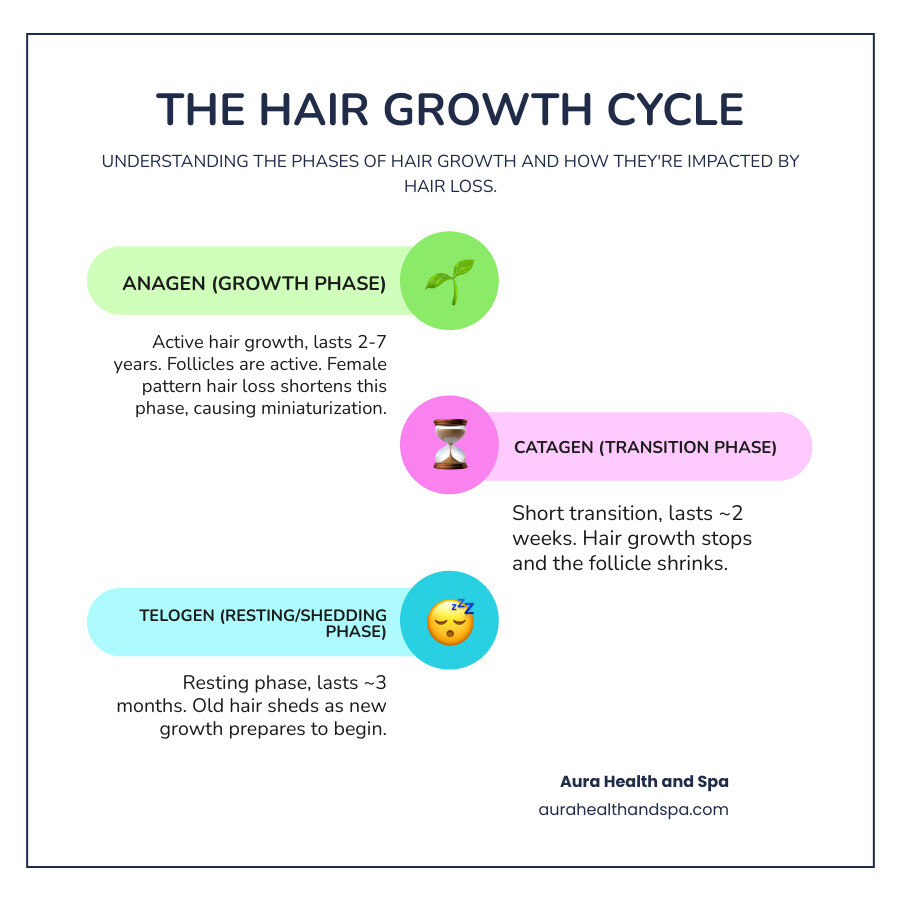
The most common cause of hair loss in women is androgenetic alopecia, often referred to as female pattern hair loss. This condition has strong links to genetics and involves the action of androgens (hormones) on hair follicles. Unlike men, who often experience a receding hairline or bald spot, female pattern hair loss develops differently than in men. In women, it typically begins with gradual thinning at the part line, followed by increasing diffuse hair loss radiating from the top of the head. The hairline usually remains unaffected, and women rarely become completely bald. This process involves a shortening of the hair’s growth phase (anagen) and follicular miniaturization, where thicker terminal hairs are replaced by shorter, thinner vellus hairs. While it can start as early as the late teens or early 20s, most women may not begin to lose their hair until their 40s or older.
Beyond genetics, several other factors can contribute to hair loss:
- Hormonal Imbalances: Significant hormonal shifts can trigger hair loss. This is commonly seen during pregnancy (postpartum hair loss), menopause, or with conditions like Polycystic Ovary Syndrome (PCOS), which can lead to excess androgen production. Thyroid disorders can also play a role.
- Nutritional Deficiencies: A lack of essential vitamins and minerals can severely impact hair health. Iron deficiency (anemia) is a frequent culprit, often resulting in excessive hair shedding. Deficiencies in Vitamin D, biotin, zinc, and fatty acids can also contribute.
- Stress-Related Shedding (Telogen Effluvium): Physical or emotional stress, illness, childbirth, or even certain medications can shock the hair follicles, causing a large number of hairs to prematurely enter the resting (telogen) phase and then shed. This type of hair loss is often temporary but can be distressing.
- Medical Conditions: Autoimmune diseases like alopecia areata (which causes patches of complete baldness) or inflammatory conditions affecting the scalp can also lead to hair loss.
- Damaging Hair Care Practices: Excessive heat styling, harsh chemical treatments, and tight hairstyles (like braids or ponytails) can cause traction alopecia, where constant pulling damages hair follicles over time.
Female pattern hair loss is often classified using the Ludwig Classification System, which describes stages from normal to advanced hair loss, typically manifesting as uniform thinning across the scalp with an unaffected frontal hairline. This classification helps our providers assess the severity and guide treatment planning.
Preparing for Your Consultation
The journey to effective women’s hair solutions begins with a thorough consultation. We understand that discussing hair loss can be emotional, and we’re here to provide a supportive and professional environment. To make the most of your visit to Aura Health & Spa in Plymouth, MI, we recommend preparing a few things:
- Symptom Tracking: Note when you first noticed hair loss, how quickly it progressed, and any patterns you observe (e.g., thinning at the part, overall shedding, specific patches).
- Family History: Is there a history of hair loss in your family, particularly on your mother’s or father’s side?
- List of Medications: Compile a list of all medications, supplements, and herbal remedies you are currently taking, as some can have hair loss as a side effect.
- Recent Life Changes: Inform us about any recent major life events, illnesses, surgeries, significant stress, or dietary changes.
- Questions for Your Provider: Don’t hesitate to write down any questions you have about your hair loss or potential treatments.
During your visit, our licensed providers will take a detailed medical history and perform a thorough scalp examination. We may also recommend diagnostic tools such as blood tests to check for nutrient deficiencies (like iron or Vitamin D) or hormonal imbalances (like thyroid issues). In some cases, a scalp biopsy might be considered to examine hair follicles for underlying conditions. This comprehensive approach ensures we pinpoint the exact cause of your hair loss, allowing us to tailor the most effective women’s hair solutions for you.
Instant Confidence: Cosmetic and Temporary Hair Solutions
For many women, the emotional impact of hair loss is immediate. While clinical treatments work over time to stimulate natural regrowth, some find that temporary cosmetic options provide a welcome boost of confidence. These non-clinical women’s hair solutions are designed to offer an instant visual improvement for thinning hair, which can be helpful for special events or during the initial phases of a clinical treatment plan.

Options like hair toppers (also known as wiglets), scalp concealers, and volumizing fibers can skillfully camouflage areas of concern. Toppers clip into your existing hair to add volume and coverage at the part or crown, while concealers reduce the contrast between the scalp and hair, creating an illusion of density.
While these methods offer an excellent temporary fix, they do not treat the underlying cause of hair loss. For lasting, natural-looking results that come from your own hair, our focus at Aura Health & Spa is on advanced clinical treatments that work at the follicular level to stimulate genuine regrowth.
Advanced Clinical Women’s Hair Solutions in Plymouth, MI
For those seeking a long-term, science-backed approach, clinical treatments work to stimulate the scalp and encourage natural hair regrowth. At Aura Health & Spa in Plymouth, MI, our licensed providers use state-of-the-art technology to create personalized hair restoration plans. We focus on premium, comprehensive treatment packages, often pairing treatments with professional skincare to improve results and value. Our Medical Director oversees all procedures, ensuring precision, professionalism, and visible results.
FolixMD™: The Next Generation of Laser Hair Restoration

At Aura Health & Spa, we are proud to offer FolixMD™ Laser Hair Restoration, a cutting-edge approach to women’s hair solutions. This treatment uses the advanced Lumenis FoLix fractional laser, which is a significant leap beyond traditional low-level laser therapy (LLLT) devices.
Unlike LLLT, which uses diffuse light, the Lumenis FoLix fractional laser employs targeted, concentrated energy to create microscopic thermal zones in the scalp. This precise action activates the body’s natural healing response at a cellular level. By stimulating blood circulation and awakening dormant hair follicles, FolixMD™ encourages new, healthier hair growth and reduces shedding.
The benefits of FolixMD™ include:
- Targeted Activation: Directly stimulates hair follicles for more effective regrowth.
- Improved Circulation: Improves nutrient delivery to the scalp.
- Minimal Downtime: Patients may experience some light redness or sensitivity on the scalp immediately after treatment, but this typically subsides quickly.
- Non-Invasive: A comfortable procedure with no incisions or lengthy recovery.
We recommend a series of treatments to achieve optimal results, which typically become visible within 4-12 weeks. Our licensed providers will work with you to determine the best treatment plan during your consultation.
Ready to find a powerful solution for thinning hair? Discover our advanced Folix Laser Hair Restoration today.
Regenerative Treatments: De|Rive and PRP Therapy
Regenerative treatments are another cornerstone of our women’s hair solutions at Aura Health & Spa, using the body’s natural healing capabilities to stimulate hair growth.
One such innovative treatment is De|Rive Ultra Plus. This plant-based serum is packed with a nutrient-rich formula designed to nourish the scalp and create an optimal environment for hair growth. It works by delivering essential compounds directly to the hair follicles, supporting their health and vitality.
Another highly effective option is Platelet-Rich Plasma (PRP) Therapy. This treatment uses growth factors derived from your own blood to stimulate scalp repair and hair follicle regeneration. The process is straightforward:
- Blood Draw: A small sample of your blood is drawn.
- Centrifugation: The blood is spun in a centrifuge to separate and concentrate the platelets, creating platelet-rich plasma.
- Injection: The PRP, rich in growth factors, is then gently injected into areas of thinning or receding hair on your scalp.
These growth factors naturally awaken dormant follicles, reduce shedding, and strengthen existing hair, leading to natural hair regrowth. For optimal results with PRP therapy, we typically recommend a series of 3-4 sessions. Potential side effects like bruising, redness, and swelling at the injection sites may last for a few days to two weeks. Our licensed providers are highly skilled in performing these treatments, ensuring precision and comfort.
Supporting Your Results: Foundational Health Therapies
Effective women’s hair solutions often extend beyond direct scalp treatments. At Aura Health & Spa, we understand the crucial role of overall health in hair vitality. Nutritional deficiencies and hormonal imbalances can significantly impact hair growth. That’s why we offer foundational health therapies to support your hair restoration journey from within.
- IV Therapy: Our customized nutrient drips deliver essential vitamins, minerals, and amino acids directly into your bloodstream, ensuring maximum absorption. This is particularly beneficial for correcting deficiencies that might be contributing to hair loss, such as low levels of Biotin, Vitamin D, and Zinc. These nutrients are vital for healthy hair follicle function and growth. Learn more about IV Therapy.
- IM Injections: For targeted nutrient boosts, we offer IM (intramuscular) injections. These provide a quick and efficient way to supplement specific vitamins like Biotin, which is well-known for its role in hair, skin, and nail health. Explore our IM Injections.
By addressing potential nutritional gaps, we help create a robust internal environment that supports the health and growth of your hair, maximizing the effectiveness of your clinical treatments.
Supporting Your Clinical Treatments with At-Home Care
While advanced clinical treatments like FolixMD™ and PRP Therapy offer powerful women’s hair solutions, your daily habits and lifestyle choices play a significant role in maximizing and maintaining your results. Integrating supportive practices into your routine can improve the outcome of professional treatments and help prevent further hair loss.
- Stress Management: High levels of stress can trigger hair shedding (telogen effluvium), potentially counteracting the benefits of your hair restoration treatments. Incorporating stress-reduction techniques like meditation, yoga, or deep breathing exercises supports your body’s ability to respond positively to clinical therapies.
- A Balanced Diet: Your hair follicles require a steady supply of nutrients to thrive. A diet rich in protein, iron, and essential vitamins (like Biotin and Vitamin D) provides the building blocks your body needs to respond effectively to treatments like PRP and FolixMD™. If you suspect a deficiency, we can recommend blood tests to identify any issues that may need to be addressed with supplements or our IV Therapy and IM Injections.
- Gentle Hair Care Practices: Protect your investment by treating your hair gently. Avoid tight hairstyles like high ponytails or braids that pull on follicles, which can cause traction alopecia. Minimize the use of high-heat styling tools, as excessive heat can damage the new, healthier hair stimulated by your treatments. Opting for sulfate-free shampoos and gentle handling will help preserve the integrity of your hair.
By adopting these supportive habits, you create a holistic approach that enhances the powerful effects of our clinical women’s hair solutions and fosters long-term hair health.
Conclusion: Your Personalized Path to Fuller Hair
Experiencing hair thinning can be a challenging journey, impacting not just your appearance but also your sense of self and confidence. However, with the diverse range of women’s hair solutions available today, you have every reason to feel hopeful. From temporary cosmetic concealers that offer instant visual improvement to advanced clinical treatments that work to regenerate natural growth, the path to fuller, healthier hair is more accessible than ever.
At Aura Health & Spa in Plymouth, MI, we believe that confidence starts with results you can see. We pride ourselves on delivering safe, effective, and customized aesthetic treatments using the most trusted medical technologies. Our licensed providers, overseen by our Medical Director, Dr. Reema Sethi, are dedicated to understanding the unique causes of your hair loss and crafting a personalized treatment plan custom to your specific needs and goals. We focus on premium, comprehensive treatment packages, ensuring superior outcomes and long-term benefits.
Whether you’re exploring the precision of our FolixMD™ laser, the regenerative power of PRP therapy, the nourishing benefits of De|Rive Ultra Plus, or supporting your hair health with our IV Therapy and IM Injections, we are here to guide you every step of the way. We aim to restore, improve, and maintain your best look, helping you love your reflection again.
Don’t let hair loss dim your light. We invite you to experience the Aura Health & Spa difference.
Begin your hair restoration journey today and take the first step towards reclaiming your confidence and achieving the vibrant hair you deserve. You can also View our Specials & Events to see our latest offerings.
by Aura Health and Spa | Feb 13, 2026 | Skincare
Understanding Your Options for Hair Restoration Without Surgery
Non-Surgical Hair Restoration offers advanced, proven treatments to address thinning hair and hair loss without the downtime, scarring, or risks of surgery. Here’s what you need to know:
Top Non-Surgical Treatments:
- FolixMD Laser Therapy – Uses the Lumenis FoLix fractional laser to activate your body’s healing response and stimulate dormant follicles
- De|Rive Ultra Plus – Plant-based exosome therapy delivering growth factors to improve hair density
- Microneedling with PRP, Exosomes, or PDGF+ – Creates micro-channels for optimal absorption of regenerative serums
What to Expect:
- Minimal to no downtime
- No scarring or incisions
- Results visible in 3-6 months
- Series of 3-4 treatments for optimal results
- Natural-looking hair restoration
Hair loss affects more than 85% of men and 55% of women during their lifetime. Whether you’re noticing a receding hairline, thinning at the crown, or general shedding, these changes can significantly impact your confidence and how you present yourself professionally and socially.
Non-Surgical Hair Restoration addresses these concerns through advanced, science-backed treatments that work with your body’s natural healing processes. Unlike invasive surgical procedures, these approaches stimulate your existing hair follicles, improve scalp health, and increase hair density—all without surgery, scarring, or significant downtime.
The emotional toll of hair thinning is real. Many of our patients in Plymouth, MI, describe feeling less confident in meetings, avoiding certain hairstyles, or worrying about their appearance in photos. The good news? Modern non-surgical treatments offer a safe, effective path to reclaiming fuller, healthier-looking hair.
I’m Dr. Reema Sethi, Medical Director of Aura Health & Spa. As a board-certified emergency medicine physician with advanced training in medical aesthetics, I’ve developed our clinic’s approach to Non-Surgical Hair Restoration. My philosophy combines medical precision with a deep understanding of how appearance impacts confidence, and I oversee our team of licensed providers to ensure every treatment is safe, effective, and helps our patients achieve the natural-looking results they desire.
What is Non-Surgical Hair Restoration and Who Is It For?
Non-Surgical Hair Restoration encompasses a range of advanced, non-invasive treatments specifically designed to combat hair thinning and loss. These methods focus on stimulating existing hair follicles, improving overall scalp health, and increasing hair density, all without the need for surgical incisions or lengthy recovery periods. Instead of surgically replacing hair, these treatments work to restore and refresh your natural hair growth cycle.
For many, the thought of surgery for hair loss can be daunting, involving concerns about downtime, potential scarring, and the invasiveness of the procedure. Our non-surgical approaches offer a compelling alternative, providing effective solutions with minimal disruption to your daily life. They are more about defense—keeping what you’ve got on your head and sometimes calling in a few reinforcements—rather than a complete overhaul. Non-surgical treatments are often easier on the pocket and excellent for earlier stages of hair loss, requiring consistency to achieve and maintain results.
Ideal candidates for Non-Surgical Hair Restoration at Aura Health & Spa in Plymouth, MI, are men and women experiencing early to moderate hair thinning or loss. This includes common conditions like androgenetic alopecia, often known as male or female pattern hair loss, which affects over 85% of men and 55% of women during their lifetime. For instance, as noted in scientific research on Female pattern hair loss, non-surgical methods often play a crucial role in treatment.
We look for individuals with realistic expectations who are committed to a treatment plan. If you’re noticing a receding hairline, a widening part, or a general decrease in hair volume, you may be an excellent candidate. These treatments are particularly beneficial for those who want to avoid surgery, prefer a gradual and natural-looking improvement, or are looking for ways to maintain the hair they currently have.
The Core Non-Surgical Hair Restoration Treatments at Aura Health & Spa
At Aura Health & Spa, we pride ourselves on offering cutting-edge, medically precise treatments for Non-Surgical Hair Restoration. Our service focus is on PRP and growth-stimulating therapies for natural hair regrowth, and we leverage the most trusted medical technologies to deliver visible results without downtime.
FolixMD: Advanced Laser Therapy with Lumenis FoLix
FolixMD is our signature laser hair restoration treatment, utilizing the state-of-the-art Lumenis FoLix fractional laser. It’s important to clarify that this is NOT a low-level laser therapy (LLLT) device. While LLLT uses broad light to stimulate follicles, our Lumenis FoLix takes a more targeted and powerful approach.
The Lumenis FoLix fractional laser works by creating precise microthermal zones on the scalp. It delivers targeted, concentrated energy directly to the hair follicles, triggering the body’s natural healing response. This process stimulates dormant follicles and revitalizes active ones, encouraging new, healthier hair growth. This method is a more powerful and direct approach than traditional LLLT, as it focuses energy where it’s needed most to activate cellular activity and boost blood flow to the hair roots, providing essential nutrients and energy for growth. Our advanced FolixMD system provides a structured program with the improved precision and power of fractional laser technology, offering a more advanced alternative to traditional LLLT programs.
Our team has been at the forefront of advanced laser therapy programs for twenty years, ensuring you receive expert care with this innovative technology. The treatments are completely painless, relaxing, and require no anesthetic, offering no downtime.
Learn more about our Hair Restoration Folix Laser.
De|Rive Ultra Plus: Plant-Based Exosome Therapy
Complementing our laser treatments, we introduce De|Rive Ultra Plus as a premium, plant-based exosome serum used to support scalp health and follicle stimulation. Exosomes are tiny vesicles released by cells that act as messengers, delivering growth factors and signaling molecules to other cells. In the context of hair restoration, these exosomes communicate with dormant or weakened hair follicles, encouraging them to enter the active growth phase and improving the overall quality and density of your hair.
By applying De|Rive Ultra Plus, we provide your scalp with a rich cocktail of beneficial compounds that nourish the hair follicles and promote a healthier environment for hair growth. We often pair De|Rive Ultra Plus with FolixMD laser treatments for synergistic results, maximizing the stimulation and regenerative potential for your hair. This combination approach targets multiple pathways involved in hair growth, leading to more comprehensive and effective outcomes.
Premium Microneedling Packages for Hair Restoration
Microneedling is a powerful technique that improves the effectiveness of topical treatments by creating micro-channels in the scalp, allowing for deeper penetration of regenerative serums. At Aura Health & Spa, we offer advanced microneedling options for hair loss, all performed with the medically precise SkinPen device. The SkinPen creates tiny, controlled punctures in the scalp, which stimulates the body’s natural healing response and increases blood flow to the follicles, promoting hair growth.
Our premium microneedling packages include:
- Microneedling with PRP (Platelet-Rich Plasma): This treatment harnesses your body’s own healing power. We draw a small amount of your blood, process it in a centrifuge to concentrate the platelets rich in growth factors, and then apply this PRP directly to your scalp during or immediately after microneedling. These growth factors refresh hair follicles, improve hair density, and stimulate natural hair growth. PRP has a high success rate in treating androgenetic alopecia in both genders. You can learn more about PRP here.
- Microneedling with Exosomes (EXOE): Similar to De|Rive Ultra Plus, this involves applying an exosome-rich serum to the scalp. Exosomes deliver potent growth factors and signaling molecules that significantly improve follicle stimulation and support cellular regeneration, leading to improved hair density and quality.
- Microneedling with PDGF+: We use a platelet-derived growth factor (PDGF) serum, such as Ariessence Pure PDGF+, for targeted cell growth and scalp rejuvenation. PDGF is a crucial growth factor involved in cell proliferation and tissue repair, making it highly effective for stimulating hair follicle activity. Find out more about PDGF here.
Optimal results for our microneedling treatments typically require a series of 3-4 sessions, allowing for progressive improvement and sustained hair growth. As confirmed by microneedling for hair loss research, this technique shows promising results.
See our Regenerative SkinPen Microneedling options.
What to Expect: Your Treatment Journey, Timeline, and Cost
Starting on a Non-Surgical Hair Restoration journey with us means stepping into a world where science, artistry, and trust meet. We are dedicated to providing results you can see, helping you regain your confidence and love your reflection again.
The Consultation and Creating Your Custom Plan
Your journey begins with a professional assessment by our licensed and registered providers, all operating under the direct oversight of Aura Health & Spa’s Medical Director, Dr. Reema Sethi. During this comprehensive consultation in Plymouth, MI, we conduct a thorough evaluation of your hair loss, including its patterns, duration, and any underlying factors. We’ll ask detailed questions about your medical history and lifestyle to understand the complete picture.
This allows us to provide a comprehensive hair loss diagnosis and then craft a personalized treatment plan specifically custom to your unique needs and goals. Our philosophy is rooted in building long-term client relationships through authenticity and skill, focusing on personalized care—no upselling, just education and results that earn loyalty. We often recommend combining therapies for superior results, as a multi-faceted approach can address various aspects of hair loss more effectively. This ensures that your customized package is designed for optimal outcomes, reflecting our premium, comprehensive approach to hair restoration.
The Treatment Process and Timeline for Non-Surgical Hair Restoration
Our Non-Surgical Hair Restoration procedures are designed to be as comfortable and convenient as possible. They are minimally invasive and generally painless, performed by our highly trained registered and licensed staff.
A typical treatment session for FolixMD or microneedling lasts around 30 minutes. One of the most appealing aspects of non-surgical hair restoration is the minimal to no downtime involved. You can often return to your normal activities immediately after your appointment.
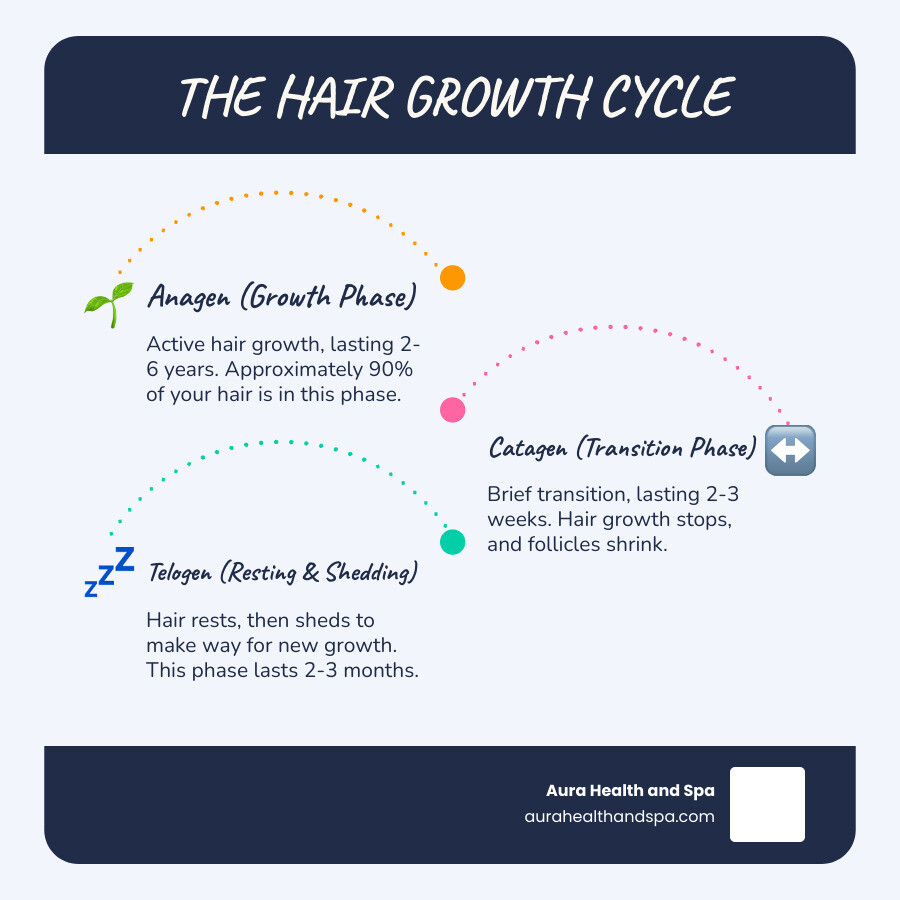
While the treatments themselves are quick, hair growth is a biological process that takes time. You can expect to see gradual improvement over a series of treatments. Most patients begin noticing early signs of regrowth within three to six months, with continued improvements in density and thickness. Full results typically become visible around 12 months, as your hair follicles cycle through their growth phases. For instance, those who have undergone a six-month program can expect lasting densification and thickness to the hair for 12 to 24 months. Consistency is key, as non-surgical treatments are more about defense, keeping what you’ve got on your head and sometimes calling in a few reinforcements.
Potential side effects are generally mild and temporary. You might experience some mild redness, swelling, or bruising at the treatment site, which typically resolves within a few days or up to two weeks. These effects are a normal part of your body’s healing response and indicate that the treatment is working.
Cost and Long-Term Maintenance
Investing in Non-Surgical Hair Restoration at Aura Health & Spa is an investment in your confidence and long-term well-being. We offer customized package pricing that reflects our premium, comprehensive approach to treatment. While we don’t list specific prices, our focus is on delivering superior outcomes and long-term benefits through carefully selected combinations of treatments and professional care. We believe in transparency and honest consultations, ensuring you understand the value and expected results of your personalized plan.
Hair loss is often an ongoing condition. Therefore, while our treatments provide significant and lasting results, they are not a permanent cure. To sustain the benefits and maintain your hair density, we highly recommend maintenance plans. These typically involve periodic follow-up sessions, often once every 6-12 months, along with recommended at-home care, such as medical-grade products or supplements. This proactive approach helps counteract the underlying genetic and environmental factors that contribute to hair loss, allowing you to enjoy your fuller, healthier hair for 12 to 24 months and beyond.
Frequently Asked Questions about Non-Surgical Hair Restoration
We understand you might have questions as you consider your options. Here are answers to some common inquiries about Non-Surgical Hair Restoration:
Is non-surgical hair restoration painful?
Our Non-Surgical Hair Restoration treatments are designed to be minimally invasive and are generally well-tolerated and painless. For procedures like microneedling, we apply a topical numbing cream to ensure your comfort throughout the session. Many patients describe the sensation as a light vibration or mild pressure rather than pain.
After your treatment, you might experience some mild redness, swelling, or slight bruising in the treated areas. These temporary effects are normal and typically subside within a few days to two weeks. Our team will provide you with detailed aftercare instructions to help minimize any discomfort and promote quick healing.
How does non-surgical hair restoration work?
Non-Surgical Hair Restoration works by stimulating your existing hair follicles and improving the overall health of your scalp, rather than transplanting new hair. Our advanced treatments, such as FolixMD laser therapy, De|Rive Ultra Plus exosome therapy, and microneedling with PRP, EXOE, or PDGF+, target the biological processes that lead to hair growth.
For example, our FolixMD laser uses concentrated energy to activate dormant follicles and encourage cellular regeneration. Microneedling creates tiny channels that allow regenerative serums to penetrate deeply, delivering growth factors directly to the follicles. These methods improve blood circulation, provide essential nutrients, and trigger the natural growth cycle of your hair. This means no follicle relocation, no scarring, and minimal downtime, making it an ideal solution for individuals with early to moderate thinning who desire natural-looking results without surgery.
Are the results permanent?
While Non-Surgical Hair Restoration treatments provide long-lasting and significant improvements in hair density and quality, they are not considered a permanent cure for hair loss. Hair loss is often an ongoing condition influenced by genetics, hormones, and other factors.
The results you achieve can be maintained and even further improved with a consistent approach. We recommend periodic maintenance sessions, typically once or twice a year, along with a custom at-home care regimen that may include specialized shampoos, topical serums, or supplements. This ongoing commitment helps to sustain the benefits, counteract the natural progression of hair loss, and keep your hair looking its best for years to come.
Begin Your Hair Restoration Journey in Plymouth, MI
If you’re experiencing hair thinning or loss, know that you have effective, non-surgical options available right here in Plymouth, MI. At Aura Health & Spa, we are committed to helping you achieve safe, effective, and natural-looking results with minimal downtime, allowing you to reclaim your confidence and love your reflection again.
Our expertise, premium treatment packages, and unwavering commitment to patient safety and satisfaction set us apart. All our procedures are performed by licensed and registered providers under the direct supervision of our Medical Director, Dr. Reema Sethi, ensuring the highest standards of care and precision.
Ready to take the first step towards a fuller, healthier head of hair? We invite you to experience the Aura Health & Spa difference.
Book your personalized hair restoration consultation today.
by Aura Health and Spa | Jan 29, 2026 | Skincare
Understanding Your Hair Restoration Options
A fuss hair transplant (Follicular Unit Strip Surgery, or FUSS) is an invasive surgical procedure where a surgeon removes a long strip of scalp tissue from the back of your head. This strip is dissected into follicular unit grafts and surgically placed into balding areas. The procedure is known for leaving a permanent linear scar that requires longer hair to conceal and involves a significant recovery period with notable downtime.
The “fuss” about FUSS isn’t just a play on words; it involves real surgical risks, a visible scar, and a lengthy healing process. While this surgical approach has existed for decades, modern technology has introduced powerful non-surgical alternatives that stimulate your body’s natural hair growth without incisions, stitches, or permanent scarring. These options offer minimal downtime and are ideal if you’re concerned about the invasiveness of surgery or prefer to wear your hair short.
I’m Dr. Reema Sethi, a board-certified emergency medicine physician with over 15 years of clinical experience and specialized training in medical aesthetics. At Aura Health & Spa in Plymouth, Michigan, I’ve helped many patients understand the significant drawbacks of surgical procedures like a fuss hair transplant and instead choose advanced, non-invasive treatments like our FolixMD laser therapy to achieve their goals safely.
Fuss hair transplant terms to know:
What is FUSS (Follicular Unit Strip Surgery)?
Follicular Unit Strip Surgery (FUSS) is a highly invasive hair restoration method. It involves surgically excising a strip of scalp from the back of the head—an area known as the donor site. This strip can be 6 to 10 inches long. After removal, the surgeon sutures the wound, which results in a permanent linear scar that patients must conceal with longer hair. The removed strip, containing hair follicles, is then dissected under a microscope into individual follicular units to be used as grafts. This entire process carries surgical risks and requires significant healing time. You can read more about the scientific research on the history of surgical hair restoration here.
How FUSS Differs from FUE
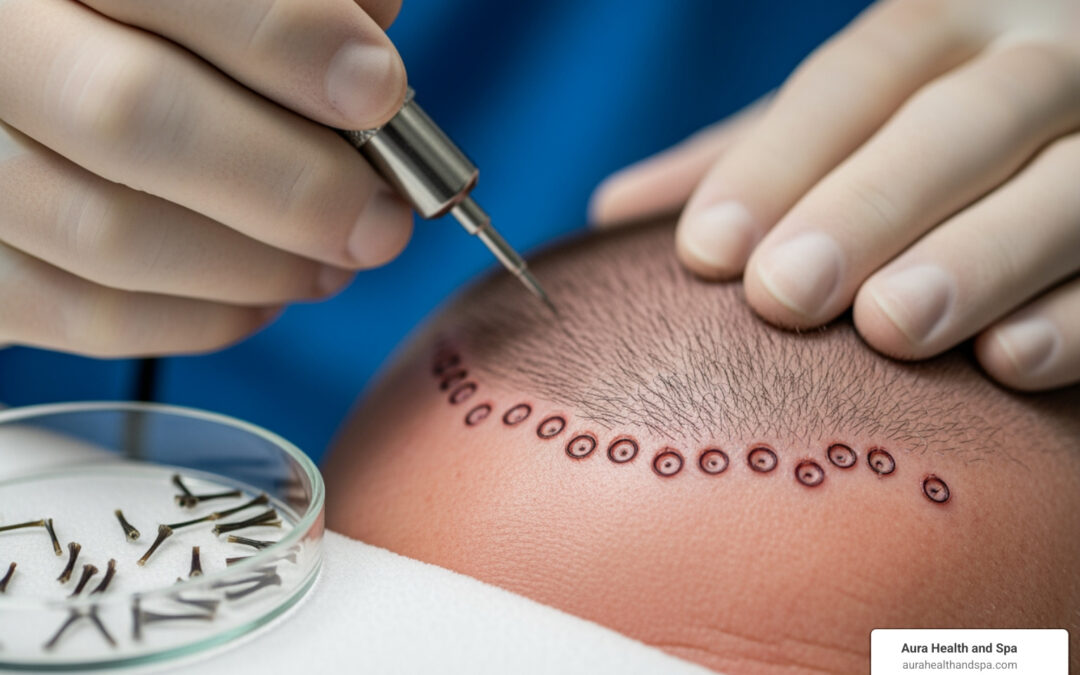
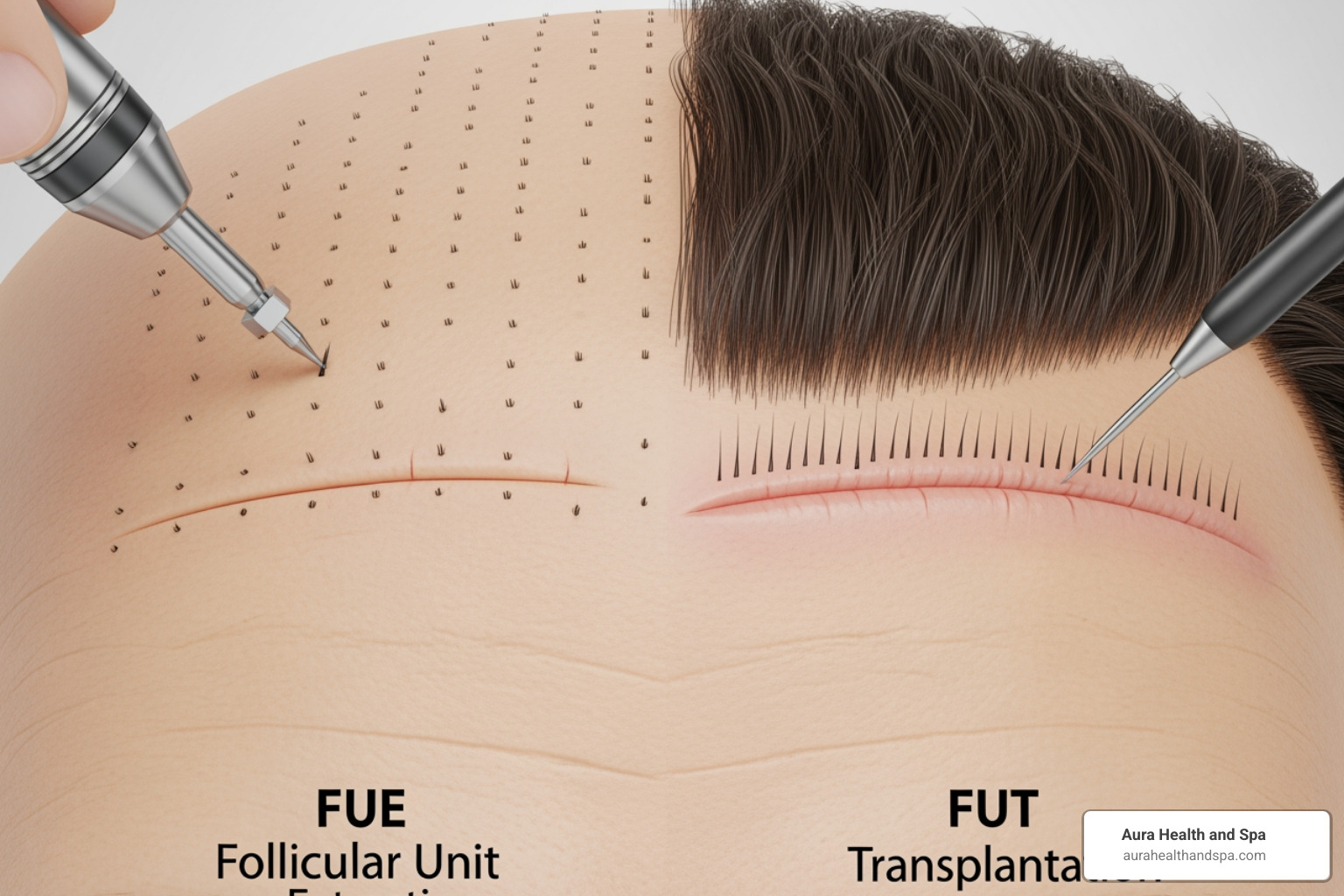
Another surgical method, FUE (Follicular Unit Extraction), differs mainly in its harvesting technique. Instead of a strip, FUE uses a micro-punch tool to extract individual follicular units directly from the scalp. While this avoids the linear scar of FUSS, it creates hundreds of small, circular dot scars and can lead to a “moth-eaten” appearance in the donor area if overharvested. Both FUSS and FUE are invasive surgical procedures that involve significant downtime, scarring, and potential for complications. They represent older approaches to hair loss, which are now being superseded by advanced non-surgical technologies.
The History and Evolution of Strip Surgery
The concept of strip surgery was an evolution from older, less refined surgical techniques of the mid-20th century that often resulted in an unnatural look. While techniques for dissecting and placing grafts have improved since the 1980s to create a more natural look, the fundamental procedure remains highly invasive. Advancements like the trichophytic closure, which aims to hide the scar, do not eliminate the scar itself or the other risks associated with the surgery.
The FUSS Hair Transplant Procedure: A Step-by-Step Look
The FUSS procedure is an intensive surgery performed under local anesthesia. It involves several key stages:
- Consultation and Planning: First, a surgeon assesses your scalp to determine if you are a surgical candidate, mapping out the areas for the procedure.
- Donor Strip Excision: The surgeon removes a horizontal strip of scalp tissue from the back of the head, which can be up to 10 inches long or more.
- Suturing the Wound: The surgeon then closes the wound with sutures or staples. This closure is what creates the permanent linear scar characteristic of FUSS.
- Graft Dissection: While the surgeon works on the patient, a team of technicians dissects the removed scalp strip into thousands of tiny follicular unit grafts.
- Recipient Site Creation and Placement: The surgeon makes small incisions in the balding areas and manually inserts the individual grafts. The entire surgery can last for several hours.
What to Expect During Recovery
Recovery from a FUSS procedure is a lengthy and often uncomfortable process.
- Initial Days (2-5 days): Expect significant tightness, aching, and swelling in the scalp. Pain medication is required to manage discomfort. Bandages on the donor scar are typically removed after a few days.
- First Two Weeks (Days 6-14): Stitches or staples are removed after 10 to 14 days, which can be uncomfortable. Scabbing in the transplanted area is common and will eventually fall off. You will likely need 1 to 2 weeks off from work.
- Shock Loss: In the weeks following surgery, it is very common for both the newly transplanted hairs and surrounding native hairs to fall out. This “shock loss” can be distressing and creates a period of temporary thinning.
- Activity Restrictions: Strenuous activities and sports must be avoided for at least 3 weeks to prevent tension on the healing scar, which could cause it to widen.
For a comprehensive guide on what to expect, you can refer to the NHS guide to hair transplant recovery.
Long-Term Results and What to Expect
Achieving the final look from a FUSS procedure is a slow process filled with uncertainty.
- New Growth: After the initial shock loss phase, new hair may begin to appear around 4 months post-surgery, but this can vary.
- Full Results: It can take 10 to 18 months to see the final outcome. The density and naturalness of the result depend heavily on the surgeon’s skill and how your body heals.
- Permanence and Ongoing Loss: While the transplanted hairs are taken from a balding-resistant area, FUSS does nothing to stop the underlying cause of hair loss. Your native, non-transplanted hair will likely continue to thin, potentially creating an unnatural look over time and requiring more procedures or treatments to maintain a consistent appearance.
The Real “Fuss”: Weighing the Risks and Downsides of Surgery
While some see a FUSS procedure as a solution for hair loss, it’s critical to understand the significant downsides and risks. The “fuss” is about the real, permanent consequences of this invasive surgery.
- The Permanent Linear Scar: This is the most unavoidable downside. The surgery leaves a linear scar on the back of the head that is permanent. Its visibility depends on your healing, but it will always be there, forcing you to wear your hair at a certain length (typically over an inch) to hide it. For anyone who prefers short hair, this scar is a major cosmetic issue.
- Post-Operative Pain and Discomfort: The recovery period is marked by scalp tightness, aching, and swelling that can last for days. A persistent feeling of tension in the donor area is also a common complaint.
- Nerve Damage: Removing a strip of tissue carries a risk of damaging nerves in the donor area. This can lead to temporary or, in rare cases, permanent numbness or chronic pain.
- Shock Loss (Telogen Effluvium): The trauma of surgery often causes a massive shedding event known as “shock loss,” where existing hair around the transplant sites falls out. While often temporary, this can be psychologically distressing and makes the hair look worse before it gets better.
- Risk of Poor Results: In the hands of an inexperienced surgeon, FUSS can lead to an unnatural-looking hairline, incorrect hair angles, or a “pluggy” appearance. There is no guarantee of a satisfactory aesthetic outcome.
- Surgical Complications: Like any surgery, FUSS carries risks of infection, excessive bleeding, and wound reopening (dehiscence), which can lead to a wider, more prominent scar.
Who Should Avoid a FUSS Procedure?
Given the significant drawbacks, a FUSS procedure is not the right choice for most people seeking hair restoration today. You should especially avoid this surgery if:
- You prefer short hairstyles: The linear scar will be visible and can be a source of self-consciousness.
- You live an active lifestyle: The healing scar is vulnerable to stretching, and contact sports are risky. You must wait at least 3 weeks before resuming strenuous activity.
- You have a tight scalp: This can make wound closure difficult and increase the risk of a wide, noticeable scar.
- You are concerned about scarring: If the idea of a permanent scar is distressing, you should seek non-surgical alternatives.
- You want minimal downtime: FUSS requires a longer and more uncomfortable recovery compared to non-invasive options.
- You are looking for a modern, less invasive solution: If you prefer to avoid surgery and its associated risks, advanced non-surgical treatments are a much better path.
Avoiding the “Fuss”: Advanced Non-Surgical Hair Restoration in Plymouth, MI
At Aura Health & Spa in Plymouth, Michigan, we understand that the thought of a FUSS procedure with its linear scar, recovery time, and surgical risks can be daunting. We believe that confidence starts with results you can see, and for many, that means exploring effective, non-surgical alternatives that align with our vision of helping you look younger, feel more confident, and love your reflection again—without the “fuss” of surgery.
Our approach to hair restoration focuses on advanced, non-invasive technology designed to stimulate your body’s natural hair growth. This means no incisions, no stitches, no permanent linear scarring, and minimal downtime. Our medical director oversees all procedures, and our treatments are performed by licensed nurses and aestheticians, ensuring precision, professionalism, and visible results. We offer premium, comprehensive treatment packages that prioritize superior outcomes and long-term benefits, often pairing treatments with add-ons and professional skincare to improve your results and value.
We focus on cutting-edge solutions that stimulate your body’s natural hair growth, providing remarkable results without the risks and recovery associated with surgical options. You can find more info about our advanced hair restoration services here.
FolixMD Laser: The Future of Hair Regrowth
One of our premier non-surgical hair restoration treatments in Plymouth, Michigan, is the FolixMD Laser. This isn’t your average low-level laser therapy (LLLT). We use the Lumenis FoLix fractional laser, a state-of-the-art device that represents a more powerful and direct approach to hair regrowth.
How does it work? The Lumenis FoLix laser creates precise microthermal zones within the scalp. This targeted, concentrated energy activates your body’s natural healing response. By stimulating the hair follicles at a deeper level than traditional LLLT, FolixMD encourages dormant follicles to re-enter the growth phase, leading to thicker, fuller, and healthier hair. It’s a testament to our commitment to using the most trusted medical technologies to help our clients restore, improve, and maintain their best look.
Microneedling with PRP/Exosomes for Hair Restoration
Another powerful, non-surgical option is microneedling combined with potent growth factors. This treatment uses fine needles to create micro-channels in the scalp, triggering the body’s natural healing process and stimulating collagen production. We then apply a concentrated serum of either Platelet-Rich Plasma (PRP), plant-based EXO|E exosomes, or PDGF+ growth factors. These substances deliver a powerful boost directly to the hair follicles, nourishing the scalp and promoting new, healthy hair growth. For optimal results, a series of 3-4 sessions is typically required.
De|Rive Ultra Plus: Plant-Based Serum for Scalp Health
To complement and improve the results of our in-office therapies, we incorporate De|Rive Ultra Plus. This innovative topical treatment is a plant-based serum enriched with powerful exosomes derived from botanical sources.
De|Rive Ultra Plus works synergistically with treatments like FolixMD Laser and microneedling by providing essential nutrients and growth factors directly to the scalp and hair follicles. It nourishes the scalp environment, supports cellular regeneration, and helps to extend the hair growth cycle. This at-home application is a vital component of our comprehensive approach, empowering you to actively support your hair health between in-clinic treatments.
Frequently Asked Questions About Hair Restoration
How much does hair restoration cost?
The cost of surgical hair restoration like a FUSS procedure is substantial, often ranging from several thousand to tens of thousands of dollars, depending on the extent of the procedure. While some compare costs between different surgical methods, the reality is that any surgical option is a major financial investment with no guarantee of a perfect outcome.
At Aura Health & Spa, we focus on non-surgical hair restoration, offering premium, comprehensive treatment packages. The cost of our advanced non-surgical treatments like FolixMD Laser and De|Rive Ultra Plus is determined during your personalized consultation. We believe in providing long-term value and superior, predictable results without the high costs and risks of surgery.
Is a FUSS hair transplant permanent?
The claim of “permanence” with a FUSS procedure is misleading. While the transplanted hairs themselves are genetically resistant to balding, the surgery does absolutely nothing to stop the progression of hair loss in your native, non-transplanted hair. Over time, you may continue to lose hair around the transplanted zones, leading to an unnatural, patchy appearance. This often necessitates further procedures or ongoing treatments to maintain a semblance of density. A truly comprehensive approach must address the health of all your hair, which is why non-surgical therapies that support existing hair are crucial.
What are the main risks of a FUSS hair transplant?
A FUSS procedure is a major surgery with significant inherent risks. The primary concerns include:
- A permanent linear scar in the donor area.
- Post-operative pain, tightness, and swelling.
- Infection at the incision or graft sites.
- Nerve damage leading to chronic numbness or pain.
- “Shock loss,” the temporary shedding of existing and transplanted hair.
- Unnatural results if performed by an inexperienced surgeon.
- General surgical risks related to bleeding and anesthesia.
For more general information on surgical risks, you can refer to resources like MedlinePlus, a service of the National Library of Medicine.
Conclusion: Choosing the Right Path for Your Hair Restoration Journey
Navigating hair restoration can be confusing, especially with outdated surgical procedures like the FUSS procedure. While it is sometimes discussed for extensive hair loss, FUSS is an invasive surgery with unavoidable and significant drawbacks: a permanent linear scar, a long and painful recovery, and serious potential risks.
At Aura Health & Spa in Plymouth, Michigan, we believe you shouldn’t have to choose between your hair and your well-being. We’ve moved beyond the “fuss” of surgery by championing advanced non-surgical hair restoration. Our FolixMD Laser therapy, Microneedling with growth factors, and the nourishing De|Rive Ultra Plus serum offer a powerful, modern approach to stimulating natural hair regrowth—without incisions, stitches, or scars.
Your journey to renewed confidence deserves a safe, effective, and personalized plan. We invite you to schedule a consultation with our expert team at Aura Health & Spa. Let us show you how to achieve the visible results you desire and love your reflection again, without the risks of surgery.
by Aura Health and Spa | Jan 27, 2026 | Skincare
Considering FUE Hair Loss Treatment? Find a Non-Surgical Alternative in Plymouth, MI
If you’re searching for solutions like FUE hair loss treatment, you’re looking for a real answer to hair thinning or balding. While surgical procedures exist, modern aesthetic medicine offers powerful, non-invasive alternatives that can restore your hair’s thickness and vitality without the need for surgery, scarring, or significant downtime.
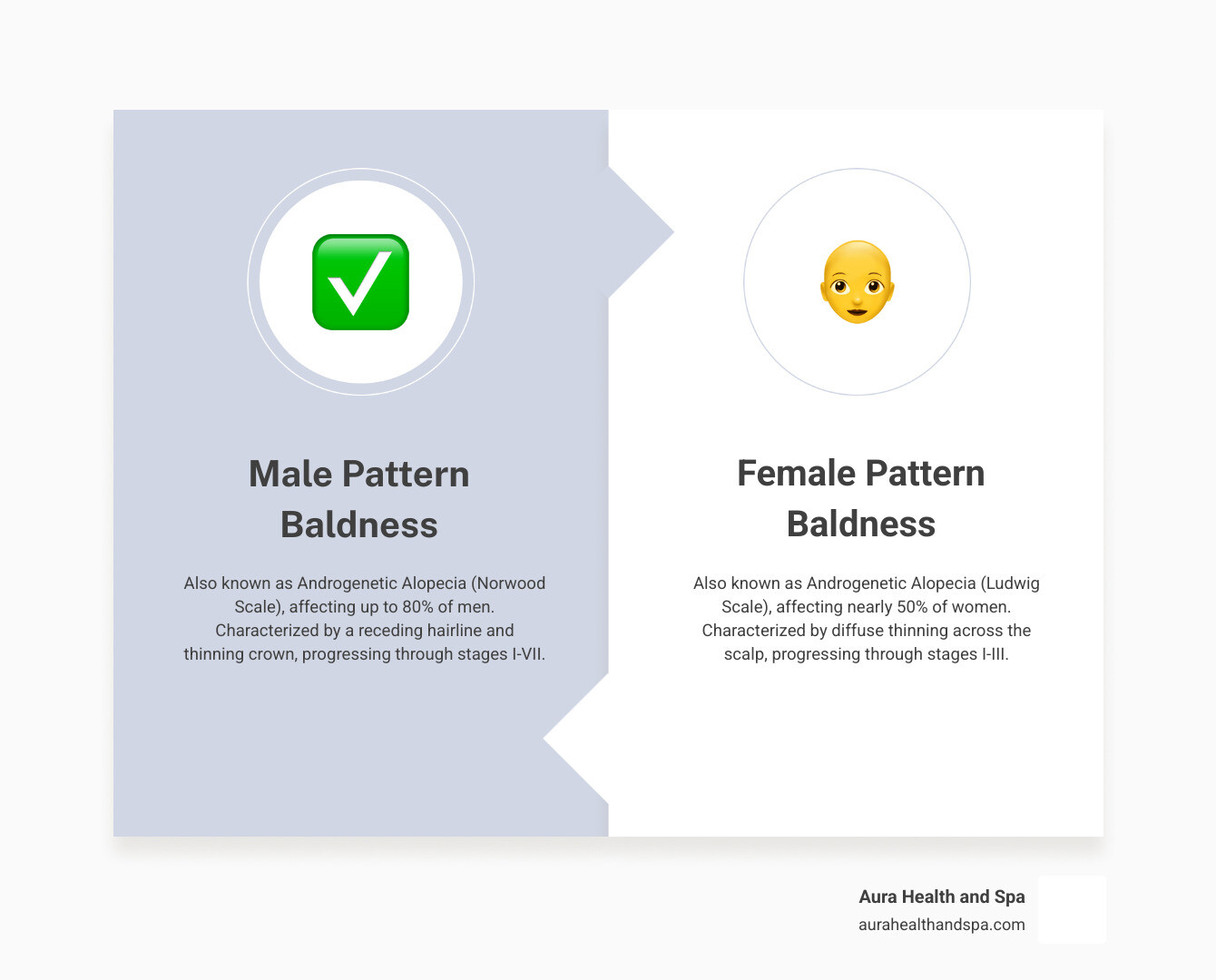
Hair loss affects more people than you might think. Up to 80% of men and nearly half of women experience some level of hair thinning during their lifetime. A common cause is androgenetic alopecia, also known as male or female pattern hair loss. Whether it’s pattern baldness or general thinning, losing hair can impact how you feel about yourself and how you present to the world. You can learn more about pattern hair loss from trusted medical resources such as the National Center for Biotechnology Information.
The good news? At Aura Health & Spa in Plymouth, Michigan, we specialize in advanced non-surgical treatments that stimulate your own hair to grow thicker and fuller. Our approach focuses on activating your body’s natural regenerative processes to achieve visible, lasting results.
This guide will walk you through our cutting-edge, non-surgical hair restoration options—specifically FolixMD and De|Rive Ultra Plus—from how they work and who they’re best for, to what the treatment journey looks like. We’ll show you how you can achieve a healthier, fuller head of hair without the risks and recovery associated with surgery.
I’m Dr. Reema Sethi, a board-certified emergency medicine physician and the Medical Director at Aura Health & Spa in Plymouth, Michigan. All treatments at our clinic, including hair restoration, are performed by registered and licensed providers under my medical supervision. I’ve helped countless patients steer their hair restoration options, guiding them toward our advanced non-surgical treatments that deliver natural-looking results by using the body’s own power to heal and regrow.
Why Choose a Non-Surgical Path to Hair Restoration?
Many people begin their research by looking into traditional surgical methods such as FUE or FUT when they notice ongoing shedding or thinning. These procedures involve surgically relocating hair follicles from one area of the scalp to another. However, surgery is not the only way to address hair loss, and it is not necessary—or appropriate—for everyone.
At Aura Health & Spa in Plymouth, Michigan, we believe in a different approach. Instead of moving follicles surgically, we focus on stimulating your own dormant and thinning hair follicles to regrow naturally using advanced, energy-based and topical therapies.
Our non-surgical philosophy is built on three key advantages:
- No Surgery, No Scars: Our treatments are non-invasive. There are no incisions, no stitches, and no linear or dot-like scars left behind. You can wear your hair any length you choose without concern.
- Minimal Downtime: Our patients can typically return to their daily activities quickly. While temporary redness, swelling, or tenderness can occur and may last for a few days or, in some cases, up to two weeks, there is no prolonged recovery like that associated with surgical procedures.
- Natural Regeneration: Rather than relocating follicles, our treatments work by waking up dormant follicles and improving scalp health, leading to the growth of your own natural hair.
For our clients in Plymouth, Michigan, and the surrounding Metro Detroit area, this modern approach offers a compelling path to hair restoration that prioritizes safety, comfort, and authentic, natural-looking results through premium, comprehensive treatment packages rather than basic, standalone services.
The Aura Advantage: Our Premier Hair Restoration Treatments
At Aura Health & Spa in Plymouth, Michigan, we focus on premium, technology-driven treatments that deliver superior outcomes. We do not provide surgical hair transplant procedures; instead, we offer comprehensive, non-surgical solutions designed to achieve the best possible results for thinning hair.
Our hair restoration protocol is centered on two powerful, synergistic treatments: FolixMD Laser Therapy and De|Rive Ultra Plus.
Stimulate Natural Growth with FolixMD Laser Therapy
Our flagship non-surgical treatment is FolixMD Laser Therapy, which uses the advanced Lumenis FoLix fractional laser. It is crucial to understand that this is not a low-level laser therapy (LLLT) cap or comb. While LLLT uses broad, low-intensity light over a wide area, the Lumenis FoLix laser represents a much more powerful and direct approach.
The FolixMD system works by creating precise microthermal zones on the scalp with targeted, concentrated energy. This energy deeply penetrates the scalp tissue to activate the body’s natural healing response. This powerful stimulation helps awaken dormant and miniaturized hair follicles, promoting new hair growth and strengthening existing strands.
The fractional technology ensures that healthy tissue surrounds each micro-zone, which supports faster healing and helps minimize discomfort. Treatments are performed in our Plymouth, MI clinic by registered and licensed providers under the supervision of our Medical Director, Dr. Reema Sethi. For an overview of how energy-based devices can influence hair follicles, you can review background information from sources such as the Journal of Cutaneous and Aesthetic Surgery.
Nourish Follicles with De|Rive Ultra Plus
To improve and support the results of our laser therapy, we use De|Rive Ultra Plus, a topical serum designed specifically for the scalp. This advanced formula uses plant-based exosomes and bio-mimetic technology to deliver a concentrated blend of growth factors and nutrients directly to the scalp and hair follicles.
De|Rive Ultra Plus works by:
- Providing Essential Nourishment: It effectively supports hair follicles, encouraging them to enter and remain in the active growth phase.
- Improving Scalp Health: A healthy scalp is the foundation of healthy hair. The serum helps calm inflammation and creates an optimal environment for robust hair growth.
- Enhancing Cellular Regeneration: The bio-mimetic technology helps revitalize scalp cells, supporting the regenerative process initiated by the FolixMD laser.
This take-home serum is easy to incorporate into your daily routine, providing continuous support for your hair restoration journey and maximizing the results of your in-clinic treatments as part of Aura Health & Spa’s premium, comprehensive packages.
Your Hair Restoration Journey: What to Expect
Starting on a non-surgical hair restoration journey at Aura Health & Spa in Plymouth, Michigan is a proactive step toward regaining your hair and confidence. Our process, overseen by our Medical Director and performed by registered and licensed providers, is designed for safety, comfort, and outstanding results.
- Consultation: Your journey begins with a thorough consultation to assess your hair loss, review your medical history, discuss your goals, and determine if you are an ideal candidate for our treatments.
- Treatment Plan: We create a personalized treatment plan, which typically involves a series of 3–4 FolixMD laser sessions, spaced several weeks apart, paired with at-home De|Rive Ultra Plus serum to achieve optimal results.
- The Treatment: During a FolixMD session, the Lumenis FoLix fractional laser handpiece is applied to the target areas of the scalp. The procedure is generally well-tolerated, with most patients experiencing a mild sensation of heat as the microthermal zones are created.
- Aftercare: You will receive specific aftercare instructions from our licensed providers, including how to use your De|Rive Ultra Plus take-home serum to nourish your scalp and improve results between sessions.
- The Results Timeline: Hair growth is a gradual process. While reduced shedding may be noticed sooner, new hair growth from our treatments typically begins to appear around 3–4 months after starting, with results continuing to improve and mature for up to a year. While the image below shows a timeline for a surgical FUE procedure, the gradual nature of seeing results over several months is a key takeaway for any effective hair restoration journey.
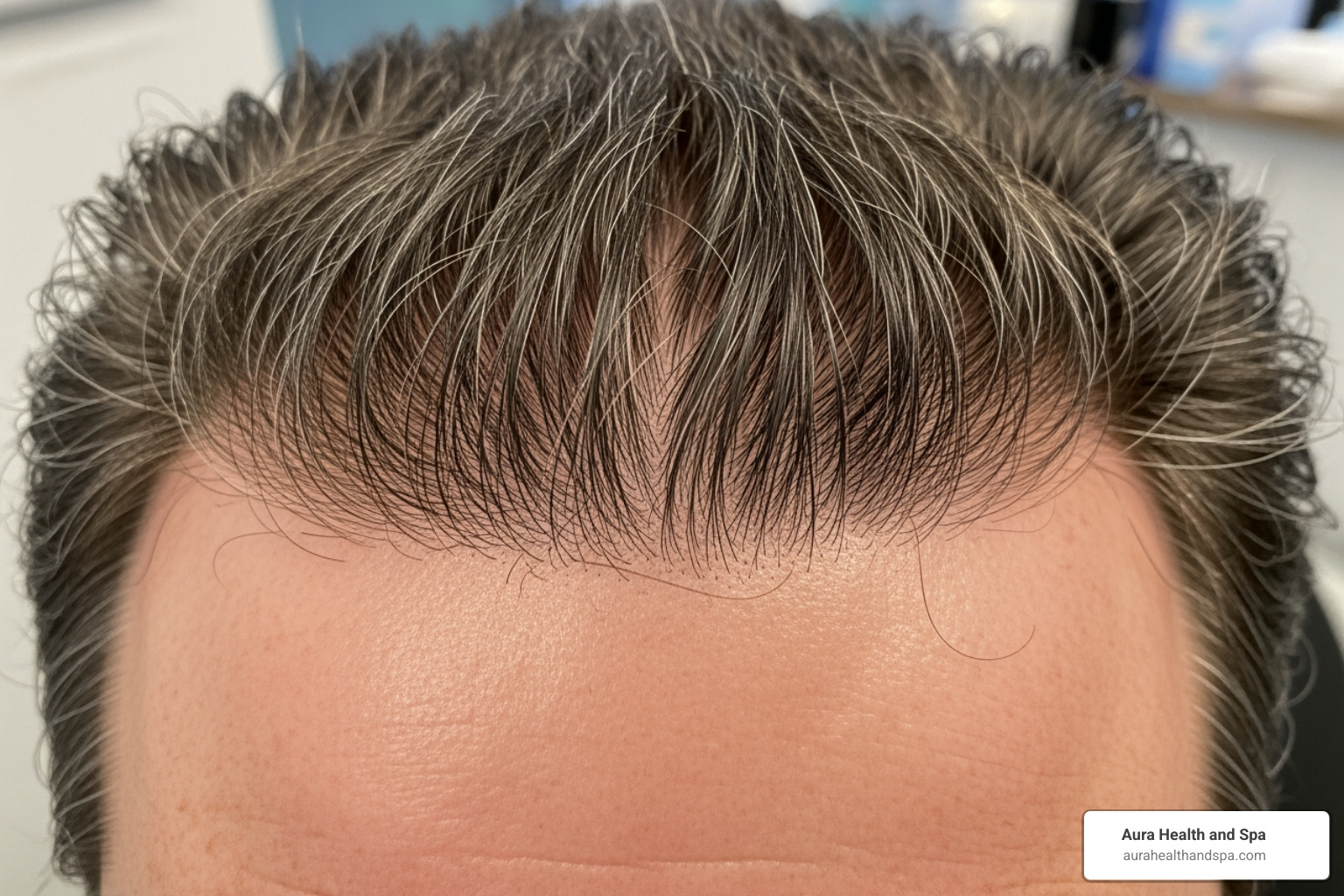
Potential Side Effects and Investment
Our non-surgical treatments are generally very well tolerated, with minimal side effects. Patients may experience temporary redness, mild swelling, or tenderness in the treated area. In most cases, these effects improve within a few hours to a few days, but for some individuals they may last up to two weeks. There is no significant activity downtime required, though we may recommend avoiding certain hair products or activities for a short period.
At Aura Health & Spa, we focus on providing premium, comprehensive treatment packages rather than basic, standalone services. This approach ensures you receive the greatest value and the most effective, long-term results by pairing in-clinic treatments with professional at-home care when appropriate. The total investment for your hair restoration journey will depend on the personalized treatment plan designed to meet your specific needs and will be reviewed transparently during your consultation.
Frequently Asked Questions about Hair Restoration
We understand you have questions when considering hair restoration. Here are some common inquiries we address with our patients at Aura Health & Spa in Plymouth, Michigan:
Are surgical transplants my only option for significant hair loss?
No. While some people do explore surgical hair transplant options elsewhere, surgery is not the only way to improve hair density, and it is not suitable for everyone. At Aura Health & Spa, we do not perform surgical hair transplantation. Instead, we focus on non-surgical treatments such as FolixMD Laser Therapy and De|Rive Ultra Plus that work to reactivate and stimulate your existing follicles to promote new, natural growth. For many individuals with early to moderate thinning, this provides a powerful, science-backed alternative to surgery, allowing you to pursue fuller-looking hair without incisions, scarring, or extended downtime.
If you are interested in reading more about surgical hair restoration in general (outside of Aura’s services), organizations like the International Society of Hair Restoration Surgery provide educational resources.
How long does it take to see results from non-surgical treatments?
The timeline for results from treatments like FolixMD and De|Rive Ultra Plus varies based on the individual’s degree of hair loss, adherence to the treatment plan, and their body’s unique response. Optimal outcomes typically require a series of 3–4 treatments. While initial improvements like reduced shedding may be noticed within the first couple of months, more significant, visible new growth and thickening often become apparent after completing the recommended series, with continued improvement over the following year. Consistency is crucial, and our licensed providers work closely with you to set realistic expectations and track your progress.
Can I combine surgical and non-surgical hair treatments?
Yes. Although Aura Health & Spa focuses exclusively on providing advanced non-surgical hair restoration, some individuals may pursue surgical options with outside specialists. In these cases, our non-surgical treatments can play a supportive role by:
- Preparing the Scalp: Optimizing scalp health and strengthening existing hair with FolixMD can create a healthier environment before any potential surgical procedure performed elsewhere.
- Maintaining Non-Relocated Hair: Surgery does not prevent native, non-relocated hair from continuing to thin. Our treatments are valuable for preserving and supporting this hair to maintain a cohesive, long-term result.
- Enhancing Overall Appearance: Combining approaches under appropriate medical guidance can lead to a more comprehensive and satisfying outcome, ensuring all areas of the scalp receive ongoing stimulation and nourishment.
For an overview of how different approaches can be integrated under medical supervision, you may find it helpful to review educational materials from resources like the American Academy of Dermatology.
Conclusion: Revitalize Your Hair, Restore Your Confidence
The journey to restoring a fuller, healthier-looking head of hair is personal. Many people start by researching terms like “FUE hair loss treatment,” but it is important to know that modern advancements provide highly effective, non-invasive solutions that do not involve surgery.
At Aura Health & Spa in Plymouth, Michigan, we pride ourselves on offering a powerful non-surgical alternative that delivers visible results without the downtime, scarring, or risks associated with surgical procedures. Our advanced FolixMD Laser Therapy, featuring the Lumenis FoLix fractional laser, directly stimulates dormant follicles by creating controlled microthermal zones that activate your body’s natural healing response. When paired with the nourishing De|Rive Ultra Plus serum, our comprehensive approach revitalizes your hair from the scalp up, boosting both your hair density and your confidence.
We believe that confidence begins with results you can see. Our team of medically trained and licensed providers, under the direction of Medical Director Dr. Reema Sethi, is dedicated to delivering safe, effective, and customized treatments using premium, comprehensive packages rather than basic, standalone services.
If you’re experiencing hair thinning and are looking for a powerful non-surgical solution in the Plymouth and greater Metro Detroit area, we invite you to experience the Aura Health & Spa difference.
Schedule your hair restoration consultation today and let us help you love your reflection again.