
Understanding Collagen Induction Therapy: A Natural Path to Skin Renewal
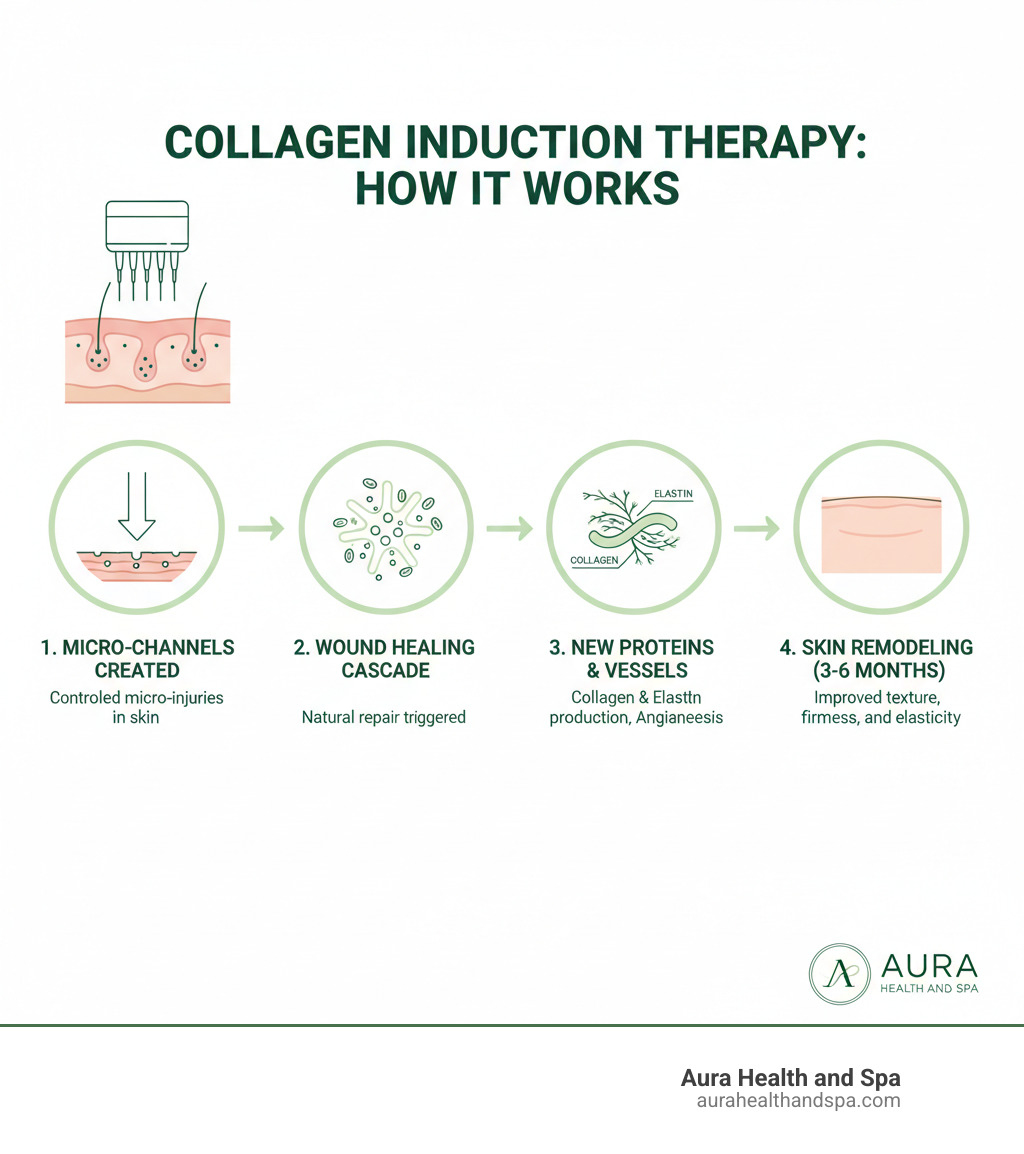
Collagen induction therapy is a minimally invasive cosmetic procedure that uses tiny, sterile needles to create controlled micro-injuries in your skin. These micro-injuries trigger your body’s natural healing process, stimulating the production of collagen and elastin – the essential proteins that keep your skin firm, smooth, and youthful.
Quick Answer: What You Need to Know
- What it is: A procedure using fine needles to puncture the skin and stimulate natural healing
- Also known as: Microneedling, dermarolling, skin needling, or percutaneous collagen induction
- How it works: Creates controlled micro-injuries that trigger collagen and elastin production
- What it treats: Acne scars, fine lines, wrinkles, hyperpigmentation, stretch marks, and hair loss
- Key benefits: Improved skin texture, reduced scarring, brighter tone, minimal downtime
- Recovery time: Typically 24-48 hours of mild redness and sensitivity
This treatment has become one of the most popular options in aesthetic medicine because it harnesses your body’s own healing abilities. Unlike ablative procedures that destroy the epidermis, collagen induction therapy preserves your skin’s protective outer layer while working beneath the surface to create real, lasting change.
Research shows impressive results. Studies found that patients experienced a 400% increase in collagen and elastin deposition six months after treatment. The epidermis itself thickened by 40% within a year. These aren’t just superficial improvements – they represent genuine regeneration of your skin’s structure.
Why This Matters for Your Wellness Journey
Your skin is more than just a physical barrier. It reflects your inner vitality and energy. When your skin feels healthy and radiant, it affects your confidence, your presence, and how you move through the world. Collagen induction therapy offers a way to support your skin’s natural renewal process without harsh chemicals or invasive surgery.
I’m Dr. Reema Sethi, a board-certified emergency medicine physician with over 15 years of clinical experience. After training in medical aesthetics in Chicago, I now specialize in delivering safe, effective collagen induction therapy treatments at Aura Health and Spa in Plymouth, Michigan, where I combine my medical expertise with a holistic approach to help you achieve your most radiant self.
The Science Behind Collagen Induction Therapy: How It Refreshs Your Skin
Your skin has an amazing superpower: it knows exactly how to heal itself. Every time you get a paper cut or scrape your knee, your body launches into action without you having to think about it. Collagen induction therapy harnesses this incredible natural ability, giving your skin the signal it needs to refresh and renew itself from the inside out.
What is Collagen Induction Therapy (CIT)?
Collagen induction therapy is a minimally invasive dermatological procedure that’s been gaining popularity for good reason. You might know it better as microneedling, though it goes by several names including percutaneous collagen induction (PCI), dermarolling, or simply skin needling. Whatever you call it, the principle remains the same: using very fine, sterile needles to create controlled micro-injuries in your skin.
I know what you’re thinking. “Injuries? That doesn’t sound relaxing!” But here’s the beautiful part: these aren’t the kind of injuries that cause damage. They’re precise, microscopic channels that wake up your skin’s natural healing abilities without requiring surgery or extensive downtime. It’s like sending your skin a gentle wake-up call to start producing fresh, healthy tissue.
This approach has become one of the most sought-after treatments in aesthetic medicine because it works with your body’s natural processes, not against them. Rather than forcing change with harsh chemicals or invasive procedures, we’re simply encouraging your skin to do what it already does best: heal and regenerate.
The Skin’s Natural Healing Mechanism
When we perform collagen induction therapy at Aura Health and Spa, we’re essentially starting a conversation with your skin. Those controlled micro-injuries we create? They’re the opening line. Your skin responds immediately, launching what we call the wound healing cascade.
This healing process unfolds in three distinct phases. First comes the inflammation phase, which starts almost instantly. Your body recognizes those tiny channels and sends blood rushing to the area, bringing immune cells along for the ride. This is why your skin might look a bit pink right after treatment. Don’t worry—that rosy glow is actually a sign that everything’s working perfectly.
Next, the proliferation phase begins. This is where the real magic happens. Your body releases growth factors that tell your fibroblasts—the cells responsible for making collagen—to get busy. New skin cells start multiplying, fresh blood vessels form, and most importantly, your skin begins producing collagen and elastin. These are the proteins that keep your skin firm, smooth, and youthful.
Finally, the remodeling phase takes over. This continues for weeks and even months after your treatment. The new collagen and elastin mature and organize themselves, strengthening your skin’s structure from within. It’s like renovating a house with better materials—the foundation becomes stronger, and the results last.
The science behind this is solid. Scientific research on new collagen formation has shown remarkable improvements in treated skin. Studies found that patients experienced increased collagen and elastin deposition as early as six months after treatment. Even more impressive, the epidermis—your skin’s outer protective layer—thickened by about 40 percent within a year, with the stratum spinosum showing particularly strong improvements.
These aren’t just surface-level changes. Your skin is genuinely becoming healthier, stronger, and more resilient. The epidermal thickening means better protection against environmental stressors, while the increased collagen deposition translates to smoother texture and improved elasticity. It’s regeneration in the truest sense of the word.
Opening Up Your Skin’s Potential: Applications and Benefits
Your skin tells a story. Sometimes it’s a story of sun-soaked summers, other times it’s chapters written by acne, stress, or simply the passage of time. Whatever your skin’s journey has been, collagen induction therapy offers a way to help rewrite those chapters you’d like to change.
I’ve watched countless clients walk through our doors in Plymouth, Sterling Heights, and Ann Arbor feeling self-conscious about their skin. They leave with renewed confidence, not because we’ve performed magic, but because we’ve helped their own bodies open up their natural healing potential.
Key Conditions Treated with CIT
When clients ask me what collagen induction therapy can address, I’m always excited to share just how versatile this treatment truly is. The beauty of CIT lies in its ability to tackle so many different concerns through one fundamental mechanism – stimulating your body’s own collagen production.
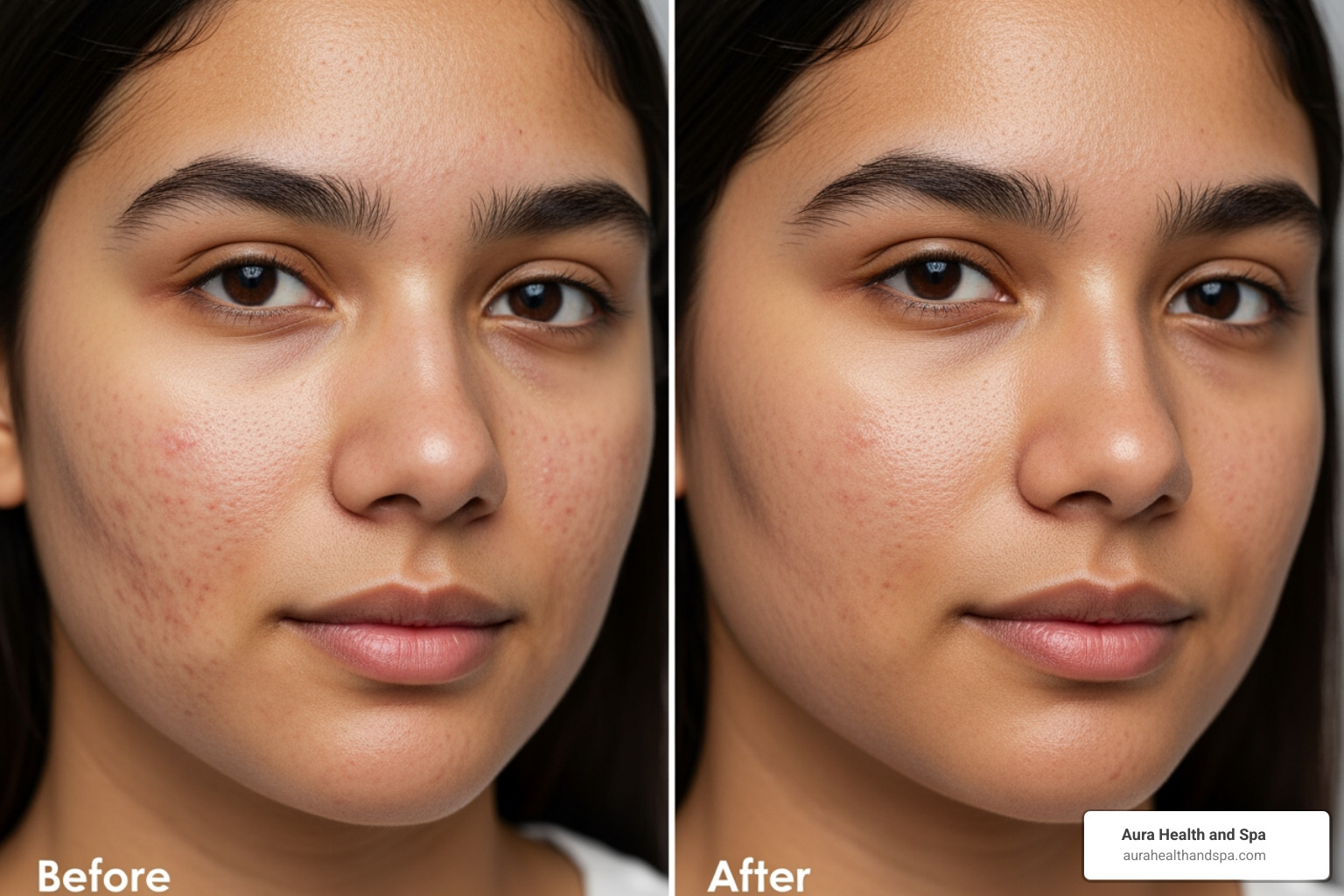
Atrophic acne scars are perhaps one of the most common reasons people seek out microneedling. These are the depressed, pitted scars that severe acne leaves behind. Research shows that after just two sessions, patients notice mild improvement, and after six sessions, many see moderate to good improvement in their scar appearance. By rebuilding collagen in these sunken areas, we’re literally filling in the gaps from the inside out.
Fine lines and wrinkles respond beautifully to this treatment as well. As collagen and elastin naturally decline with age, our skin loses that plump, youthful quality. CIT reverses this process by jumpstarting fresh collagen production. The delicate lines around your upper lip, those crow’s feet by your eyes – these all soften as your skin rebuilds itself.
For those struggling with hyperpigmentation and sun spots, the results can be truly liberating. The treatment helps break up clusters of excess pigment while encouraging new, evenly toned skin cells to take their place. When we combine CIT with targeted topical agents like tranexamic acid or vitamin C, the improvement in conditions like melasma becomes even more dramatic.
Stretch marks – medically known as striae distensae – are another area where we’ve seen remarkable changes. Whether they appeared after pregnancy, growth spurts, or weight changes, these silvery lines represent areas where collagen and elastin broke down. One fascinating study found that microneedling effectively improved stretch marks on both the thighs and abdominal area when combined with appropriate fillers.
Even enlarged pores respond to treatment. By promoting collagen production around each pore, the skin tightens, making pores appear smaller and less noticeable. It’s like tightening the weave of a fabric.
What surprises many people is that hair loss, particularly androgenetic alopecia, can also be addressed with microneedling. Studies suggest it activates stem cells and dermal papillae, triggering the production of epidermal growth factors essential for healthy hair follicles. When combined with minoxidil or Platelet-Rich Plasma (PRP), the results become even more impressive.
You can find more info about SkinPen Microneedling and how it specifically addresses these concerns on our website.
The Transformative Benefits of CIT
Beyond treating specific conditions, collagen induction therapy creates a ripple effect of positive changes throughout your skin. It’s not just about fixing one problem – it’s about elevating your entire complexion.
Improved skin texture is often the first thing people notice. That rough, uneven feeling transforms into something smoother and more refined. Your makeup glides on better. Your skin simply feels better when you touch it.
Improved skin firmness and elasticity follow as your collagen and elastin networks rebuild. Your skin regains that youthful bounce and resilience it had years ago. It looks lifted, feels firmer, and moves more naturally with your expressions.
The reduced appearance of scars – whether from acne, surgery, or old injuries – happens gradually as healthy tissue replaces damaged areas. We’re not erasing your history, but we’re helping your skin tell a different story.
Many clients are thrilled by their brighter, more even skin tone. Discoloration fades. Dark spots lighten. The overall clarity improves, creating a luminous quality that no highlighter can replicate.
Perhaps most telling is the high patient satisfaction we see. In one study conducted in Germany, patients rated their improvement between 60 and 80 percent better than before treatment. These aren’t just numbers – they represent real people who feel more confident in their own skin.
And here’s what makes this all even better: you achieve these results with minimal downtime. Unlike more aggressive treatments that leave you hiding at home for weeks, CIT lets you return to your daily activities quickly. You might be a little red for a day or two, but that’s a small price for such remarkable change.
Want to explore even more ways this treatment can benefit your skin? Check out the lesser known microneedling benefits for radiant skin on our blog.
Exploring the Different Types of CIT and How They Compare
Just as there are many paths to wellness, there are several approaches to collagen induction therapy, each offering unique advantages. Understanding these options helps us create the perfect treatment plan custom to your individual skin goals and needs.
Manual vs. Automated Devices
The world of microneedling has evolved significantly, and today we have access to sophisticated tools that deliver precise, effective results.
Dermarollers were among the pioneers of modern microneedling. These handheld devices feature a rotating barrel studded with tiny needles. While they played an important role in bringing microneedling to the forefront, they have some limitations. The rolling motion can sometimes create uneven punctures or “track marks” on the skin. Additionally, because the needles enter at an angle rather than vertically, they can cause more trauma to the surrounding tissue. You’ve probably seen at-home dermarollers available for purchase, but these typically have much shorter needles that can’t penetrate deeply enough to reach the dermis where true collagen stimulation happens.
Dermapens, or automated microneedling devices, represent the modern gold standard for professional collagen induction therapy. These pen-like devices use disposable needle cartridges that move rapidly up and down, creating clean, vertical punctures in the skin. This vertical action is a game-changer because it creates more precise micro-channels while minimizing damage to the surrounding epidermis. The result? Faster healing, less discomfort, and more consistent, beautiful outcomes.
Professional devices like the SkinPen we use at Aura Health and Spa can adjust needle depth precisely to reach the dermis, the deeper skin layer where collagen production truly happens. This level of control and penetration simply isn’t possible with at-home devices. When you choose professional treatment, you’re also benefiting from our expertise in maintaining sterility, selecting the optimal needle depth for your specific concerns, and ensuring even application across the treatment area.
Advanced CIT: Microneedling with Radiofrequency (RF)
For those seeking even more dramatic results, microneedling with radiofrequency takes collagen induction therapy to an exciting new level. This advanced treatment combines the physical benefits of microneedling with the powerful thermal energy of radiofrequency technology.
Here’s how it works: as the microneedles create those beneficial micro-channels in your skin, radiofrequency energy is simultaneously delivered deep into the dermis. This controlled heat creates an additional stimulus for collagen and elastin production, amplifying the skin’s natural healing response. The thermal energy creates a broader zone of treatment around each needle point, intensifying the entire collagen-rebuilding process.
The benefits are truly impressive. RF microneedling offers improved collagen remodeling, superior skin tightening effects, and the ability to treat deeper tissue layers for more comprehensive rejuvenation. It’s particularly effective for addressing skin laxity, deeper wrinkles, and texture concerns that need that extra boost.
If this sounds intriguing, you can discover youthful skin with Microneedling and Radiofrequency on our blog. We’re proud to offer Morpheus8, a cutting-edge RF microneedling treatment that delivers remarkable results. Learn more info about Morpheus8 Skin Rejuvenation and see if it’s the right fit for your skin change journey.
CIT vs. Other Rejuvenation Treatments
When you’re exploring your options for skin rejuvenation, it’s helpful to understand how collagen induction therapy compares to other popular treatments. Let’s look at how CIT and laser therapy differ:
| Feature | Collagen Induction Therapy (CIT) | Laser Therapy |
|---|---|---|
| Invasiveness Level | Minimally invasive; creates controlled micro-channels without removing skin layers | Varies by type; can be non-ablative (no tissue removal) to ablative (removes outer skin layers) |
| Downtime/Recovery | Minimal; typically 24-48 hours of redness and sensitivity, back to normal activities quickly | Varies widely; ablative lasers may require 1-2 weeks of healing, non-ablative options have less downtime |
| Suitability for Skin Types | Safe and effective for all skin types, including darker skin tones (Fitzpatrick IV-VI) | Some lasers carry higher risk of hyperpigmentation in darker skin tones; careful selection required |
| Safety for Darker Skin Tones | Excellent safety profile; no risk of thermal damage or pigmentation changes | Requires caution; certain wavelengths can cause post-inflammatory hyperpigmentation in melanin-rich skin |
| Cost Comparison | Generally more affordable per session; multiple sessions typically needed | Can be more expensive; cost varies significantly by laser type and treatment area |
What makes collagen induction therapy particularly special is its universal safety profile. Because it works through mechanical stimulation rather than heat or light energy, it doesn’t carry the same risks for hyperpigmentation that can affect people with darker skin tones when using certain lasers. This makes CIT an inclusive option that delivers beautiful results for everyone, regardless of skin type.
Both CIT and laser therapy have their place in aesthetic medicine, and sometimes they can even complement each other. If you’re curious about laser options, you can explore The Professional Guide to Laser Skin Treatment Advantages to learn more. During your consultation at Aura Health and Spa, we’ll discuss which approach or combination of treatments will best help you achieve your unique skin goals.